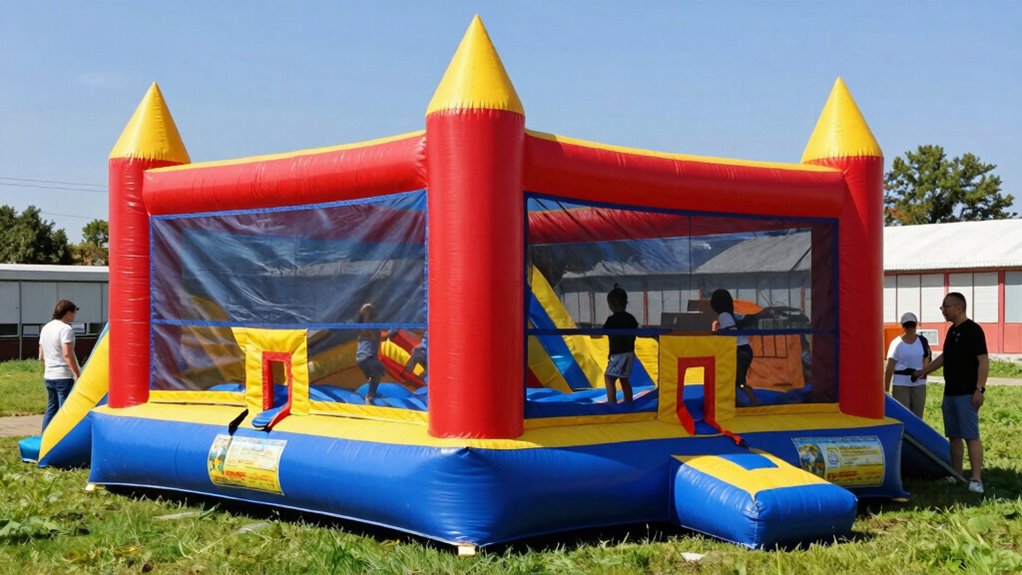

To keep your bounce house safe, make sure you anchor it firmly with stakes or weights at a 45-degree angle and regularly check all ties and straps. Monitor weather conditions closely, especially wind speeds, and be ready to evacuate if storms approach. Supervise children at all times, enforcing safety rules and inspecting the bounce house for damage during play. Following these steps helps prevent accidents—stick around to learn more essential tips for safe bounce house use.
Key Takeaways
- Properly anchor the bounce house with stakes or weights at a 45-degree angle for maximum stability.
- Regularly inspect all equipment, including anchors, ropes, and seams, before and after use.
- Monitor weather conditions continuously, especially wind speed, and deflate or secure the bounce house during storms.
- Supervise children closely, enforce safety rules, and stay alert for unsafe behaviors or damages during play.
- Conduct thorough safety checks before each event and keep detailed logs of inspections and maintenance activities.
bounce house stakes and weights
As an affiliate, we earn on qualifying purchases.
As an affiliate, we earn on qualifying purchases.
How to Safely Anchor Your Bounce House
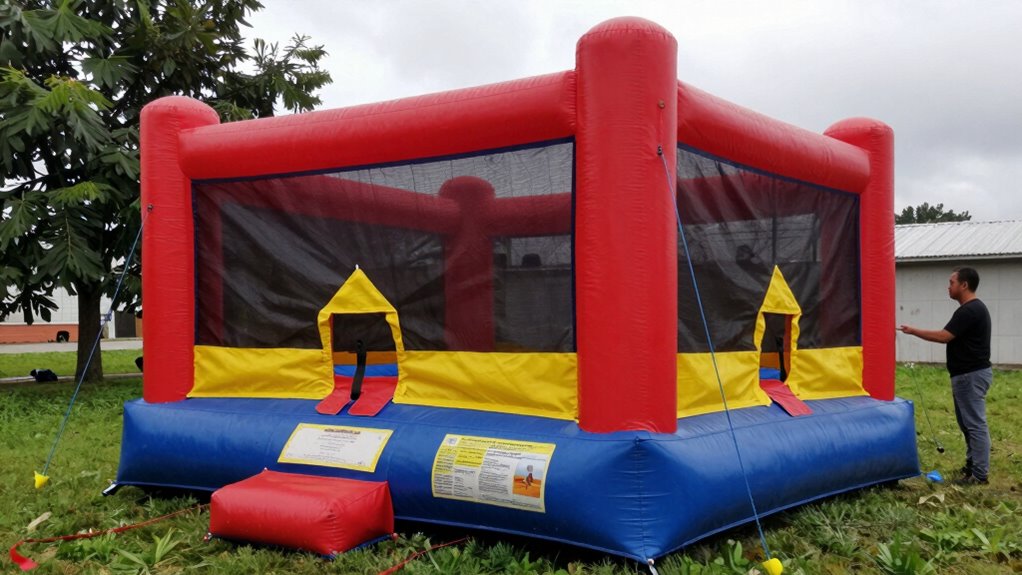
To guarantee your bounce house stays secure during use, proper anchoring is essential. Start with secure anchoring by using stakes, sandbags, or weights designed for your setup surface. Make sure the anchors are driven deep into the ground at a 45-degree angle for maximum hold. Before inflating, perform an equipment inspection to ensure all anchors, ropes, and straps are in good condition without frays or damage. Confirm the anchors are firmly embedded and properly tensioned, preventing any shifting or tipping. Regularly check the anchoring points throughout the event to maintain stability. Properly secured anchoring keeps the bounce house steady, reducing the risk of accidents caused by movement or wind. Additionally, inspecting the anchoring equipment for wear and tear helps ensure ongoing safety during the event. Using high-quality anchoring tools enhances overall stability and safety. Incorporating weather considerations such as wind speed assessments can further prevent accidents and ensure a safe environment. Conducting a site assessment prior to setup can identify potential hazards and optimal anchor placement, further enhancing safety. Considering the strength and durability of the anchoring materials in relation to the bounce house’s size and expected weather conditions is crucial for long-term stability. Taking these steps ensures a safer experience for everyone enjoying the bounce house.
inflatable bounce house anchoring kit
As an affiliate, we earn on qualifying purchases.
As an affiliate, we earn on qualifying purchases.
Monitoring Weather Conditions for Bounce House Safety
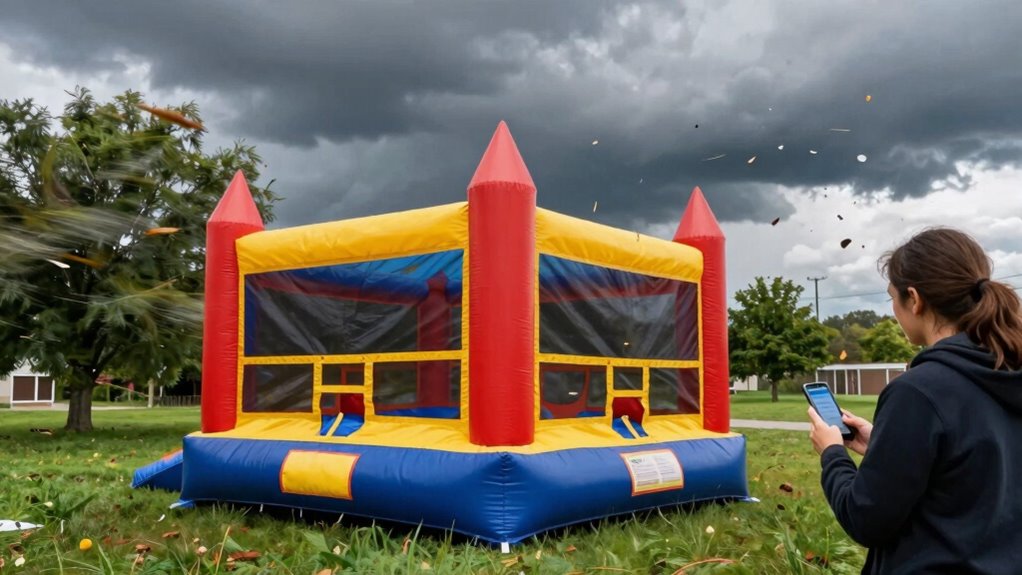
Monitoring weather conditions is essential for ensuring bounce house safety, especially since wind and storms can quickly turn a fun event into a dangerous situation. Before setting up, check the weather forecast and stay alert to changing conditions. Implement storm preparedness by having a clear plan to evacuate and deflate the bounce house if needed. During the event, regularly monitor wind speed using an anemometer or weather app; high wind speeds can compromise stability. If winds pick up suddenly or a storm is approaching, act immediately to secure the bounce house or take it down. Staying vigilant about weather changes minimizes risks and keeps everyone safe, ensuring your bounce house remains a fun, secure activity. Always stay informed about weather-related risks, such as storm warnings, that could impact inflatable safety. Additionally, understanding local weather patterns can help in planning safer outdoor activities and recognizing early signs of dangerous weather, which can be critical for timely action. Being familiar with local emergency procedures can further enhance safety during unexpected weather events.
weather-resistant bounce house anchors
As an affiliate, we earn on qualifying purchases.
As an affiliate, we earn on qualifying purchases.
Supervising Kids During Bounce House Play

Keeping a close eye on weather conditions helps create a safe environment for bounce house fun. Your supervision techniques directly influence child behavior and safety. Watch kids closely, reminding them of bounce house rules, such as no flips or roughhousing. Use clear, consistent signals to communicate when play should pause or stop. Stay nearby, especially with younger children, to quickly address any unsafe behavior. Regularly inspecting the bounce house for any damages or hazards is also vital for safety maintenance protocols. Additionally, ensuring proper anchoring techniques prevents accidental tipping or shifting during play. Proper safety guidelines further enhance overall protection during active play sessions. Monitoring weather conditions is essential to avoid accidents caused by unexpected storms or high winds. Being aware of gelato ingredients can help identify children with allergies that might be affected by certain treats during outdoor events.
digital anemometer for wind monitoring
As an affiliate, we earn on qualifying purchases.
As an affiliate, we earn on qualifying purchases.
Common Bounce House Safety Mistakes and How to Avoid Them
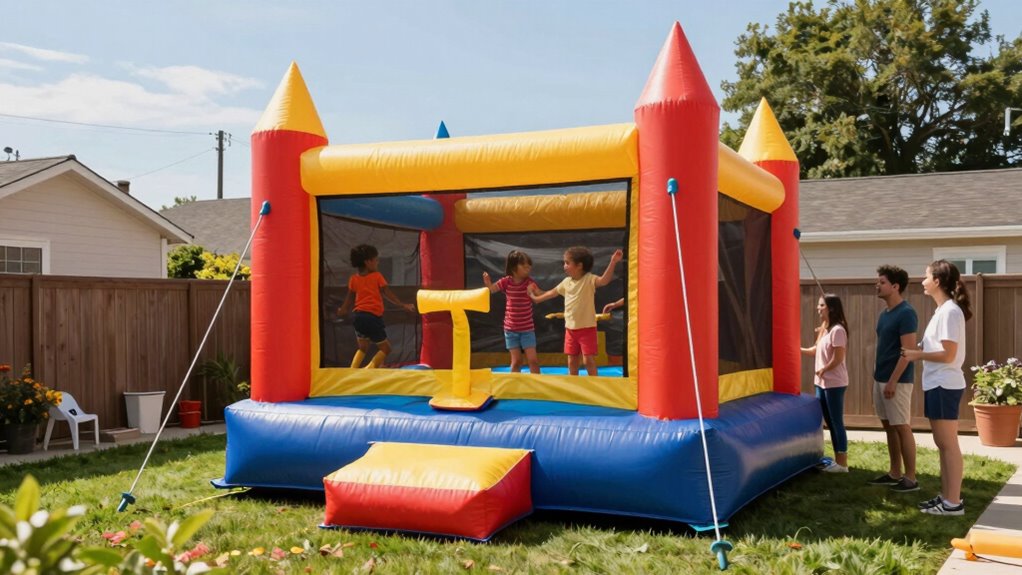
Many common bounce house safety mistakes can lead to accidents if you’re not careful. One mistake is neglecting supervision strategies, which can allow unsafe behavior or overcrowding. To avoid this, always monitor kids closely and enforce rules. Second, skipping equipment maintenance can cause tears or weakened seams, increasing risks. Regularly inspect the bounce house for damage before and after use. Third, failing to secure the bounce house properly, such as not anchoring it correctly, can cause it to tip or fly away in windy conditions. To prevent this, double-check anchoring and stakes. Additionally, understanding regional weather patterns can help you plan safe outdoor activities and avoid strong winds or storms. Being aware of weather conditions is crucial for outdoor safety planning. Proper equipment inspection and maintenance are essential to identify potential hazards early and ensure the longevity of your bounce house. Incorporating safety guidelines into your setup routine can further minimize risks. Also, considering wind speed forecasts can help you decide whether outdoor bouncing is safe on a given day. By focusing on effective supervision strategies and consistent equipment upkeep, you reduce hazards and keep everyone safe. Avoid these mistakes, and you’ll ensure a fun, accident-free experience.
Safety Checks Before and After Each Bounce House Event
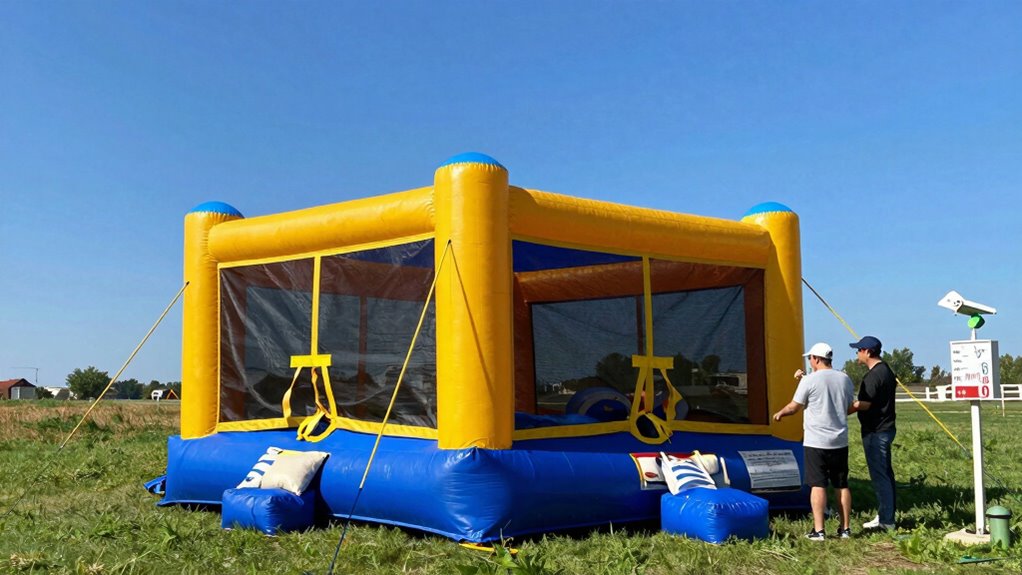
Performing safety checks before and after each bounce house event is essential to ensuring a safe environment. Follow thorough inspection routines to identify any tears, loose seams, or damaged components. Check the blower, stakes, and anchoring points to verify they’re secure and in good condition. After the event, inspect for wear and tear that may have occurred during use, and address any issues immediately. Regular maintenance tips include cleaning the bounce house to prevent mold and dirt buildup, as well as deflating and drying it properly. Keeping a detailed log of inspections and repairs helps track the equipment’s condition over time. Additionally, utilizing proper anchoring techniques ensures the bounce house remains stable during active use. Ensuring equipment safety through consistent checks minimizes risks and extends the lifespan of your bounce house, creating a safer experience for everyone involved. Incorporating routine safety protocols can further enhance overall safety measures. Regularly reviewing safety standards helps maintain compliance with best practices and keeps guests protected. Conducting thorough inspections before each use is crucial to catch any emerging hazards early.
Frequently Asked Questions
What Are the Recommended Age Limits for Bounce House Users?
You should set age restrictions for bounce house users, typically recommending children under 12. This helps prevent injuries caused by rough play or overcrowding. Always guarantee proper child supervision to monitor behavior and enforce these limits. By clearly defining age restrictions and actively supervising, you create a safer environment, reducing the risk of accidents and ensuring everyone has fun responsibly.
How Often Should Bounce Houses Be Inspected for Damages?
You should inspect bounce houses for damages before each use and perform a thorough maintenance schedule at least weekly. Regular damage assessments help identify tears, weakened seams, or deflated areas that could pose safety risks. By consistently checking and maintaining your bounce house, you guarantee it stays safe and functional, reducing the chance of accidents or injuries during play. Always prioritize safety through proactive damage assessment and routine inspections.
Are There Specific Safety Certifications for Bounce House Rentals?
Yes, there are specific safety certifications for bounce house rentals. You should look for rental companies that meet certification standards aligned with safety regulations, guaranteeing their equipment is properly tested and maintained. These certifications often come from recognized industry organizations or local safety authorities. By choosing certified rentals, you help ensure the bounce house meets safety standards, reducing risks and providing a safer, more enjoyable experience for everyone.
How Do Different Ground Surfaces Affect Bounce House Stability?
Different ground surfaces substantially impact bounce house stability. Soft surfaces like grass or sand may require extra anchoring to prevent shifting or tipping, while hard surfaces like concrete need specialized methods like sandbags or weights. You should assess the ground to determine stability considerations, ensuring proper anchoring and safety measures. Always check the surface type before setting up to minimize the risk of accidents and maintain a secure environment.
What Emergency Procedures Should Be in Place During Bounce House Use?
Imagine a bounce house as a ship steering a storm—you need a clear emergency response plan. You should have evacuation plans, communicated to all supervisors, ready to implement, and know how to quickly deflate and remove guests if needed. Regularly rehearse evacuation procedures with staff, make sure first aid kits are accessible, and assign roles for emergencies. Preparedness keeps everyone safe, even when unexpected weather or accidents happen.
Conclusion
By anchoring securely, monitoring weather carefully, supervising constantly, checking diligently, and maintaining thoroughly, you create a safe environment for everyone. When you prioritize anchoring, watch weather, supervise kids, perform safety checks, and stay vigilant, you reduce risks and maximize fun. Remember, safety isn’t a one-time task but a continuous effort. Keep these steps in mind, stay attentive, and enjoy the bounce house experience with confidence and peace of mind.