To guarantee your smoke and CO detectors work effectively, install smoke alarms on ceilings or high on walls, about 4-12 inches below the ceiling, and place CO detectors at eye level or slightly lower on walls. Keep them at least 10 feet from kitchens, bathrooms, vents, and windows to prevent false alarms. Make sure detectors are on every level, near bedrooms, and away from obstructions. Continuing with these tips will help you position them for maximum safety.
Key Takeaways
- Install smoke detectors on ceilings or high on walls, 4-12 inches below ceiling, near bedrooms and hallways for quick alerts.
- Place CO detectors at eye level or slightly lower, on every level, and near sleeping areas to ensure effective detection.
- Keep detectors away from vents, fans, windows, bathrooms, and kitchens to prevent false alarms and interference.
- Ensure detectors are spaced at least 10 feet apart in large rooms and at least 3 feet from cooking appliances.
- Regularly test, maintain, and replace batteries to keep detectors functioning reliably and maximize safety.

First Alert Smoke Alarm, Battery-Operated Detector with Test & Silence Button, SMI100, 1-Pack
First Alert's Precision Detection advanced sensing technology complies with new industry standards to reduce cooking nuisance alarms and…
As an affiliate, we earn on qualifying purchases.
As an affiliate, we earn on qualifying purchases.
Why Proper Placement Ensures Your Smoke and CO Detectors Work

Proper placement of smoke and CO detectors is essential because it directly affects how quickly they can alert you to danger. If you install a detector in the wrong spot, the alarm sound might not trigger promptly or at all. Proper placement ensures you get early warnings, giving you critical time to respond. It also helps maximize the detector lifespan by preventing false alarms or damage caused by poor positioning. When your detectors are correctly situated, they’re more reliable and less likely to be silenced unnecessarily. Remember, a well-placed detector can mean the difference between safety and disaster. Regularly testing the alarm sound and maintaining proper placement keeps your detectors functioning at their best, ensuring you stay protected when it matters most. Additionally, understanding the importance of contrast ratio can help you choose detectors with better sensitivity and performance, enhancing your overall safety. Proper installation according to manufacturer guidelines can also prevent common issues like dead zones where smoke or carbon monoxide might not reach the sensor efficiently. Being aware that sensor placement impacts detection accuracy can further improve your safety measures. Ensuring detectors are installed away from obstructions such as furniture or curtains helps maintain optimal detection performance, and careful consideration of airflow patterns can also improve detection reliability.
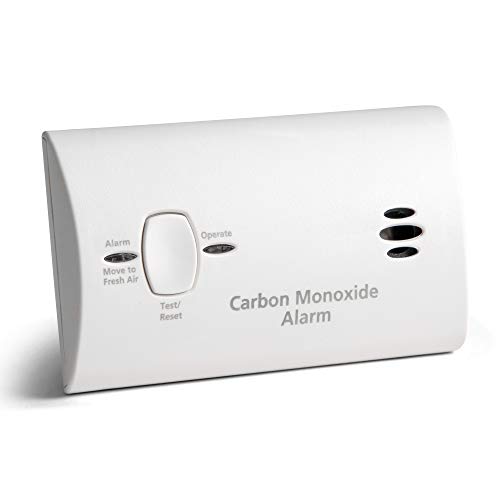
Kidde Carbon Monoxide Detector, Battery Powered CO Alarm with LEDs, Test-Reset Button, Low Battery Indicator, Portable
Electrochemical sensor technology detects CO gas
As an affiliate, we earn on qualifying purchases.
As an affiliate, we earn on qualifying purchases.
Where Should I Install Smoke Detectors for Maximum Safety?

To maximize safety, you should install smoke detectors near bedrooms so you’re alerted during sleep. It’s also important to place detectors on every level of your home, including the basement and attic. Avoid installing them in or near kitchens to prevent false alarms caused by cooking fumes. Regularly testing and replacing batteries in your detectors ensures they remain functioning properly. Additionally, choosing appropriate household products that reduce fire hazards can further enhance your home’s safety. Being aware of early warning signs of fires can help you respond quickly in emergencies. Moreover, understanding fire safety regulations can help ensure your home is fully compliant and protected. Proper placement of smoke detectors is essential for effective home soundproofing tips, ensuring peace of mind and safety for your family.
Install Near Bedrooms
Since your bedrooms are where you’ll likely spend a significant portion of your night, installing smoke detectors nearby is essential for early warning. Place them on the ceiling or high on the wall, within the fire alarm zones designated for sleeping areas. This placement ensures the detectors can quickly identify smoke or fire as soon as it enters the room. Be mindful of detector sensitivity; choose models that are responsive without causing false alarms from steam or dust. Keep detectors at least 10 feet from bathrooms or kitchens to avoid nuisance alarms. Proper placement in or near bedrooms guarantees you’ll be alerted promptly, giving you valuable time to evacuate safely. Additionally, understanding fire safety principles and managing user preferences can enhance your overall safety awareness and experience. Regularly testing and maintaining detectors ensures they function correctly when needed, contributing to your peace of mind. Ensuring your detectors are correctly installed and maintained contributes to their effectiveness and your peace of mind.
Place on Every Level
Installing smoke detectors on every level of your home is essential because fire can spread quickly and unpredictably. Make certain each detector is compatible with your fire alarm system to guarantee reliable operation and easy integration. When installing, follow detector wiring guidelines to ensure proper power supply and prevent false alarms or failures. Place detectors in central locations on each floor, ideally outside bedrooms and in hallways. This coverage helps detect fires early, regardless of where they start. Remember, interconnected detectors will sound simultaneously if one detects smoke, increasing safety. Regularly check wiring connections and test all detectors to confirm they’re functioning correctly. Proper placement and adherence to wiring standards maximize your home’s fire safety and give you peace of mind. Additionally, ensure that smoke detectors are installed away from body piercings or areas with high humidity, which can interfere with their operation. Be aware that AI detection methods are continuously evolving to improve the accuracy of smoke and fire detection technologies. Proper maintenance and regular testing are vital to ensure your detectors work when you need them most. To further enhance safety, consider installing smart alarms that can send alerts directly to your mobile devices for immediate action. Incorporating advanced sensor technology can also improve detection sensitivity and reduce false alarms.
Avoid Kitchen Areas
While it might seem logical to place smoke detectors near the kitchen to catch fires early, doing so can lead to frequent false alarms caused by cooking smoke or steam. To maintain kitchen safety, avoid installing detectors directly in or above the cooking area. Instead, position them at a safe distance, such as in hallways outside the kitchen or in adjacent rooms. Proper appliance placement is vital; ensure that detectors aren’t near vents, fans, or windows that could disperse smoke or steam quickly. This setup helps prevent nuisance alarms while still alerting you promptly to genuine fires. Remember, effective smoke detector placement balances quick detection with minimizing false alarms, ensuring your home stays safe without unnecessary disturbances. Proper placement is crucial for achieving this balance, especially considering safe installation practices for maximum effectiveness. Additionally, understanding detector sensitivity can help you select models that minimize false alarms while maintaining safety. Being aware of maintenance routines is also essential to keep detectors functioning correctly over time. Regular testing and cleaning of detectors contribute to reliable operation, further enhancing your home safety strategy.

Kidde Hardwired Smoke & Carbon Monoxide Detector, AA Battery Backup Smoke Alarm, Interconnectable, LED Warning Light Indicators, 2 Pack
2-IN-1 DETECTION: Alerts you to both smoke & carbon monoxide (CO) using a single, cost-effective detector.
As an affiliate, we earn on qualifying purchases.
As an affiliate, we earn on qualifying purchases.
Best Locations for Carbon Monoxide Detectors in Your Home
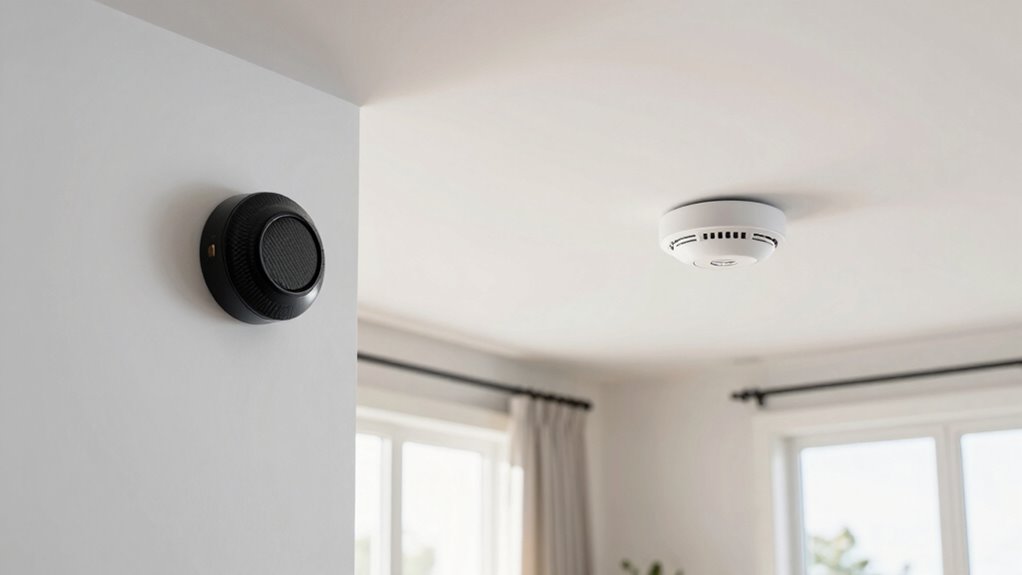
You should install carbon monoxide detectors near your sleeping areas to guarantee you’re alerted if CO levels become dangerous overnight. Placing detectors on every level of your home further increases safety by catching leaks early. Proper placement is key to making sure these devices work when you need them most. Additionally, Proper placement ensures that the detectors are more effective at alerting you promptly in case of a CO leak. To maximize their effectiveness, consider placement guidelines that account for typical leak locations and airflow patterns within your home. Understanding airflow dynamics within your residence can help optimize detector positioning for early and reliable detection. Being aware of environmental factors that influence airflow can further enhance the placement strategy for optimal safety, especially considering how nail biology varies between males and females, which can subtly affect environmental exposure patterns.
Near Sleeping Areas
Have you ever wondered where to place your carbon monoxide detectors for maximum safety while sleeping? Placing them near sleeping areas guarantees you’re alerted promptly if CO is present. Position detectors on the wall or ceiling close to bedrooms, but avoid placing them directly in the fire escape route. Consider different smoke alarm types—photoelectric for smoldering fires and ionization for fast-flaming fires—and choose the right detector for each location. Use the table below to guide placement:
| Location | Reason |
|---|---|
| Outside bedrooms | Detects CO while asleep |
| Adjacent hallways | Covers multiple sleeping rooms |
| Avoid in closets or near vents | Prevents false alarms |
Proper placement maximizes safety and ensures you wake up in time.
On Every Level
Placing carbon monoxide detectors on every level of your home guarantees thorough protection, especially since CO can seep in from appliances, garages, or nearby vehicles. Proper alarm placement is essential; position detectors at least 15 feet from fuel-burning appliances to avoid false alarms. Keep them on each floor, including the basement and attic, to ensure no area is left vulnerable. When choosing detector types, opt for combination units that include both smoke and CO detection for convenience. Mount detectors at chest height or slightly higher, avoiding dead air spaces like corners or near vents. Regularly test each detector and replace batteries annually to keep them functioning effectively. Additionally, proper placement techniques can enhance detector sensitivity and reliability. Covering every level guarantees prompt alerts everywhere, giving you peace of mind and safety throughout your home.

9V Batteries Carbon 6F22 9 Volt Battery for Smoke/CO Detectors Leakproof & Long-Lasting, 4 Count Pack Square Fire Alarm Batteries for Wireless Microphones, Guitar Pedals/Tuners, Two-Way Radios
Long-lasting: Xfoxbatt 9v 6f22 batteries are fully charged before leaving factory. Battery life is long-lasting
As an affiliate, we earn on qualifying purchases.
As an affiliate, we earn on qualifying purchases.
COmmon Placement Mistakes to Avoid With Smoke and CO Detectors

One common mistake is installing smoke and CO detectors in the wrong locations, which can prevent them from functioning effectively. Poor placement hampers alarm maintenance and can leave you vulnerable. For example, placing detectors too close to vents, windows, or kitchens can cause false alarms or delays in detection. Additionally, ignoring different detector types—such as ionization or photoelectric smoke alarms—can undermine safety. Each type has specific ideal locations; for instance, ionization alarms are better in bedrooms, while photoelectric ones suit living rooms. Avoid installing detectors in humid areas like bathrooms or near heating vents, as moisture and temperature fluctuations impair performance. Proper placement ensures your detectors respond promptly when needed, maximizing safety and alarm reliability.
How to Choose the Right Height and Distance for Installing Detectors

Choosing the right height and distance for installing smoke and CO detectors is crucial to guarantee they detect hazards promptly. Start by considering height considerations: install smoke detectors on the ceiling or high on the walls, about 4 to 12 inches below the ceiling. For CO detectors, placing them at eye level or slightly lower ensures effective detection. Follow distance guidelines by spacing detectors at least 10 feet apart in large rooms and avoiding placement near vents, windows, or fans that can interfere with their sensors. Keep detectors at least 3 feet away from cooking appliances to prevent false alarms. Proper placement at the correct height and distance ensures your detectors respond quickly and reliably in an emergency.
Tips for Installing, Maintaining, and Testing Your Detectors
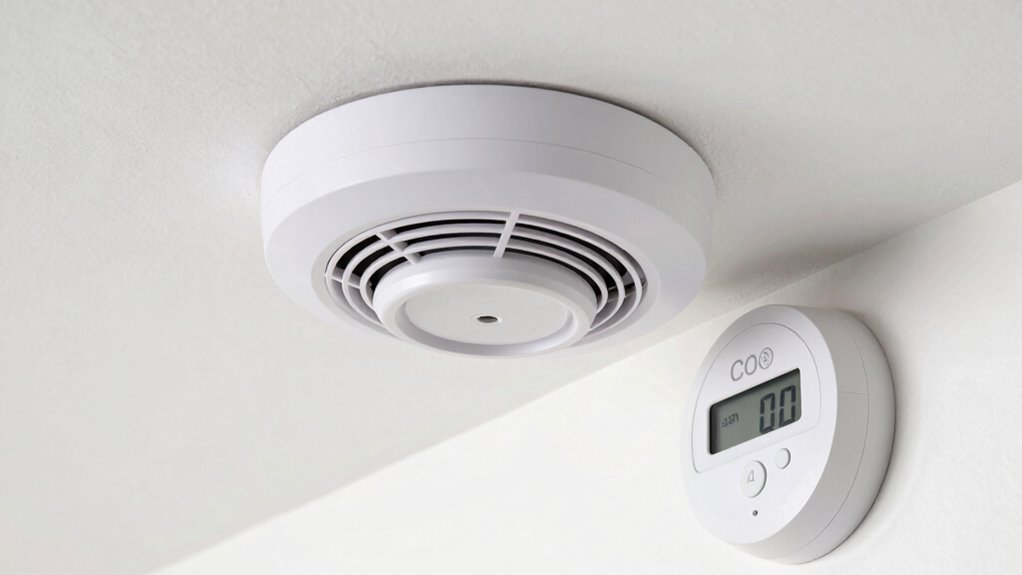
Proper installation and regular maintenance are key to guaranteeing your smoke and CO detectors function reliably when you need them most. Start by checking your sensors regularly; dust or debris can impair sensor maintenance, reducing their effectiveness. Test your detectors monthly by pressing the test button until you hear the alarm. This simple step confirms that the circuitry and alarm are working properly. Replace batteries at least once a year, or as needed, and follow manufacturer guidelines for replacing the entire unit typically every 8-10 years. Keep the detectors free of obstructions and clean them with a soft cloth to prevent dust buildup. Regular detector testing and sensor maintenance help assure your devices will alert you promptly during an emergency, providing peace of mind.
Do Different Rooms Need Special Detector Placement?

Different rooms in your home have unique features and risks that affect where smoke and CO detectors should be placed. For example, kitchens and bathrooms have room-specific hazards like steam and cooking fumes that can cause false alarms, so detector types suited for these areas are essential. Bedrooms and living spaces need detectors placed near sleeping areas for quick alerts. Here’s a quick overview:
| Room Type | Hazards | Recommended Detector Type |
|---|---|---|
| Kitchen | Smoke from cooking | Photoelectric |
| Bathroom | Steam and humidity | Combination Smoke/CO with humidity sensor |
| Bedroom | Sleeping undetected fire risk | Smoke detector near sleeping areas |
| Living Room | Fireplace or heating sources | Photoelectric or combo detectors |
| Basement | Gas leaks, fires | CO detector, smoke detector combo |
Adjust detector placement based on these room-specific hazards for maximum safety.
Using Your Home Layout to Optimize Detector Effectiveness

Your home’s layout plays a crucial role in guaranteeing smoke and CO detectors offer maximum protection. To optimize their effectiveness, consider how electrical wiring affects detector placement—hardwired units with backup batteries provide reliable alerts during power outages. Avoid installing detectors near electrical outlets or wiring that could cause false alarms. Use fire escape planning to identify the best locations for quick access and escape routes, placing detectors where they can alert you early without hindering your escape. Keep detectors on every level, especially near bedrooms and common areas. Consider the flow of your home’s layout to avoid dead zones where smoke or CO might not reach quickly. Proper placement aligned with your home’s design ensures faster detection and safer evacuation.
Frequently Asked Questions
How Often Should I Replace My Smoke and CO Detectors?
You should replace your smoke and CO detectors every 10 years to guarantee they work properly. Regularly check the battery maintenance, replacing batteries at least once a year or when the low-battery alert sounds. Keep an eye on the detector lifespan, as older units may not detect hazards effectively. Stay proactive by testing your detectors monthly and replacing them on schedule to keep your home safe.
Can I Install Smoke and CO Detectors Outside Bedrooms?
Think of detector placement like setting a security system—you want coverage everywhere. Yes, you can install smoke and CO detectors outside bedrooms, but make sure they’re on the hallway walls or ceilings, not in the corners. Proper placement guarantees alarm calibration, so they detect hazards early. Regularly test and maintain them to keep your home’s protection effective. This way, you guarantee safety, just like a well-placed alarm keeps a house secure.
Are Interconnected Detectors Necessary for Safety?
Interconnected detectors are definitely necessary for safety. They provide the benefit of alarm synchronization, so if one detects smoke or carbon monoxide, all alarms sound simultaneously. This guarantees you and your family are alerted promptly, no matter where you are in your home. Interconnection benefits include faster response times and increased safety, especially in larger homes. Installing interconnected detectors is a smart move to keep everyone safe during emergencies.
Do Different Brands Have Specific Installation Requirements?
Think of each brand as its own unique recipe—you need to follow specific instructions for the best results. Yes, different brands have distinct installation guidelines and specifications, so you should always read the manufacturer’s instructions carefully. Ignoring these can compromise safety. Check the packaging or manuals for brand-specific requirements, ensuring your detectors work efficiently and keep you safe. Proper installation is your best defense against hazards.
What Should I Do if Detectors Keep False Alarming?
If your detectors keep false alarming, start by performing regular detector maintenance, like cleaning sensors and checking batteries. Make certain there’s no dust, dirt, or insects that could trigger false alarms. Avoid placing detectors near cooking appliances or bathrooms where steam or fumes may set them off. To prevent future issues, test them monthly and replace batteries annually. Proper installation and maintenance are key to false alarm prevention and reliable operation.
Conclusion
So, after all this, it’s amusing how a tiny detector tucked away in the corner or placed wrong can make all the difference—yet many still overlook these simple steps. Think about it: the safest place for smoke or CO might be right where you’re not looking. Don’t wait for a false alarm or worse. Proper placement isn’t just a suggestion; it’s your best shot at staying safe—so don’t leave it to chance.