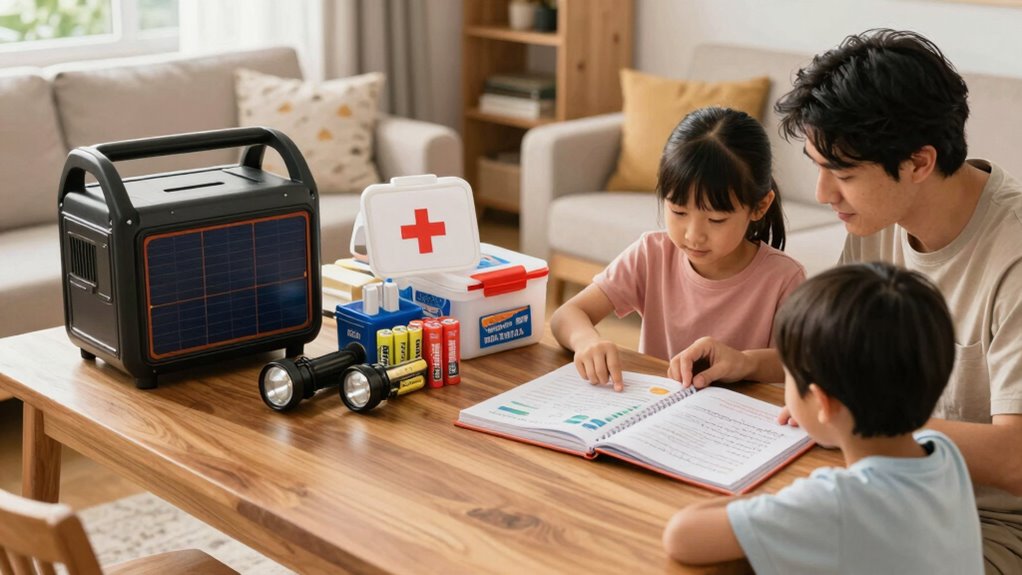

To build a family emergency power plan in one weekend, start by evaluating your home’s risks and your family’s specific needs, including medical devices and communication essentials. Gather reliable backup equipment like generators and solar options, and create clear procedures for switching to backup power. Practice your plan with drills, establish communication methods, and review safety protocols. Keep updating your plan regularly—if you’re ready to learn how to make it effective and easy, continue exploring the details.
Key Takeaways
- Conduct a quick risk assessment to identify essential devices and potential hazards in your home.
- Choose and test backup power options like generators or solar setups, focusing on critical appliances.
- Develop a clear, step-by-step emergency power plan, including safety procedures and equipment operation.
- Assign roles and establish communication protocols for family members during outages.
- Practice drills and review the plan to ensure readiness, updating it as needed for changing circumstances.

Westinghouse 12500 Watt Dual Fuel Home Backup Portable Generator, Remote Electric Start, Transfer Switch Ready, Gas and Propane Powered
9500 Running Watts and 12500 Peak Watts (Gasoline); 8500 Running Watts, 11200 Peak Watts (Propane); Remote Start with…
As an affiliate, we earn on qualifying purchases.
As an affiliate, we earn on qualifying purchases.
How Do I Assess My Family’s Power Needs and Risks?
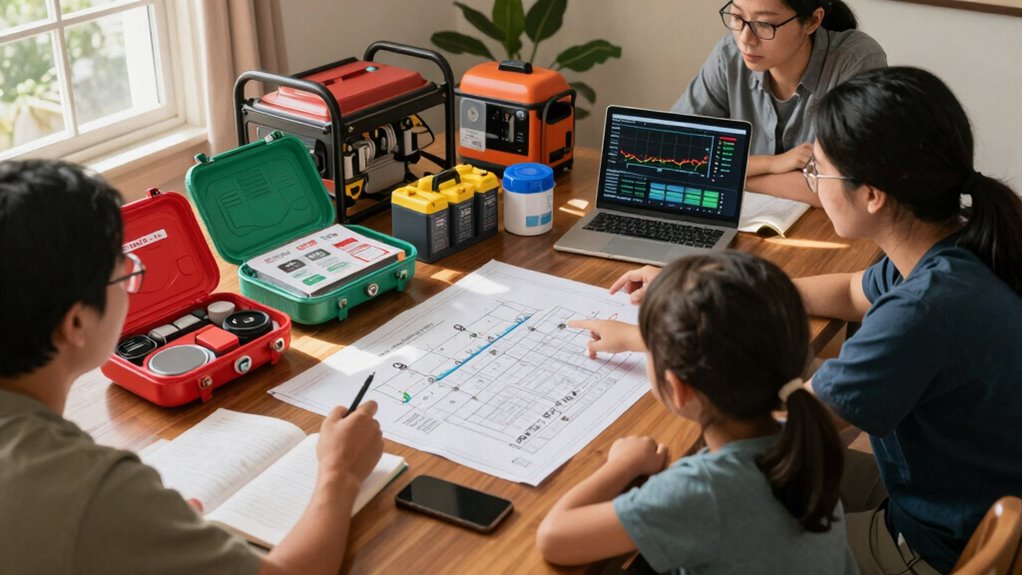
Understanding your family’s power needs and risks is the first step in creating an effective emergency power plan. Start by evaluating your home safety and identifying potential hazards, such as power outages during storms or earthquakes. Conduct a risk assessment to determine which essential devices and appliances you must keep powered, like medical equipment, heating or cooling systems, and communication devices. Consider the number of family members and their specific needs, especially if anyone requires special medical devices. Think about how long power outages might last in your area and plan accordingly. Developing a backup power strategy can help ensure continuous power supply during emergencies. Assessing your power requirements and understanding potential dangers allows you to prioritize critical equipment and prepare for various scenarios, ensuring your family stays safe and comfortable when the power goes out. Additionally, understanding the capacity of your battery inverter generator will help you select the right power source to meet your needs effectively. Properly evaluating power storage options can further enhance your preparedness and reliability during extended outages, especially when you consider storage capacity and how to maximize it.

PRAANA 3-in-1 Solar Survival Kit, Emergency Flashlight with 5000mAh USB-C Power Bank & 7W Solar Panel for Power Outages, Camping, and Emergency Preparedness
EMERGENCY LIGHT FOR POWER OUTAGES: Provides up to 800 lumens of wide-angle light with three brightness modes and…
As an affiliate, we earn on qualifying purchases.
As an affiliate, we earn on qualifying purchases.
What Equipment and Supplies Do I Need for Emergency Power?
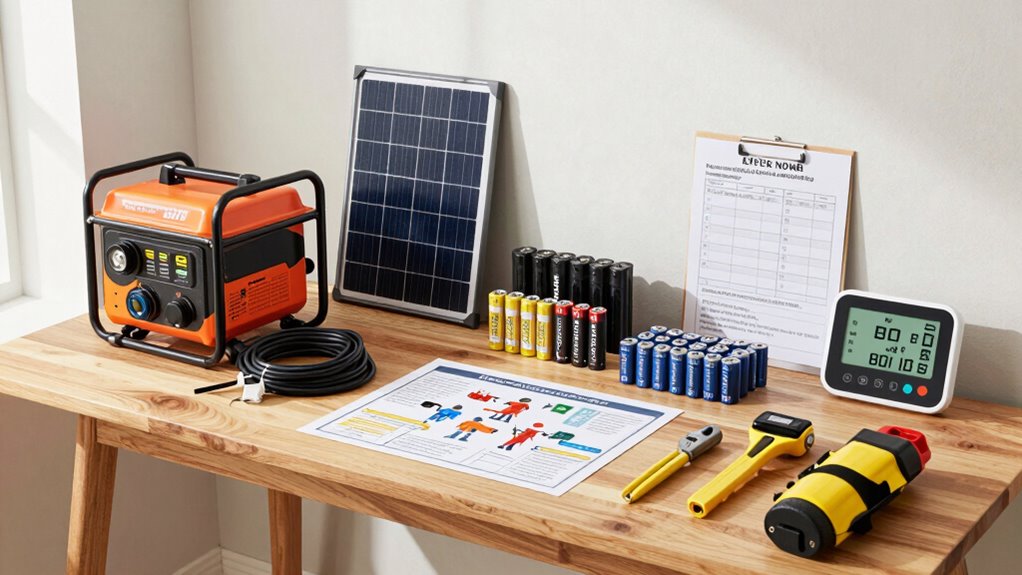
To make certain your family stays safe during a power outage, gather the right equipment and supplies to support your power plan. First, invest in a reliable generator, and learn proper generator maintenance to keep it running smoothly. Second, consider installing a solar panel setup to provide renewable power and reduce reliance on fuel. Third, keep essential items like extension cords, surge protectors, and a portable charger handy for quick setup. Fourth, stock up on emergency supplies such as batteries, flashlights, and a first aid kit. Additionally, understanding smart thermostat setup can help you optimize home energy use and maintain comfort during outages. Properly securing power backup systems ensures they function effectively when needed. Incorporating transfer switch fundamentals into your planning can greatly improve safety and efficiency. These preparations ensure you can maintain power safely and efficiently. Proper equipment and supplies help you stay connected and comfortable while safeguarding your family during extended outages.

Jackery Portable Power Station Explorer 300, 293Wh Backup Lithium Battery, Solar Generator for Outdoors Camping Travel Hunting Blackout (Solar Panel Optional)
SPEED UP YOUR RECHARGEABILITY: It takes only 2 hours to recharge 80% battery of the power station through…
As an affiliate, we earn on qualifying purchases.
As an affiliate, we earn on qualifying purchases.
How Can I Create a Family Emergency Power Plan That Works?
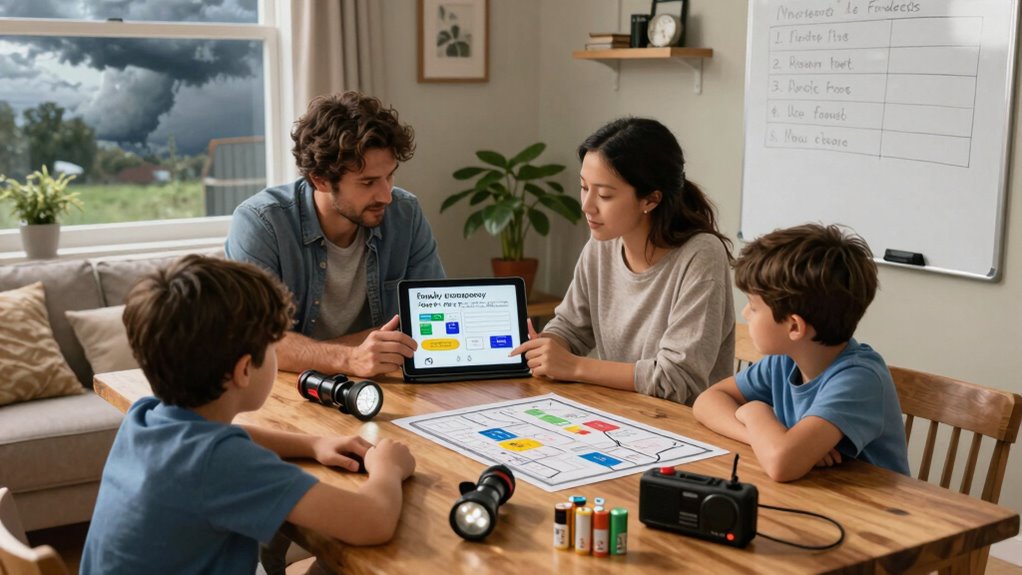
Creating a family emergency power plan begins with evaluating your specific needs and potential risks. Determine which appliances and devices are essential, like medical equipment or communication tools. Consider options like solar power to provide sustainable energy, especially if outages last days. When choosing a generator, prioritize safety by placing it outdoors, away from windows, and using proper extension cords. Establish clear procedures for starting and shutting down your generator, and ensure everyone knows how to operate it safely. Incorporate backup plans, such as solar chargers or battery packs, for critical devices. Regularly review and update your plan to account for changes in family needs or equipment. Additionally, understanding affordable jewelry gifts under $100 can help you prepare thoughtful emergency supplies or gifts for loved ones. Incorporating portable power stations and solar solutions can enhance your family’s resilience during outages. Ensuring proper soundproofing measures within your home can also reduce noise disruptions during stressful times. A well-thought-out plan guarantees reliable power and safety during emergencies, giving your family peace of mind. To optimize your setup, consider derating (altitude/temp) factors when selecting your generator to ensure it performs reliably in your environment. Conducting a power needs assessment helps determine the appropriate size and capacity of your backup power system.

MUJURUR 100A Generator Transfer Switch, 24000W Heavy Duty Double Throw Safety Switch, 120/240V Manual Transfer Switch, Stronger Stability, Enlarged NEMA 3R Enclosure for Outdoor, 10-Year Warranty
【100 Amp Generator Transfer Switch】This transfer switch is perfect for shifting power from the utility grid to an…
As an affiliate, we earn on qualifying purchases.
As an affiliate, we earn on qualifying purchases.
How Do I Test and Practice My Power Outage Procedures?

You need to regularly test your power outage procedures to guarantee everyone knows what to do. Conduct drills with your family so they’re prepared and comfortable following the plan. Also, check your equipment frequently to make sure it works when you need it most. Incorporating support breakfast options into your emergency plan can help ensure everyone stays nourished during extended outages. Ensuring a growth mindset within your family can also foster resilience and adaptability during emergencies. Familiarizing yourself with essential kitchen gear can streamline meal preparations and boost confidence during stressful situations. Additionally, understanding proper kitchen gear care and disposal methods can prevent damage and promote sustainability during emergency preparedness. Being aware of essential oils and their uses can also provide comfort, relaxation, and health benefits during stressful times.
Conduct Regular Drills
Regularly conducting drills is essential for guaranteeing your family is prepared for a power outage. These practice sessions strengthen emergency preparedness and enhance family safety. During drills, focus on clarity and quick action. You can:
- Simulate a power outage scenario to practice safe evacuation routes.
- Assign roles so each family member knows their responsibilities.
- Test communication plans, like using a designated meeting spot or walkie-talkies.
- Review and update your emergency kit to guarantee all supplies are accessible.
- Incorporate digital content formats into your training to familiarize your family with various information-sharing methods. Engaging with diverse resources can help diversify your practice approaches.
Performing these drills periodically helps identify gaps and builds confidence in your plan. It also ensures everyone understands what to do in a real outage, reducing panic and confusion. Consistent practice is key to keeping your family safe and ready for any emergency.
Check Equipment Function
To guarantee your power outage procedures are effective, it’s important to regularly test and practice your equipment. Begin with battery maintenance—check that batteries in flashlights, radios, and backup systems are charged and in good condition. Perform generator testing by running it under load to ensure it starts smoothly and operates correctly. This helps identify any issues before an emergency occurs. Make sure to review all connections, fuel levels, and ventilation. Regularly practicing your procedures, including switching to backup power sources, will help you become familiar with the process and spot potential problems. Consistent testing builds confidence and ensures all equipment functions properly when you need it most. Staying proactive with maintenance and testing keeps your family prepared and safe during outages.
How Should My Family Communicate During Power Disruptions?

To stay connected during power outages, you need an emergency contact list everyone knows. Decide on reliable communication channels, like text messages or walkie-talkies, so your family can reach each other easily. Regularly practicing family drills guarantees everyone understands how to communicate quickly when it matters most. Additionally, understanding media literacy can help your family identify trustworthy information and avoid misinformation during emergencies. Developing strong emotional regulation skills can also assist your family in managing stress and staying calm during unpredictable situations. Incorporating communication strategies can further enhance your family’s ability to coordinate effectively during a crisis. Implementing emergency communication plans ensures that everyone is prepared to stay in touch regardless of the situation. Building familiarity with emergency tools can empower your family to use technology effectively during disruptions.
Establish Emergency Contact List
Creating a thorough emergency contact list is essential for effective communication during power disruptions. It guarantees your family stays connected and maintains safety. Start by including:
- Primary emergency contact—usually a parent or guardian.
- Local emergency services—fire, police, medical.
- Nearby relatives or friends who can assist if needed.
- School or workplace contacts for updates and coordination.
- Consider adding home safety devices information, such as alarm systems or medical alert systems, to ensure quick assistance if necessary. Incorporating communication tools like two-way radios or cell phones with backup power can also improve connectivity during outages. Ensuring that your communication devices are battery-powered or solar-charged can be critical when the power is out. Additionally, having a backup power source for essential devices can help maintain communication when outages last longer. Make sure each contact has up-to-date phone numbers and addresses. Share this list with all family members and store copies in accessible places, like your emergency kit or a safe digital location. Having a well-organized emergency contact list promotes family safety and reduces confusion during stressful situations, allowing everyone to stay informed and connected despite power outages.
Designate Communication Channels
When power outages occur, establishing clear communication channels guarantees your family stays connected and informed. You should set up emergency contact protocols, so everyone knows who to reach if traditional lines are down. Designate a primary communication method, like mobile phones, and identify alternative communication methods such as walkie-talkies, text messaging, or social media updates. Make sure each family member understands how to use these tools and where to find backup contact information. Keep a physical list of emergency contacts in a visible spot, like your emergency kit. By planning ahead, you assure that, even without power, your family can quickly share crucial information, coordinate safe actions, and stay connected during disruptions.
Practice Family Drills
Practicing family drills guarantees everyone understands how to communicate effectively during power disruptions. This step enhances home safety and strengthens your emergency preparedness. To verify your family is ready, try these practices:
- Review your designated communication channels, like walkie-talkies or cell phones, and test them regularly.
- Establish a clear meeting spot outside the home where everyone can gather safely.
- Practice calling emergency contacts and relaying essential information calmly.
- Role-play different scenarios, such as a power outage during a storm, to reinforce response actions.
Regular drills help identify gaps in communication plans, making sure everyone stays safe and informed. Consistent practice builds confidence, reduces panic, and ensures your family can navigate power disruptions smoothly.
How Often Should I Review and Update My Family Power Plan?

Regularly reviewing and updating your family power plan guarantees it remains effective and reliable during emergencies. You should schedule an annual review to ensure all details are current and relevant. During this time, evaluate any changes in your family’s needs, home setup, or new equipment that might affect your plan. Plan updates might include replacing outdated devices, adjusting communication methods, or adding new safety measures. Reassessing your plan annually helps identify potential gaps and keeps everyone familiar with procedures. It’s also wise to review your plan after significant events, such as storms or power outages, to learn from experience. By staying proactive with these updates, you ensure your family’s safety remains a top priority and your emergency plan stays ready when you need it most.
Frequently Asked Questions
How Can I Ensure All Family Members Understand the Plan?
You can guarantee all family members understand the plan by practicing regular family communication about emergency procedures. Hold emergency drills together so everyone knows what to do and feels confident. Use simple language and visuals if needed, and encourage questions. Repeating drills and discussing the plan during family meetings helps reinforce understanding and readiness, making sure everyone stays prepared and confident during actual emergencies.
What Are Cost-Effective Options for Emergency Power Solutions?
You can save money by choosing cost-effective emergency power solutions like portable generators and solar batteries. Portable generators are affordable and reliable for short-term power needs, while solar batteries store renewable energy, reducing fuel costs. Look for models that match your family’s power requirements and consider combining both options. Regular maintenance and proper usage will ensure these solutions stay effective during emergencies without breaking the bank.
How Do I Handle Power Needs for Medical Devices?
You should prioritize portable generators and battery backups to handle power needs for medical devices. Portable generators can supply reliable, on-demand power during outages, but make certain they’re used safely outdoors. Battery backups provide a quieter, maintenance-free option for essential devices, keeping them running without interruption. Test these solutions regularly, keep fuel and batteries stocked, and have a clear plan for quick deployment to ensure your medical devices stay operational during emergencies.
What Legal Considerations Exist for Generator Installation?
Installing a generator is like wiring your home for a superhero—powerful and essential. You must verify legal compliance and adhere to property regulations to avoid legal troubles. Check local codes, permits, and zoning laws before installation. Failing to follow these rules can turn your emergency setup into a legal nightmare. Always consult professionals to guarantee your generator meets safety standards and complies with all regulations for peace of mind.
How Can I Incorporate Renewable Energy Sources Into My Plan?
You can incorporate renewable energy sources by adding solar integration and wind energy options to your plan. Install solar panels to harness sunlight, and consider small wind turbines if your location has consistent wind. Connect these sources to your backup power system with proper inverters and safety measures. This way, you’ll guarantee a sustainable, reliable energy supply during emergencies, reducing dependence on traditional generators and lowering environmental impact.
Conclusion
Don’t wait for a crisis to recognize the importance of a solid family emergency power plan. Even if you think it’s too complicated or time-consuming, dedicating just one weekend can make a huge difference. With careful planning, testing, and regular updates, you’ll guarantee your family stays safe and connected during outages. Remember, being prepared now means peace of mind later—so take action today and build that plan, no matter how busy your schedule.