
To create a solid family emergency plan, you should set clear contacts, prepare go-bags with essentials, and practice emergency drills regularly. Identify multiple evacuation routes and guarantee everyone knows them, including alternative paths for natural disasters. Use devices like walkie-talkies or designated meeting spots for communication, and keep contacts and plans updated. Continuously review and rehearse these steps to stay prepared—learning more will help you build confidence in your family’s safety strategy.
Key Takeaways
- Establish and regularly practice multiple evacuation routes, using maps and landmarks for quick navigation.
- Designate external contacts and ensure all family members know how and when to communicate with them.
- Assemble go-bags with essentials, updating supplies periodically to ensure readiness during emergencies.
- Conduct routine drills and safety checks to reinforce procedures and adapt plans to changing neighborhood conditions.
- Educate all family members on emergency procedures, including communication methods and meeting points.
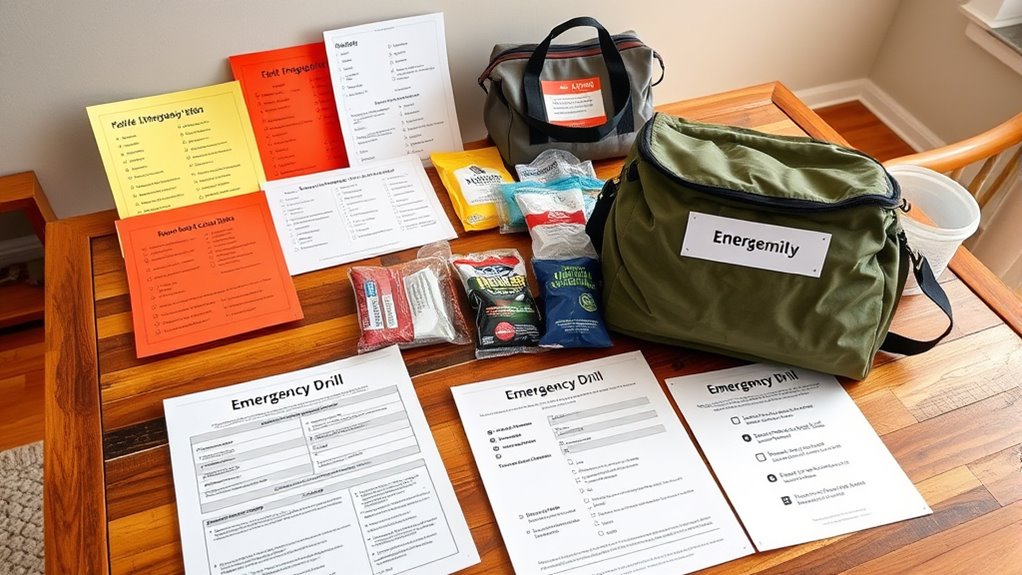
Have you ever thought about what you would do if a sudden emergency disrupted your family’s routine? It’s a question that might seem distant until an unexpected event forces you to act quickly. That’s why establishing a clear family emergency plan is essential. One of the most critical components is knowing your evacuation routes. You need to identify multiple paths out of your home and neighborhood, so you’re prepared if a fire blocks your usual exit or a natural disaster makes certain roads impassable. Take the time to walk through these routes with your family, pointing out landmarks and alternative paths. Remember, flexibility is key—what works in a calm moment might not be feasible during chaos. Having a map marked with these routes and practicing them periodically ensures everyone knows where to go without hesitation. Incorporate emergency preparedness into your routine to keep everyone informed and ready for unexpected situations.
Alongside evacuation routes, establishing reliable emergency communication is crucial. During a crisis, phone lines can become overloaded, or power outages might cut off electronic communication. Decide on a designated family member or friend outside the immediate area who can serve as a central contact point. Make sure everyone knows how to reach this person and that you all have a list of important contacts written down, stored both digitally and physically. Use simple, clear instructions for communication, like sending a quick text to confirm safety or sharing your location. Keep a charged portable phone charger or power bank dedicated to emergencies. It’s also wise to agree on a specific time to check in after evacuation, so everyone stays connected and informed. Emergency communication isn’t just about phones; consider alternative methods such as walkie-talkies or designated meeting spots where everyone can gather safely if separated.
family emergency go-bag kit
As an affiliate, we earn on qualifying purchases.
As an affiliate, we earn on qualifying purchases.
Frequently Asked Questions
How Often Should We Update Our Emergency Contact List?
You should update your emergency contact list at least every six months. Regularly updating contacts guarantees you have current phone numbers and addresses, which is essential during emergencies. Review and revise your emergency procedures simultaneously to make sure everyone knows the plan. Changing phone numbers, moving, or new family members mean your contact list needs fresh information. Staying proactive helps you respond quickly and effectively when it matters most.
What Should Be Included in a Go-Bag for Pets?
In your pet’s go-bag, include enough pet food for at least three days, making certain it’s suitable for their dietary needs. Add emergency harnesses for safe, secure transportation, and pack any medications your pet requires. Don’t forget essentials like a leash, a bowl, and a familiar blanket or toy. Having these items ready ensures you’re prepared to keep your pets safe and comfortable during emergencies.
How Can We Practice Emergency Drills Effectively?
You can practice emergency drills effectively by incorporating role-playing exercises and scenario planning. Assign roles to family members to simulate different situations, like evacuations or power outages, so everyone understands their responsibilities. Use realistic scenarios to identify gaps in your plan and practice quick decision-making. Repeating these drills regularly helps build confidence, guarantees preparedness, and makes responses more instinctive during real emergencies.
What Digital Tools Can Help Us Manage Our Emergency Plan?
Did you know that 85% of people feel more secure with digital tools? To manage your emergency plan effectively, use digital mapping to visualize escape routes and safe zones. Emergency apps help you store contacts, set reminders, and receive alerts instantly. These tools keep everyone informed and prepared, making your family’s safety a priority. Embrace technology to stay connected and respond swiftly during emergencies.
How Do We Coordinate With Neighbors for Community Emergencies?
You can coordinate with neighbors by joining or forming a neighborhood watch, which promotes communication and safety. Share resources like flashlights, first aid kits, or tools to prepare for emergencies. Organize regular meetings or digital groups to discuss plans, assign roles, and stay informed. Building strong relationships helps guarantee everyone knows who to contact during emergencies and fosters a community effort to stay safe together.
portable emergency communication devices
As an affiliate, we earn on qualifying purchases.
As an affiliate, we earn on qualifying purchases.
Conclusion
Having a solid family emergency plan guarantees you’re prepared when it matters most. With over 60% of Americans feeling unprepared for disasters, taking the time to set up contacts, go-bags, and drills makes all the difference. Remember, regular practice keeps everyone calm and ready. Don’t wait for an emergency to strike—create your plan today and keep your loved ones safe, confident, and prepared for whatever comes next.
family evacuation plan maps
As an affiliate, we earn on qualifying purchases.
As an affiliate, we earn on qualifying purchases.
walkie-talkies for family safety
As an affiliate, we earn on qualifying purchases.
As an affiliate, we earn on qualifying purchases.