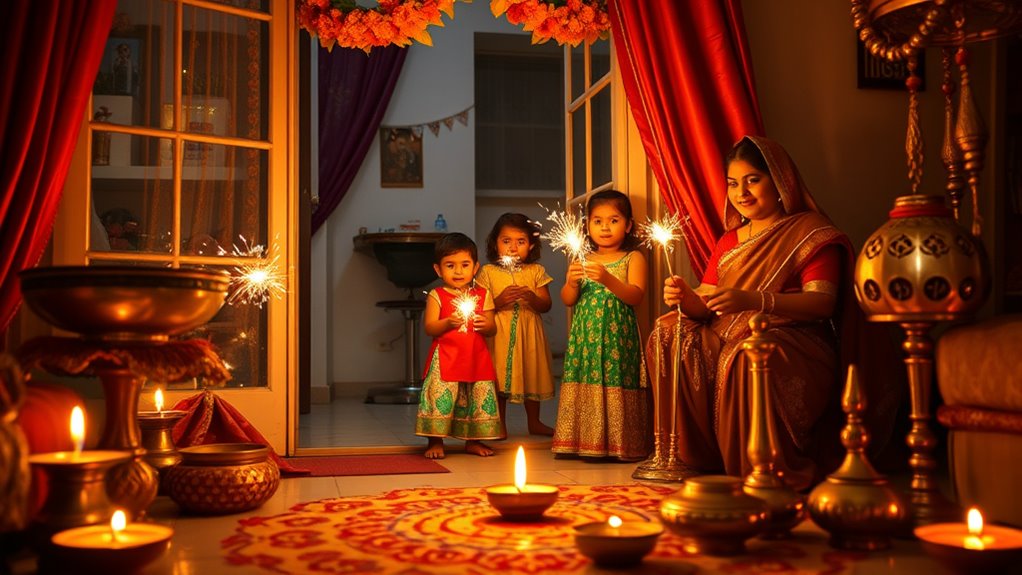

During Diwali at home, you and your family come together to light lamps and decorate with colorful rangoli, creating a warm and inviting atmosphere. You prepare traditional sweets, often with children helping in the kitchen, and participate in rituals that honor light and gratitude. These customs strengthen family bonds, celebrate cultural heritage, and spread positivity. If you want to know more about how to create memorable Diwali traditions, keep exploring these joyful practices.
Key Takeaways
- House cleaning, decorating, and lighting lamps create a festive atmosphere filled with warmth and positivity.
- Preparing traditional sweets and sharing them fosters community spirit and family bonding.
- Conducting puja rituals and prayers deepen spiritual connection and gratitude.
- Involving family members in chores and celebrations strengthens togetherness and joyful memories.
- Celebrating with lights, music, and cultural customs highlights the festival’s message of light over darkness.

Diwali at home is a time to celebrate tradition, light, and togetherness. As the festival approaches, you’ll find yourself immersed in festival preparations that bring everyone together. From cleaning and decorating your house to setting up lamps and fairy lights, each task enhances the festive spirit. You may start by sweeping away the dust and clutter, symbolizing the removal of negativity, and then decorate your home with colorful rangoli patterns, diyas, and lanterns. The process itself becomes a joyful activity, involving family members of all ages. You’ll notice how everyone pitches in with enthusiasm, turning chores into cherished memories.
A key part of your preparations involves making traditional sweets, which are essential to Diwali celebrations. You might spend a day in the kitchen, blending ingredients to prepare classics like ladoos, barfis, or jalebis. The aroma of these sweets fills your home, creating an inviting atmosphere. Making traditional sweets isn’t just about the taste; it’s about preserving a cultural heritage and passing it down to the next generation. Kids love helping out, whether it’s pouring syrup or shaping ladoos, and you get a sense of pride seeing these treats come together. Sharing these sweets with neighbors and friends reinforces the spirit of giving and community that Diwali embodies.
You may also incorporate cultural traditions from your region, such as specific puja rituals or festive music, to deepen the spiritual experience. As you prepare for the festival, you also focus on creating a warm and inviting environment. Lighting lamps and candles illuminates your home, symbolizing the victory of light over darkness. You may organize small pujas or prayer ceremonies, where family members gather to offer gratitude and seek blessings for health, happiness, and prosperity. These moments of prayer and reflection strengthen your family bonds and remind everyone of the deeper meaning behind Diwali. It’s more than just the glitz and decorations; it’s about expressing gratitude for the blessings in your life.
Throughout these preparations, you realize that Diwali isn’t just about the external festivities. It’s about the inner light that shines through acts of kindness, sharing, and gratitude. As you light up your home and enjoy traditional sweets, you’re also creating a space filled with love and positivity. The festival becomes a beautiful reminder of your cultural roots and the importance of family traditions. When the night falls and your home glows with lamps and smiles, you know that all your efforts have woven a tapestry of warmth, light, and heartfelt joy that will be treasured for years to come.

KSJONE Set of 30 Colourful Handmade Diyas for Home Hand Painted Decorative Clay Mitti Diya Deepak Lanterns, Diwali Decor, Diwali Diyas Diwali Decoration for Home with Cotton Wicks
DECOR: You can place our beautiful lamps/ Diya's on your doorstep, window/balcony ledge, office, garden or use it…
As an affiliate, we earn on qualifying purchases.
As an affiliate, we earn on qualifying purchases.
Frequently Asked Questions
How Do Families Incorporate Modern Technology Into Diwali Celebrations?
You incorporate modern technology into Diwali by using digital decorations to brighten your home virtually, creating festive displays on screens or social media. You send virtual greetings to friends and family worldwide, sharing warm wishes instantly. Additionally, you might stream Diwali rituals or celebrations online, allowing loved ones to join remotely. These tech-savvy practices blend tradition with innovation, making your festivities more inclusive and connected.
What Are Unique Regional Diwali Traditions Across India?
You might enjoy celebrating Rajasthan’s Diwali by wearing traditional attire like ghagras and kurtas, while savoring regional sweets such as ghevar and chikki. In some regions, families perform unique rituals like lighting small oil lamps along water bodies or arranging intricate rangoli patterns. These traditions, rooted in local culture, make your celebration more meaningful and vibrant, connecting you deeply to India’s diverse heritage during this festive time.
How Do Families Adapt Diwali Rituals During the Pandemic?
During the pandemic, you adapt Diwali rituals by embracing virtual puja sessions, ensuring family members can participate safely from home. You practice social distancing while decorating your space with lights and diyas, and you might share sweets via contactless delivery. Many families also connect with relatives through video calls, preserving the festive spirit and traditions while prioritizing health and safety. This way, Diwali remains meaningful despite the challenges.
What Eco-Friendly Practices Are Popular During Diwali?
During Diwali, you can embrace eco-friendly practices like using eco-friendly lighting, such as LED lamps and solar-powered lights, to brighten your home sustainably. You might also opt for sustainable decorations, like handmade or biodegradable ornaments, instead of plastic. These choices help reduce environmental impact, making your celebrations more responsible. By incorporating eco-friendly lighting and sustainable decorations, you contribute to a greener Diwali while maintaining the festive spirit.
How Do Non-Hindu Families Celebrate Diwali at Home?
You embrace Diwali at home by creating a vibrant scene with sparkling lights and colorful decorations, even if you’re not Hindu. You participate in interfaith celebrations, sharing sweets and stories that honor different traditions. Cultural adaptations might include lighting candles or lanterns, exchanging thoughtful gifts, and enjoying festive meals. This way, you foster unity, gratitude, and joy, making the festival meaningful and inclusive for everyone in your family.

Matio Color Run Powder, 12 Pack 3.5oz/100g Each Natural Holi Powders Assorted Coloring Rangoli Bulk, Washable Chalk Powders Paint for Color War, Summer Camp, Photography Smoke, Gender Reveals
🌈Multiple Colors Suit: HOLI color powder packets with 12 different vivid colours: blue, pink, green, yellow, red, purple,…
As an affiliate, we earn on qualifying purchases.
As an affiliate, we earn on qualifying purchases.
Conclusion
As you light the final diya, the soft glow flickers across your home, casting warm shadows on walls filled with laughter and love. The scent of marigolds and sweet treats drifts through the air, wrapping everyone in a comforting embrace. In this moment, the flickering lights and shared gratitude remind you that Diwali isn’t just about brightness outside, but the glow of family bonds and cherished traditions that illuminate your heart long after the festival ends.

Ghasitaram Gifts Indian Sweets – Diwali Gifts Diwali Sweet – Big Box of 12 Pcs Assorted Bites, Kaju Katli and Methi Mathi
Legacy: A legacy of four generations.Our treasured recipes have been passed down from grandfather to grandsons — a…
As an affiliate, we earn on qualifying purchases.
As an affiliate, we earn on qualifying purchases.

Vedic Charya 10 Inch Brass Puja Thali Set Round Shape – Set of 7 Golden Traditional Pooja Plate, Spiritual Decor Indian Religious Worship & Festivals Thali for Shivratri, Home Mandir, Return Gift
Complete Pooja Set: Includes an 10-inch brass thali, diya (lamp), agarbatti holder and other essential pooja accessories for…
As an affiliate, we earn on qualifying purchases.
As an affiliate, we earn on qualifying purchases.