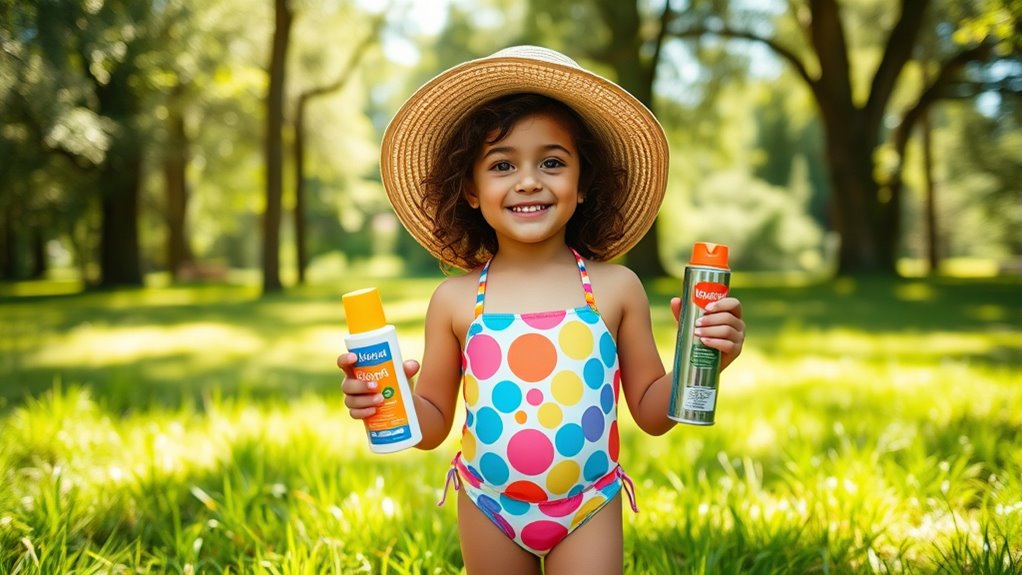

When using sunscreen and bug spray on kids, choose broad-spectrum products with SPF 30+ and low-chemical options like picaridin or oil of lemon eucalyptus. Apply sunscreen generously 15 minutes before outdoor play, and reapply every two hours or after swimming or sweating. Spray bug repellent on exposed skin and clothing, avoiding the face, and follow the instructions carefully. Combining proper application with protective clothing helps keep kids safe—learn more tips to make sure their outdoor adventures are safe and fun.
Key Takeaways
- Choose broad-spectrum, SPF 30+ sunscreens free from harmful chemicals like oxybenzone and parabens.
- Use child-safe bug sprays with DEET below 30% or natural alternatives like picaridin or oil of lemon eucalyptus.
- Apply sunscreen generously 15 minutes before outdoor activity and reapply every two hours, especially after swimming or sweating.
- Spray bug spray on hands first, then gently apply to the face, avoiding eyes and mouth; use protective clothing for extra safety.
- Combine sunscreen, bug spray, protective clothing, hats, and shaded areas to maximize outdoor protection and safety for kids.

As a parent, protecting your kids from the sun and bugs is essential for outdoor fun and safety. When it comes to pediatric skin protection, choosing the right sunscreen and bug spray plays a vital role in keeping your children safe while they enjoy outdoor activities. Kids’ skin is more sensitive than adults’, making it crucial to select products formulated specifically for children. Look for sunscreens labeled “broad-spectrum” with SPF 30 or higher, and ensure they are free from harmful chemicals like oxybenzone or parabens. Applying sunscreen generously about 15 minutes before going outside helps establish a protective barrier, and reapplying every two hours—or more often if your child is swimming or sweating—is key to maintaining that protection. Remember, even on cloudy days, UV rays can penetrate through clouds, so consistent application is necessary to prevent sunburn and long-term skin damage.
Similarly, when choosing bug spray, prioritize products that are safe for children and contain DEET at appropriate levels—generally below 30%. There are also natural alternatives with ingredients like picaridin or oil of lemon eucalyptus, which some parents prefer. Always read labels carefully and follow instructions for application. Spray bug spray on exposed skin and clothing, but avoid applying near your child’s face, especially around the eyes and mouth. Instead, spray onto your hands and then gently apply around the face. Using protective clothing, such as long sleeves and hats, adds an extra layer of defense against insect bites, especially in areas with high mosquito or tick populations. Incorporating appropriate SPF products into your routine can significantly reduce the risk of sun damage over time.
In addition to choosing the right products, practicing outdoor activity safety means being mindful of the timing and location of your outings. Try to avoid peak sun hours between 10 a.m. and 4 p.m., when UV rays are strongest. Seek shaded spots whenever possible, and encourage your kids to wear hats and sunglasses for added protection. Regularly checking your kids for ticks after outdoor adventures helps prevent tick-borne illnesses. Hydration, proper clothing, and sun safety habits all contribute to a safe and enjoyable outdoor experience. By taking these simple but effective steps, you ensure your children are protected from the sun and bugs, allowing them to have fun while staying safe and healthy.

Neutrogena Sheer Zinc Oxide Kids Mineral Sunscreen Lotion, Broad Spectrum SPF 50+ with UVA/UVB Protection, Water-Resistant for 80 Minutes, Paraben-, Dye-, Fragrance- & Tear Free, 3 fl. oz
Kids Sunscreen: One 3 fl oz tube of Neutrogena Sheer Zinc Oxide Kids Mineral Sunscreen Lotion with broad…
As an affiliate, we earn on qualifying purchases.
As an affiliate, we earn on qualifying purchases.
Frequently Asked Questions
Can I Use Adult Sunscreen or Bug Spray on My Child?
You shouldn’t use adult sunscreen or bug spray on your child. Adult products often contain higher concentrations of active ingredients, which can be harsh or unsafe for young skin. Always check the label for child-specific formulations, focusing on safe product ingredients. Use proper application techniques, like applying evenly and reapplying as directed. This guarantees your child’s skin is protected without risking irritation or adverse reactions.
How Often Should I Reapply Sunscreen and Bug Spray to Kids?
You should reapply sunscreen and bug spray every two hours, or more often if your kid’s swimming or sweating—a fun reminder that product longevity is just a myth. While kids love the sun and bugs, they also need constant protection. Keep a close eye on reapplication frequency, because even the best products can’t last forever. It’s your job to stay vigilant and keep those pesky critters and UV rays at bay.
Are Natural or Organic Options Safer for Children?
Natural or organic options can be safer for children because they often contain natural ingredients and organic formulations, reducing exposure to harsh chemicals. You should look for products labeled as free from synthetic fragrances, parabens, and phthalates. While these options are generally gentler, always check for allergy risks and consult your pediatrician if you’re unsure. Remember, natural doesn’t always mean completely risk-free, so choose products carefully.
Can Children With Sensitive Skin Use These Products?
Think of your child’s sensitive skin like a vintage watch—delicate and needing gentle care. Yes, children with sensitive skin can use natural or organic products, but you must choose carefully. Look for formulas labeled hypoallergenic and free of fragrances or harsh chemicals. Always do a patch test first to prevent product irritation. If irritation occurs, discontinue use and consult a pediatrician for alternatives better suited to your child’s skin.
What Should I Do if My Child Has an Allergic Reaction?
If your child has an allergic reaction, act quickly. Look for symptoms like hives, swelling, or difficulty breathing. Call emergency services immediately if these occur. For milder reactions, remove the product and rinse the affected area with water. Give your child an antihistamine if recommended by your doctor. Stay calm, monitor their condition closely, and seek medical help promptly to guarantee their safety during allergic reactions.

Off! Insect Repellent Aerosol for Adults & Kids, Fragrance-Free Picaridin Bug Spray for Everyday DEET-Free Protection from Mosquitoes and Ticks, 5 oz
Non-greasy, unscented insect repellent is breathable and does not feel sticky or oily
As an affiliate, we earn on qualifying purchases.
As an affiliate, we earn on qualifying purchases.
Conclusion
Remember, when it comes to protecting your kids, sunscreen and bug spray are your shields against outdoor dangers. Think of them as armor that keeps pesky bugs and harmful rays at bay, allowing your little ones to enjoy the sunshine safely. Always follow the directions, apply generously, and reapply as needed. With these simple steps, you can turn outdoor adventures into worry-free memories—like a protective parachute guiding your kids safely through every sunny day.

Babyganics Insect Spray, 2oz, 1 pack, Made with Plant and Essential Oils, Packaging May Vary
Made without parabens, sulfates, phthalates, synthetic fragrances or dyes
As an affiliate, we earn on qualifying purchases.
As an affiliate, we earn on qualifying purchases.
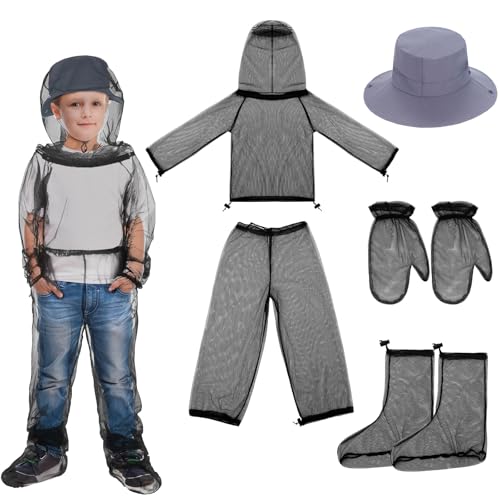
Threehoney Kids Mosquito Outdoor Suit Bug Net Pants & Jacket with Hood Fishing Hat Mitt Socks for Girls Boys Camping Hiking (Gray, Large)
Breathable Translucent Insect Net Suit: anti Mosquito Netting clothing made of lightweight polyester no-see-um mesh for outdoor activities;…
As an affiliate, we earn on qualifying purchases.
As an affiliate, we earn on qualifying purchases.