
To find the right bedtime for your school-age child, establish a consistent routine and adjust it based on their age and sleep needs. Create a calming environment with dim lights, white noise, and relaxing activities like reading or gentle stretches. Limit screen time and avoid stimulants before bed. Track their sleep patterns and make gentle adjustments to optimize rest. If you want more tips on creating an effective sleep schedule, keep going—these strategies really make a difference.
Key Takeaways
- Establish a consistent bedtime and wake-up schedule aligned with your child’s age and natural sleep rhythms.
- Create a calming pre-sleep routine with activities like reading, gentle stretching, and dim lighting to signal readiness for sleep.
- Optimize the sleep environment by ensuring darkness, quiet, and a comfortable, clutter-free space to promote restful sleep.
- Limit screen time at least one hour before bed and avoid caffeine or stimulants close to bedtime.
- Use sleep tracking and gradual routine adjustments to monitor progress and fine-tune bedtime routines for better sleep quality.

Color Noise Sound Machines with 10 Colors Night Light 25 Soothing Sounds and Sleep White Noise Machine 32 Volume Levels 5 Timers Adjustable Brightness Memory Function for Adults Kids Baby
♪【25 High-fidelity and Soothing Sounds】 There are 4 types of white noise, 4 fan sounds, 3 sea wave…
As an affiliate, we earn on qualifying purchases.
As an affiliate, we earn on qualifying purchases.
Why Consistent Bedtimes Matter for School‑Age Kids
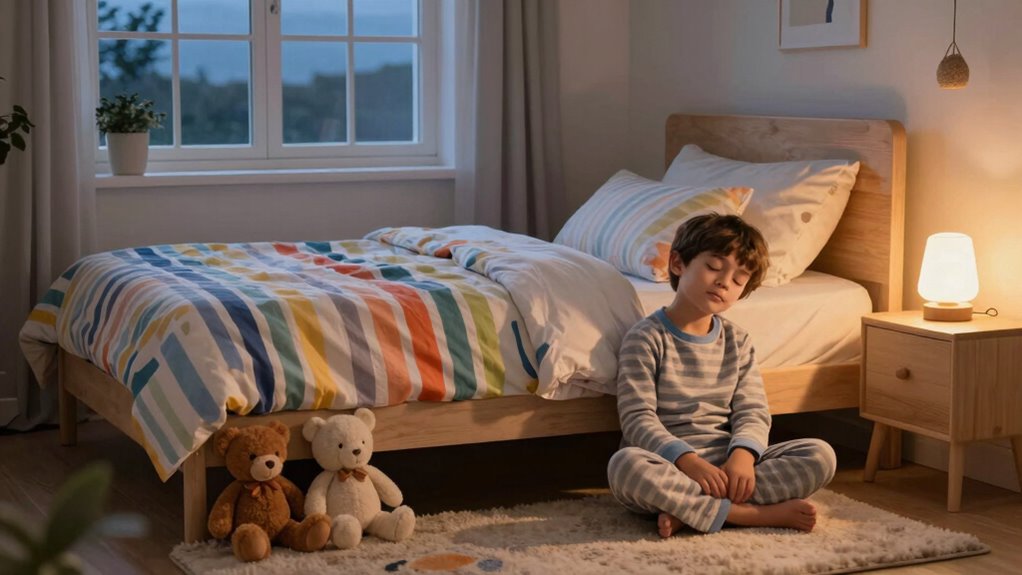
Maintaining consistent bedtimes is essential for school-age kids because it helps regulate their internal clocks and promotes better sleep quality. Many bedtime myths suggest that letting children stay up later occasionally won’t hurt, but inconsistent routines can disrupt their sleep patterns. Sleep training isn’t about strict schedules but establishing a predictable bedtime routine that signals their body it’s time to wind down. When you stick to a regular schedule, it becomes easier for your child to fall asleep and wake up refreshed. This consistency reduces bedtime resistance and nighttime awakenings. Incorporating household organization strategies can also create a more calming environment conducive to sleep. Additionally, a well-organized sleep space minimizes distractions and helps reinforce sleep cues, making it easier for your child to settle down. Creating a consistent environment also reduces anxiety related to bedtime, helping children feel more secure. Establishing a consistent routine also supports healthy sleep habits, which are vital for your child’s overall well-being and development over time. Consistent routines can also help in regulating melatonin levels, leading to more predictable sleep patterns. Remember, establishing a routine isn’t about quick fixes or shortcuts; it’s about fostering healthy sleep habits that support your child’s growth and development over time.

365 Bedtime Stories and Rhymes: Short Bedtime Stories, Nursery Rhymes and Fairy Tales Collections for Children
As an affiliate, we earn on qualifying purchases.
As an affiliate, we earn on qualifying purchases.
How to Determine the Right Bedtime for Your Child’s Age
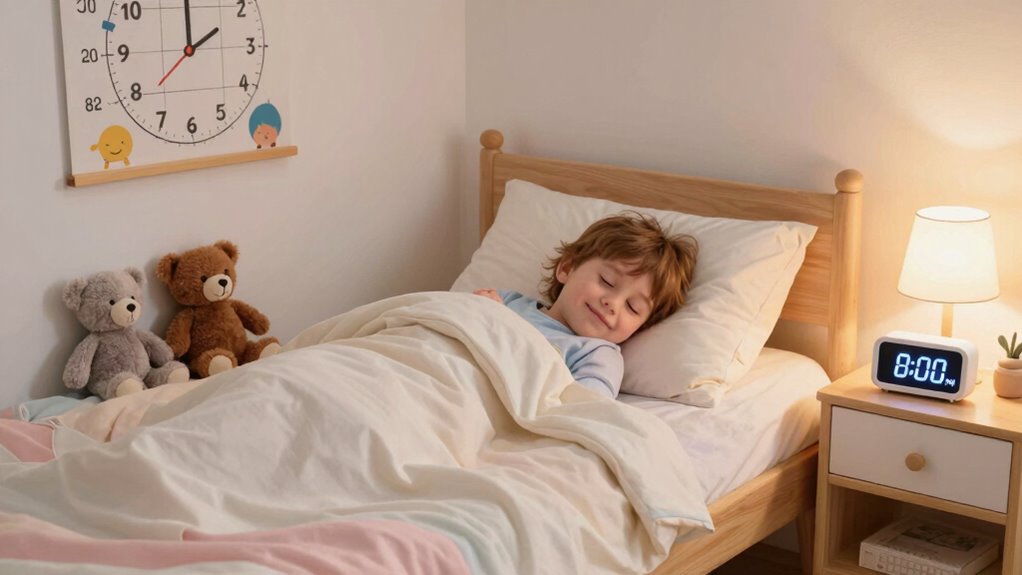
To find the right bedtime for your child, you need to understand that sleep needs change as they grow. Setting a consistent bedtime helps your child get enough rest and supports their development. Let’s explore how age influences sleep requirements and how to establish a routine that works. Incorporating age-specific sleep guidelines can further tailor your child’s sleep schedule to their developmental stage. Being aware of sleep safety tips is also essential to ensure a healthy sleep environment. Additionally, choosing the right daisy variety for a child’s room can create a calming and cheerful atmosphere that promotes better sleep. Recognizing the importance of positive sleep associations can also help your child develop healthy sleep habits. Understanding home theater projector features can enhance your child’s bedtime routine by creating a soothing and engaging environment.
Sleep Needs Vary by Age
Since children’s sleep needs change as they grow, it’s important to adjust bedtimes accordingly. As kids develop, their dream patterns and sleep cycles evolve, influencing how much rest they need. Younger children require more sleep to support growth, while older kids need less but still benefit from quality rest. Pay attention to these key points:
- Dream patterns shift with age, affecting how restorative sleep feels.
- Sleep cycles lengthen and become more adult-like, influencing wakefulness and restfulness.
- The right bedtime aligns with your child’s natural rhythms, ensuring they get sufficient deep and REM sleep. Additionally, understanding the sleep needs by age can help tailor bedtime routines to promote healthy development. Recognizing how brain development impacts sleep can further assist in setting appropriate routines and expectations for children at different stages.
Establishing Consistent Bedtimes
Determining the right bedtime for your child involves understanding their age-specific sleep needs and natural rhythms. Many bedtime myths suggest that kids can simply go to bed later without consequences, but consistent bedtimes support better sleep quality. To find the right time, consider sleep tracking—keeping a sleep journal or using apps—to monitor how your child responds to different schedules. Look for signs of tiredness and alertness during the day, and aim for a routine that allows your child to get enough rest. Consistency is key, so establish a set bedtime that aligns with their age and energy levels. This approach helps regulate their sleep cycle, making it easier for them to fall asleep and wake refreshed each morning. Additionally, understanding sleep needs for school-age children can help tailor the bedtime schedule more effectively. Recognizing biological sleep patterns can further improve your child’s sleep habits by aligning their schedule with natural rhythms, including factors like body temperature and melatonin production, which influence sleep onset and quality. Being aware of these biological rhythms can make a significant difference in establishing an effective bedtime routine.

Cravonel Portable Baby Night Light, 3 Color Egg Lights for Nursery, 2400mAh, Small Rechargeable LED Lamp, Dimmable Touch Nightlight for Newborn, Toddler, Kids, Adults
【3 Adjustable Warm Colors & Dimming】: Features three soothing color temperatures (3000K-6000K) infinite dimming via tap control. Each…
As an affiliate, we earn on qualifying purchases.
As an affiliate, we earn on qualifying purchases.
Creating a Bedtime Routine That Works for Your Family
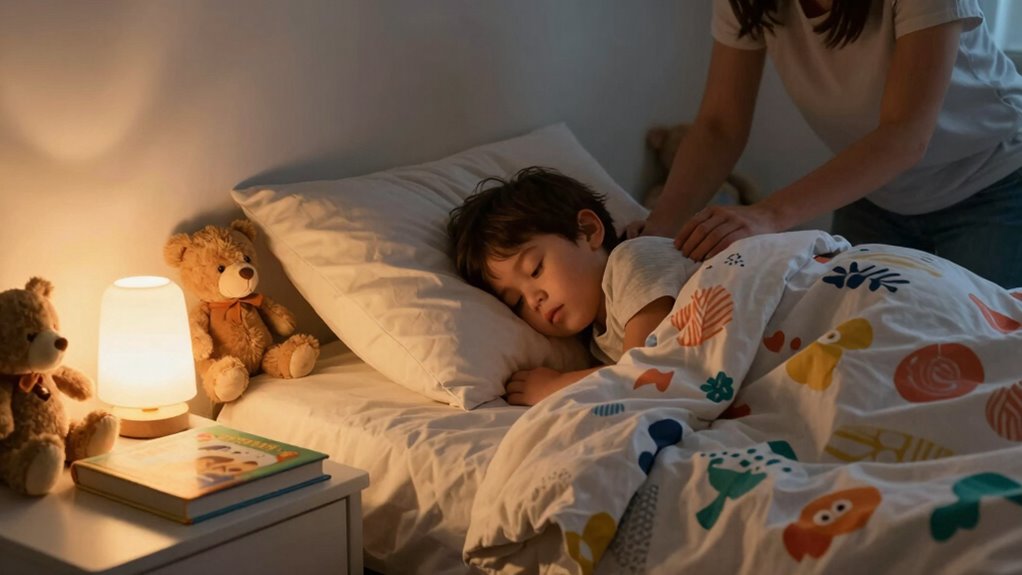
A consistent bedtime schedule helps your child know what to expect and feel secure. Incorporating calming activities before bed can promote relaxation and make the shift easier. Personalizing routines with your child’s favorite rituals creates a sense of comfort and consistency every night. Establishing home safety measures can further support your child’s well-being during bedtime routines. Using the right DIY tools and safety tips can help you set up a safe and comfortable sleep environment. Ensuring the proper home architecture details, such as safe door swings and stair proportions, can also contribute to a secure bedroom setting. Selecting reliable power sources like a battery inverter generator can ensure your family has dependable electricity during outages, providing peace of mind for your home.
Consistent Bedtime Schedule
Establishing a consistent bedtime schedule helps your child’s body recognize when it’s time to wind down, making it easier for them to fall asleep each night. Many parents fall for bedtime myths that irregular routines won’t impact sleep, but consistency actually strengthens your child’s internal clock. It’s important to recognize signs of sleep disorder and consult a professional if needed, rather than relying on guesswork. To create an effective schedule, consider these key points:
- Set a regular bedtime and wake-up time, even on weekends
- Limit screen time before bed to avoid interference with sleep signals
- Keep the environment calm and dark to reinforce the routine
- Using a bedtime routine can further signal to your child that it’s time to sleep, helping establish healthy habits and improve overall sleep quality. Additionally, maintaining a consistent routine can support energetic alignment between your child’s habits and their natural sleep rhythms. A predictable schedule helps reduce bedtime battles and fosters healthy sleep habits that last. Incorporating Free Floating concepts, such as allowing your child some flexibility in wind-down activities, can also help ease transition times and promote relaxation. Being mindful of sleep environment factors, like noise levels and temperature, can further enhance your child’s ability to settle peacefully. Recognizing and addressing sleep disorders early can prevent long-term issues and improve overall well-being.
Calming Pre‑Sleep Activities
Creating a calming pre‑sleep routine can make a significant difference in helping your child shift smoothly from daytime activities to restful sleep. Incorporate relaxation techniques like deep breathing or gentle stretches to help your child unwind. Using soothing sounds, such as soft music or white noise, can create a peaceful environment that signals bedtime. Dimming the lights and reducing screen exposure also promote relaxation. Establishing a consistent sequence of calming activities, like reading a quiet book or cuddling, helps your child associate these moments with sleep. Keep activities gentle and predictable to reinforce a sense of security. Incorporating LED skincare masks and eye safety tips into your routine can also provide a calming, self-care moment before bed. Being mindful of neural interface considerations may help ensure your child’s comfort during relaxation. Additionally, choosing age-appropriate relaxation tools can enhance your child’s bedtime experience. Recognizing the importance of bedtime consistency can further help your child develop healthy sleep habits. By integrating relaxation techniques and soothing sounds into your routine, you set the stage for a peaceful transition into sleep, making bedtime more effective and less stressful.
Personalized Bedtime Rituals
Designing a bedtime routine that fits your family’s unique needs can make evenings more peaceful and help your child look forward to sleep. Personalizing rituals creates consistency and comfort, making bedtime something your child enjoys. Start with a calming bedtime story to signal winding down. Adjust your sleep environment—dim lights, comfortable bedding, and minimal noise—to promote relaxation. Incorporate activities your child loves, like gentle stretching or listening to soft music, to reinforce a positive sleep association. Keep the routine consistent, but flexible enough to adapt as needed. Remember, the key is creating a rhythm that feels natural for your family. When bedtime feels predictable and soothing, your child will settle more easily and develop healthy sleep habits.

Zenimal Kids Sleep Aid – Screen-Free Sound Machine with Voice-Guided Audio Journeys, Soothing Sounds & Calming Music to Help Children Fall Asleep Faster and Sleep Peacefully All Night
Made for families who want calmer nights without phones, tablets, or overstimulation. Zenimal was created for parents who…
As an affiliate, we earn on qualifying purchases.
As an affiliate, we earn on qualifying purchases.
Tips for Setting Up a Calm, Sleep-Friendly Bedroom

A calm, sleep-friendly bedroom starts with thoughtful choices that promote relaxation. Focus on bedroom lighting by using soft, warm lights or dimmable lamps to create a soothing atmosphere. Bright overhead lights can be too stimulating before bed, so opt for gentle lighting options instead. Keep the sleep environment cool, quiet, and dark to help your child wind down easily. Blackout curtains or a sleep mask can block out unwanted light, while white noise machines or fans can mask disruptive sounds. Avoid clutter and keep the space tidy to reduce stress and promote a sense of calm. By carefully selecting lighting and maintaining a peaceful sleep environment, you set the stage for restful, uninterrupted sleep.
Managing Screen Time and Stimulants Before Bed
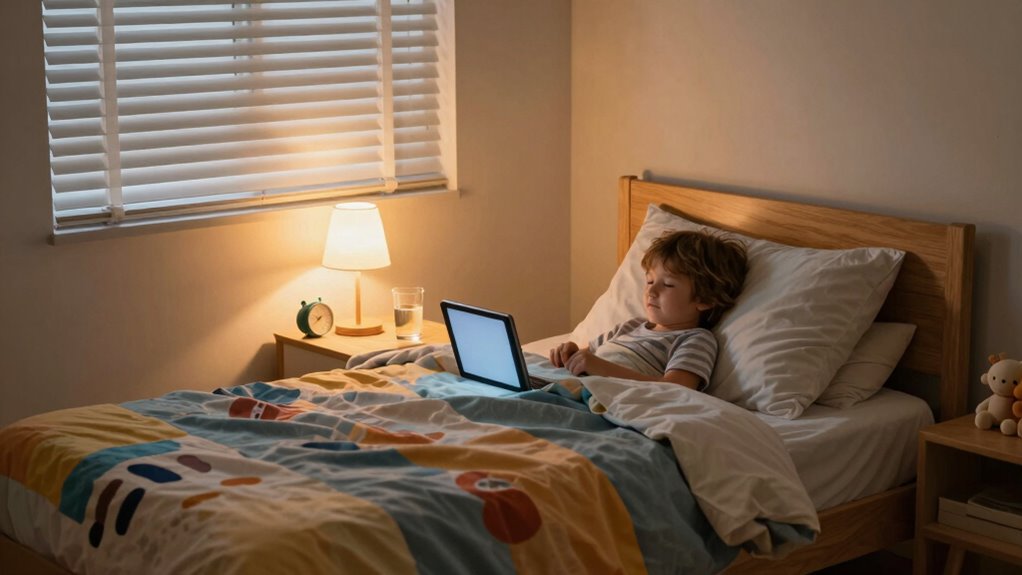
Since screens and stimulants can interfere with your child’s ability to fall asleep, it’s important to set clear boundaries before bedtime. Limiting screen time at least an hour before bed helps reduce exposure to blue light, which can suppress melatonin production. Be mindful of stimulant intake, such as caffeine or certain medications, and avoid giving them close to bedtime. To create healthy habits:
Setting clear boundaries on screens and stimulants before bed supports your child’s healthy sleep routine.
- Establish a screen-free zone in the hour before bed
- Encourage calming activities like reading or quiet play
- Monitor and restrict stimulant intake in the evening
Strategies to Handle Bedtime Resistance and Night Wakes
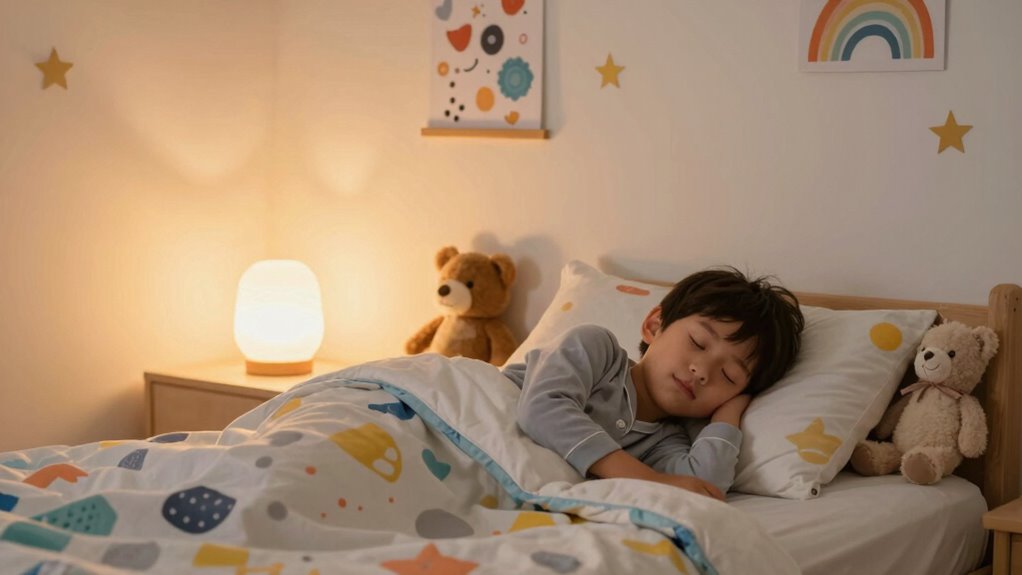
Handling bedtime resistance and night wakes can be challenging, but consistent routines and strategies can help. To reduce bedtime resistance, establish a predictable schedule and calming activities like reading or gentle music. For night wakes, avoid turning on bright lights or engaging your child; instead, keep interactions brief and soothing. Consider using a visual chart to motivate cooperation at bedtime.
| Strategy | Technique | Goal |
|---|---|---|
| Consistent Routine | Same bedtime, calming activities | Reduce resistance, promote sleep |
| Gentle Reassurance | Brief comforting words | Ease night wakes |
| Minimize Stimuli | Dim lights, quiet environment | Improve sleep continuity |
| Positive Reinforcement | Praise cooperative behavior | Encourage bedtime compliance |
How Nutrition and Daytime Play Improve Sleep Quality
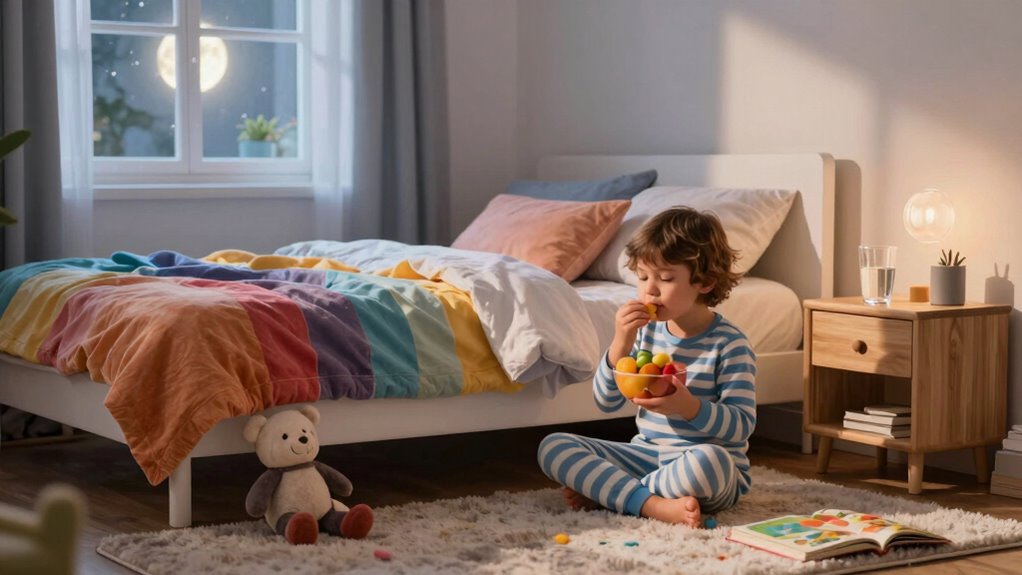
Proper nutrition and active daytime play considerably boost your child’s sleep quality by supporting their physical health and regulating their internal clock. Offering healthy snacks throughout the day helps stabilize blood sugar levels, reducing energy crashes that can interfere with sleep. Incorporate plenty of daytime activity to tire them out naturally, promoting restful sleep at night. When your child engages in physical play, their body releases sleep-inducing hormones, making it easier to fall asleep. Additionally, nutritious meals rich in fruits, vegetables, and whole grains fuel their growth and development, preventing hunger from disrupting sleep. By focusing on healthy snacks and active play, you create an environment that encourages consistent, quality sleep and helps establish a solid bedtime routine.
Track Your Child’s Sleep and Adjust Bedtimes as Needed

Tracking your child’s sleep patterns helps identify whether they’re getting enough rest and falling asleep easily. Use sleep tracking to monitor their bedtimes, wake times, and overall sleep quality. Consistent bedtime routines promote bedtime consistency, making it easier for your child to fall asleep and wake refreshed. Keep a sleep journal or use apps to record nightly sleep habits, noting any difficulties or irregularities. If you notice your child isn’t sleeping enough or has trouble falling asleep, adjust their bedtime gradually—by 15-minute increments—to find the most suitable schedule. Regularly reviewing sleep data allows you to fine-tune bedtimes, ensuring they get the necessary rest for school and growth. Remember, flexibility is key—adapt as needed to keep your child’s sleep on track.
Common Bedtime Challenges and How to Avoid Them
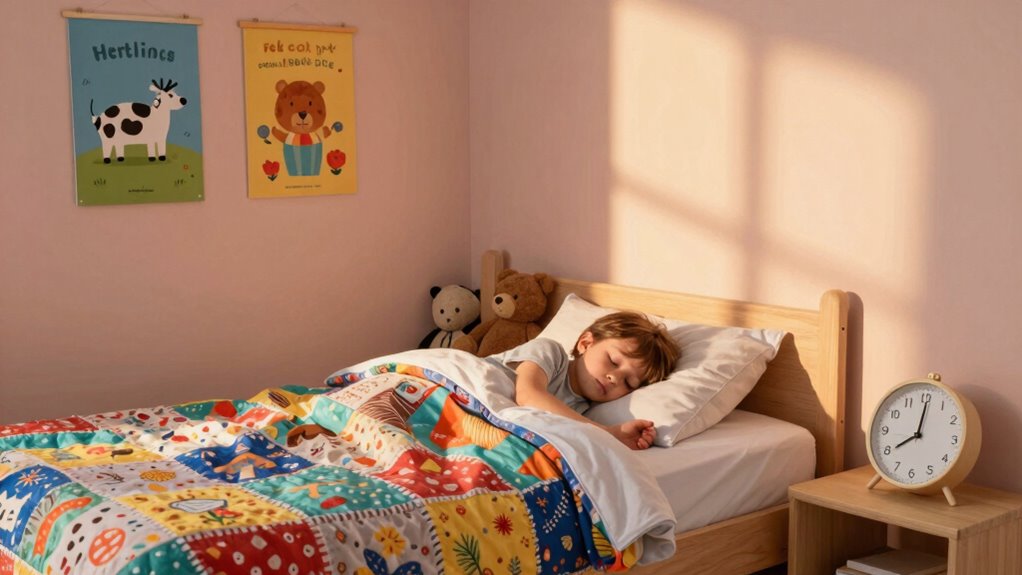
Even with a consistent sleep schedule, children can face common bedtime challenges that make falling asleep difficult. One obstacle is disruptive sleep environments—noisy or bright rooms can keep them awake. You can improve this by creating a calm, dark, and cool space. Another challenge is bedtime snacks; eating too close to bedtime or choosing sugary foods can interfere with sleep quality. Try offering a light, healthy snack earlier in the evening. To conclude, kids may resist bedtime routines, delaying sleep and increasing fussiness. Establishing a calming routine and sticking to it helps signal bedtime. Addressing these challenges by optimizing the sleep environment, managing bedtime snacks, and maintaining consistent routines will promote smoother transitions to sleep.
Frequently Asked Questions
How Can I Tell if My Child’s Sleep Quality Is Sufficient?
You can tell if your child’s sleep quality is sufficient by observing their sleep pattern and nap duration. If they wake up feeling refreshed, have consistent sleep and wake times, and don’t seem overly tired during the day, it’s a good sign. Additionally, guarantee their naps aren’t too long or too short, as balanced nap duration supports overall rest. Trust your child’s mood and energy levels as key indicators of quality sleep.
What Are Alternative Calming Activities if My Child Resists Bedtime?
Did you know that only 30% of children fall asleep easily? If your child resists bedtime, try alternative calming activities like relaxation techniques or bedtime storytelling. You can guide them through deep breathing exercises or listen to calming music. Reading a favorite story helps them wind down and feel secure. These activities create a peaceful bedtime routine, making it easier for your child to shift into sleep peacefully.
How Does Sleep Affect My Child’s Academic Performance?
When your child gets enough sleep, it boosts dream consolidation and cognitive enhancement, which are vital for academic success. Adequate sleep helps improve memory, focus, and problem-solving skills, making learning easier. If your child sleeps well, they’re more alert and motivated during the day, leading to better performance in school. Prioritizing consistent bedtimes and a calming routine can greatly support their sleep quality and academic achievements.
When Should I Consider Consulting a Sleep Specialist?
When sleep issues turn into a silent storm, it’s time to seek help. If your child’s sleep disorder persists despite consistent routines, or if you notice signs like loud snoring, night terrors, or daytime fatigue, don’t wait. A sleep consultation can uncover underlying problems and provide solutions. Trust your instincts—consult a specialist to guarantee your child’s restful nights and bright days ahead.
Are There Specific Bedtime Routines for Children With Special Needs?
You should develop specific bedtime routines for children with special needs that incorporate visual routines and sensory integration. Use visual cues to signal bedtime and create a consistent, calming sequence to ease their shift. Incorporate sensory activities like gentle massage or calming sounds to help them relax. Adjust these routines based on their unique sensory preferences to promote better sleep and reduce bedtime resistance.
Conclusion
So, after all that, the secret to perfect sleep might just be resisting the urge to overthink it. You’ll plan, set routines, manage screens, and tweak bedtimes — only to find that sometimes, the best sleep comes when you stop trying so hard. Ironically, the more you focus on making sleep perfect, the more your child might resist. Relax, trust the process, and let bedtime become a peaceful part of your family’s rhythm.