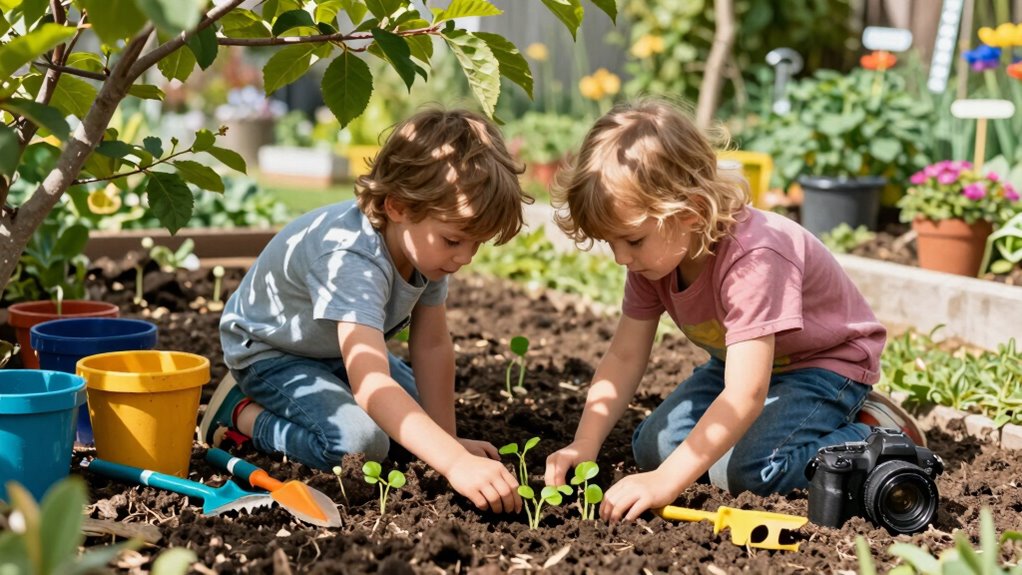

Gardening with kids is a fantastic way to boost their executive functions by engaging their senses, encouraging decision-making, and fostering responsibility through hands-on activities. When you involve them in planting, watering, and caring for plants, you promote skills like planning, patience, and problem-solving. These outdoor tasks strengthen their focus, self-control, and working memory. Keep exploring, and you’ll discover more fun ways to grow their brains right in the dirt.
Key Takeaways
- Gardening activities enhance executive functions like planning, working memory, and self-control through hands-on tasks and decision-making.
- Sensory experiences in gardening strengthen neural connections and support cognitive development in children.
- Managing garden responsibilities encourages responsibility, organization, and problem-solving skills.
- Gardening promotes patience and resilience by observing growth cycles and overcoming challenges.
- Collaborative garden projects foster teamwork, curiosity, and environmental awareness, reinforcing executive function development.

Kinderific Gardening Set, Tool Kit, for Kids, STEM, Includes Tote Bag, Spade, Watering Can, Rake, Fork, Trowel and Gloves (Ocean Blue)
Fun & Educational: Have fun digging, planting and watering! This set is perfect for teaching kids the basics…
As an affiliate, we earn on qualifying purchases.
As an affiliate, we earn on qualifying purchases.
Why Gardening Is a Fun Way to Boost Your Kids’ Brain Development

Gardening offers a hands-on way to boost your kids’ brain development because it actively engages their senses and encourages curiosity. When you involve them in soil preparation, they learn about textures, smells, and the importance of healthy soil for plant growth. Letting children choose which plants to grow—fruits, vegetables, or colorful flowers—so they feel invested and excited about the process. As they dig, plant, and water, their fine motor skills improve, and they develop a sense of responsibility. Plus, observing how different plants grow enhances their understanding of cause and effect. Engaging in sensory experiences like feeling soil and smelling flowers helps strengthen neural connections that support learning. Gardening not only stimulates their senses but also nurtures patience and problem-solving skills, making it a fun and educational activity that supports brain development. Incorporating activities like watering and pruning can additionally teach children about plant maintenance and responsibility. Developing executive function skills through these activities helps children plan, organize, and adapt as they care for their garden. Engaging in outdoor activities like gardening also provides physical exercise, which is beneficial for overall brain health and development. Additionally, learning about the growth cycles of plants can help children understand life processes, fostering a deeper appreciation for nature and science.

Burpee, 9 Quarts | Premium Organic Potting Natural Soil Mix Food Ideal for Container Garden-Vegetable, Flower & Herb Use for Indoor Outdoor Plant
ALL-NATURAL MIX: Burpee Organic Premium Potting Mix is formulated with plant food & coconut coir to promote seed…
As an affiliate, we earn on qualifying purchases.
As an affiliate, we earn on qualifying purchases.
Setting Up a Kid-Friendly Garden: Tips for Success
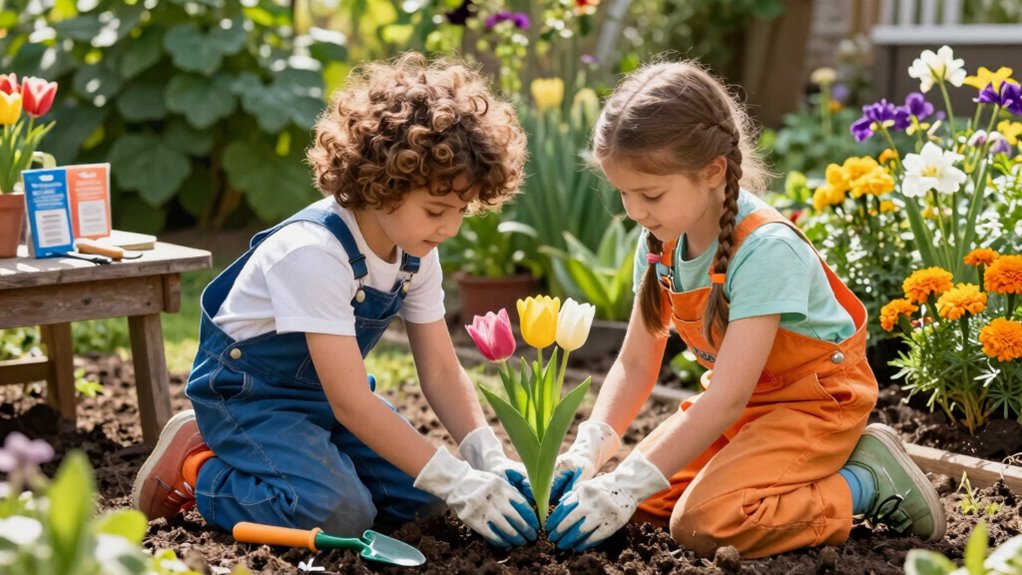
To create a kid-friendly garden, start by choosing safe, non-toxic materials for tools and containers. Keep tasks simple and manageable so your kids stay engaged and confident. Planning these easy steps sets a strong foundation for a fun and successful gardening experience. Incorporating aquatic exercise principles can also introduce children to water-based activities that promote coordination and relaxation. Additionally, selecting child-safe gardening tools can help prevent accidents and encourage independent participation. Understanding large numbers can assist in planning garden projects and resources efficiently. Recognizing the importance of appropriate safety measures ensures a secure environment as children explore and learn through gardening.
Choose Safe Materials
Choosing safe materials is essential for creating a kid-friendly garden. You want to prioritize soil safety by using non-toxic, organic soil blends free from harmful chemicals. Testing your soil or choosing pre-made potting mixes can help guarantee it’s safe for children’s contact. When it comes to tool selection, opt for child-sized tools with blunt edges and lightweight designs. These are easier and safer for kids to handle, reducing the risk of injury. Avoid sharp or heavy tools that could pose a danger. Also, steer clear of garden materials treated with pesticides or herbicides. Instead, choose natural, biodegradable options. Incorporating child-safe gardening supplies can further enhance safety and make gardening a fun, worry-free activity for children. Additionally, selecting non-toxic gardening materials aligns with safe gardening practices and supports children’s health and safety. To further promote a safe environment, consider using child-friendly, temperature-controlled tools that help prevent accidental burns or cold injuries during outdoor activities. Incorporating natural pest control methods can also reduce the need for chemical interventions, making the garden safer for kids. Using indoor air quality gear like HEPA filters or UV-C sterilizers can also help maintain a healthy environment around gardening areas, especially in enclosed spaces.
Plan Easy Tasks
Starting with simple, manageable tasks helps guarantee your kids stay engaged and confident in the garden. Focus on easy planting techniques like placing seeds gently and watering lightly. Keep tasks short and clear, such as planting a few seeds or watering specific areas. This approach aligns with the importance of ethical consumer choices by promoting responsible and mindful engagement with the environment. It also builds their sense of accomplishment and keeps frustration at bay. Remember, garden safety is key—supervise closely, ensure tools are child-friendly, and teach them safe handling. Avoid overwhelming them with complex planting techniques early on; instead, break tasks into small steps. As they gain confidence, introduce more detailed activities. Incorporating safe, toxin-free gardening practices ensures that children interact with environmentally friendly materials and reduces health risks. Engaging in mindful gardening helps children develop patience and attention to detail, reinforcing valuable executive functions. Recognizing the importance of spiritual connections can also inspire a deeper appreciation for nature and their role within it. Creating a responsible gardening environment encourages sustainable habits from a young age. By planning easy tasks, you create a positive experience that nurtures their curiosity and sense of responsibility while keeping safety top of mind.

Dan&Darci Root Viewer Kit for Kids – Grow Your Own Plant for Boys & Girls Easter Gifts – Science STEM Toy & Craft Growing Kits for Ages 4-8 Birthday Gifts for Boy, Girl 4, 5, 6, 7, 8, Year Old
Innovative Transparent Design: The Root Viewer offers a unique, see-through planter that reveals the fascinating underground world of…
As an affiliate, we earn on qualifying purchases.
As an affiliate, we earn on qualifying purchases.
Planning and Organizing Your Kid’s Garden to Build Executive Skills

When you plan and organize your kid’s garden, you create opportunities for them to develop essential executive skills like decision-making, planning, and problem-solving. Start by conducting soil testing to understand nutrient levels and decide what plants will thrive. Involve your child in choosing which vegetables or flowers to grow, encouraging them to weigh options and consider growth requirements. As you set up the garden, teach pest management strategies, prompting them to identify potential issues and brainstorm solutions. Creating a layout that balances planting zones and maintenance tasks helps your child develop organizational skills. This process fosters their ability to prioritize, adapt, and take ownership of their garden, building confidence and executive function through active participation and thoughtful planning. Incorporating essential oils into garden care routines, such as using natural repellents or soothing aromatics, can also enhance the experience and teach children about holistic health practices. Additionally, understanding the chemical properties of different plants and repellents can deepen their appreciation for science and sustainability in gardening. Recognizing the importance of cybersecurity measures in managing digital garden tools can help protect your child’s online interactions related to gardening projects. Engaging children in tracking their garden’s progress can further strengthen their monitoring skills, encouraging careful observation and record-keeping. Moreover, teaching them about mammography guidelines and the importance of early detection can be linked to understanding health and safety practices in all areas of life.

Melissa & Doug Sunny Patch Giddy Buggy Watering Can with Flower-Shaped Spout
Colorful child-sized watering can featuring Sunny Patch’s Giddy Buggy character
As an affiliate, we earn on qualifying purchases.
As an affiliate, we earn on qualifying purchases.
How Gardening Supports Kids’ Executive Function Development
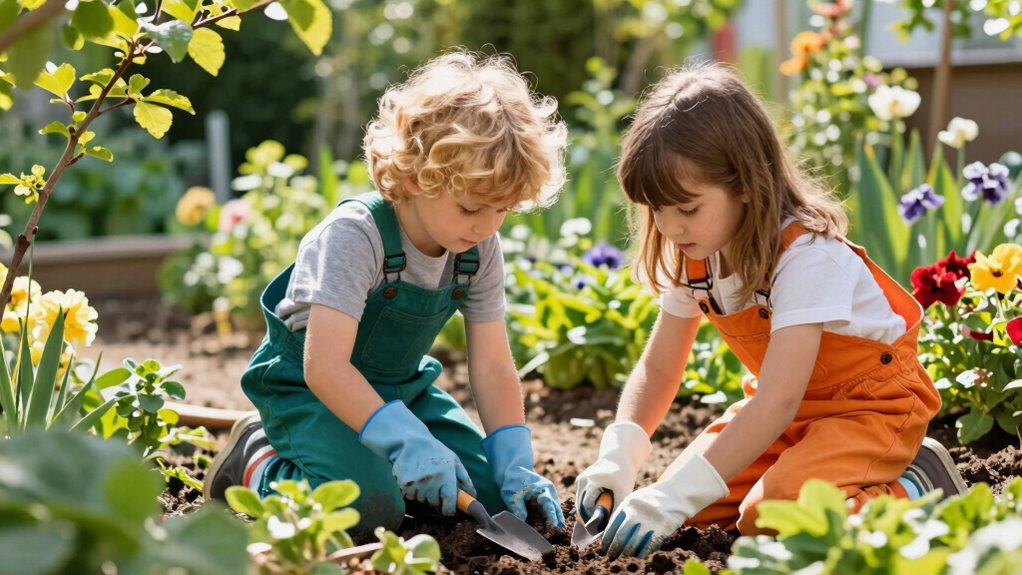
Gardening naturally promotes the development of kids’ executive functions by requiring them to plan, monitor, and adjust their actions. As they work with soil health and observe plant biology, they learn to predict outcomes and solve problems. For example:
- They decide how to prepare soil, considering its health for prime plant growth.
- They track plant progress, noticing signs of health or stress.
- They adjust watering or fertilizing based on plant responses.
- They evaluate what worked and plan improvements for next time.
These tasks foster skills like self-control, flexibility, and working memory. By engaging directly with soil and plant biology, kids develop a deeper understanding of natural systems while strengthening their executive functions. Incorporating ergonomics tips can also help create a comfortable gardening environment that supports sustained focus and reduces physical strain during these activities. Additionally, understanding soil health can help children learn about the importance of sustainable practices in gardening, which ties into broader concepts of environmental stewardship and ecosystem balance. Recognizing the role of natural systems in gardening further reinforces how interconnected ecological health is with successful plant growth. Promoting awareness of ecosystem services can deepen children’s appreciation for the environment and its vital functions.
Core Skills Kids Develop While Gardening

Engaging kids in gardening helps them develop a range of essential skills that will benefit them in many areas of life. When they explore soil health, they learn the importance of nutrients, composting, and maintaining a healthy environment for plants. This fosters problem-solving and critical thinking as they observe how different conditions affect growth. Additionally, studying plant taxonomy introduces kids to the classification of plants, helping them understand diversity and relationships within the plant kingdom. These activities encourage curiosity and scientific reasoning, building foundational knowledge that supports future learning. Gardening also enhances fine motor skills through planting and watering. Moreover, participating in gardening can introduce children to sustainable practices, fostering an early awareness of environmental impact. Overall, kids develop a deeper understanding of nature, science, and responsibility while strengthening their core skills in a hands-on, engaging way.
Teaching Patience and Perseverance in Gardening

As kids observe their plants grow slowly over days and weeks, they naturally encounter the need for patience and perseverance. You can teach these skills by encouraging them to use garden tools carefully and consistently. For example:
- Waiting for sprouts teaches patience as they watch tiny green shoots emerge.
- Practicing planting techniques like digging holes just right reinforces perseverance through trial and error.
- Watering regularly reminds kids that consistent effort yields results.
- Handling setbacks such as pests or weather challenges helps them learn resilience and stay committed to their garden.
Fostering Decision-Making and Responsibility in Gardening
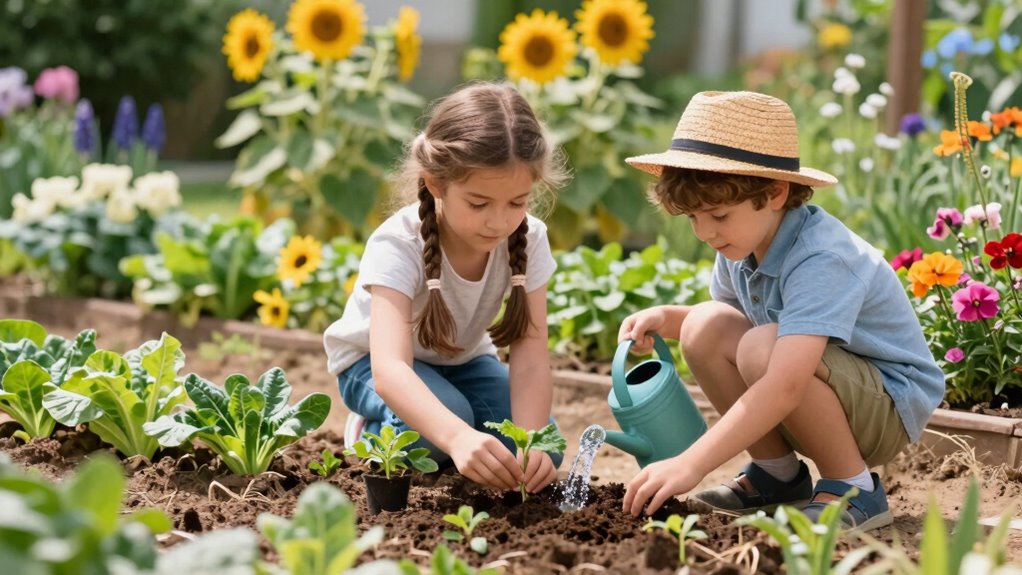
You can help kids develop decision-making and responsibility by involving them in choosing seeds together and assigning specific garden tasks. Encourage them to track the growth progress and notice how their choices impact the plants. This hands-on approach builds confidence and a sense of ownership in the gardening process.
Choosing Seeds Together
Choosing seeds together is a great way to teach kids about decision-making and responsibility. It encourages them to contemplate different options and see how their choices impact the garden. When selecting seeds, involve them in exploring various plant varieties and understanding their growth needs.
Here are some tips to make it engaging:
- Discuss the different plant varieties and what they produce.
- Talk about the preferred planting times for each seed.
- Let kids weigh the pros and cons of easy-to-grow versus more challenging plants.
- Encourage them to choose based on their interests, like colorful flowers or tasty vegetables.
This process helps kids understand seed selection and develop confidence in making decisions about their garden.
Assigning Garden Tasks
Assigning garden tasks is an effective way to teach kids about responsibility and teamwork. When you give them specific jobs like managing compost or helping with pest control, they learn to take ownership of the garden’s health. Let them decide how to turn kitchen scraps into compost and monitor it regularly. Encourage them to identify pests and choose safe methods to control them, fostering decision-making skills. By assigning these tasks, you empower kids to understand the importance of maintaining a balanced garden ecosystem. They’ll develop a sense of responsibility as they see how their actions impact plant growth. Clear roles also promote cooperation, making gardening a shared adventure. This hands-on involvement helps build executive function skills like planning, organization, and self-regulation.
Tracking Growth Progress
Tracking growth progress is a vital part of teaching kids responsibility and decision-making in the garden. It helps them understand plant identification and how different plants grow within garden design. To make this process engaging, you can:
- Use a growth chart to record each plant’s height and development over time.
- Encourage kids to observe and note changes, fostering decision-making about watering or sunlight needs.
- Create a garden journal where they sketch plants and track their progress.
- Discuss how growth impacts garden design, helping them see the connection between their decisions and the garden’s appearance.
Outdoor Gardening Activities That Boost Brain Development

Engaging kids in outdoor gardening activities can considerably enhance their brain development by encouraging curiosity, problem-solving, and sensory exploration. You can start by exploring soil composition, allowing kids to feel different textures and learn how nutrients support plant growth. This hands-on activity sharpens their observation skills and understanding of natural systems. Additionally, involving children in pest control teaches responsibility and critical thinking. Show them safe methods to identify pests and decide which ones need removal, reinforcing decision-making skills. These activities stimulate their senses, promote patience, and build executive function as they analyze soil health and develop strategies to protect plants. By actively participating in these tasks, kids strengthen their cognitive abilities while connecting with nature.
Fun Gardening Activities to Engage Kids of All Ages
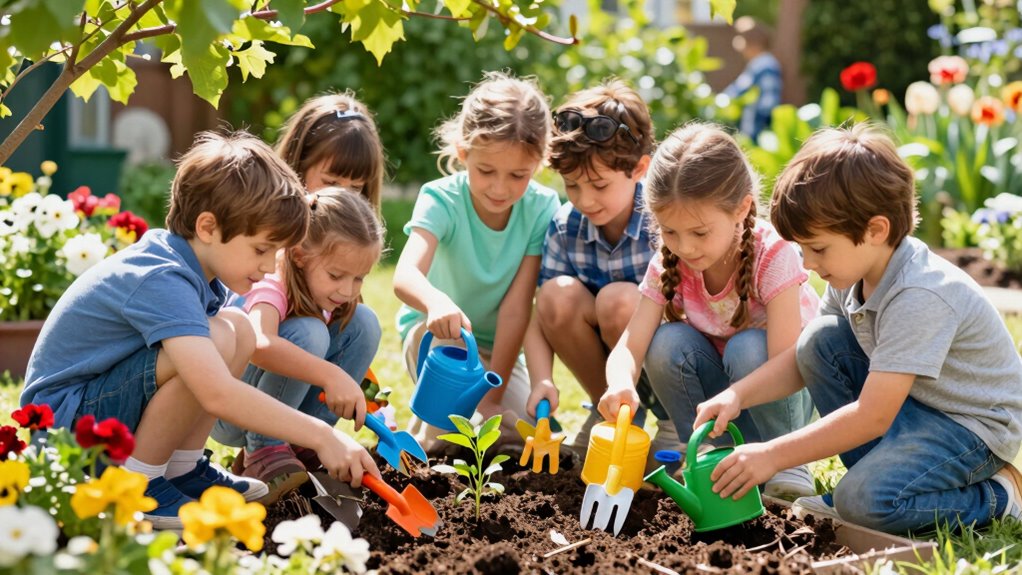
Gardening activities can be a delightful way to bring kids of all ages together, offering fun and educational experiences that suit their different interests and skill levels. To keep everyone engaged, try these activities:
- Create colorful garden art using painted rocks or plant markers, encouraging kids to express their creativity.
- Start simple composting tips, teaching them how organic waste becomes nutrient-rich soil, boosting their understanding of sustainability.
- Design a mini herb garden, letting kids choose and care for their favorite herbs, fostering responsibility.
- Organize a seed-planting relay race, combining fun with fine motor skill development. These activities promote teamwork, curiosity, and a love for nature.
Incorporating Gardening Into Your Family Routine to Support Brain Growth

Integrating gardening into your family routine can considerably boost your children’s brain development by providing hands-on learning opportunities and fostering a sense of responsibility. Focus on soil health by teaching kids how to enrich the soil with compost and understanding its importance for plant growth. When selecting plants, involve your children in choosing easy-to-grow, seasonal options that match your local climate, encouraging their decision-making skills. Regular gardening routines, such as watering, weeding, and harvesting, help develop executive functions like planning and self-control. Creating a consistent schedule makes gardening a natural part of your family life, strengthening bonds and reinforcing learning. By actively participating in soil care and plant selection, kids gain a deeper understanding of ecosystems, which supports their overall brain development.
Frequently Asked Questions
How Can Gardening Help Children With Learning Disabilities?
Gardening helps children with learning disabilities by engaging their senses and improving skills like plant recognition. You can encourage them to touch different textures, smell herbs, and observe plant growth, which boosts sensory engagement. As they identify various plants, they develop confidence and focus. This hands-on activity promotes learning through experience, making it easier for children to connect concepts and enhance their executive function skills naturally and enjoyably.
What Safety Precautions Should Be Taken When Gardening With Young Kids?
When gardening with young kids, always guarantee proper child supervision to prevent accidents. Teach them tool safety by showing how to handle gardening tools carefully and store them out of reach when not in use. Use age-appropriate tools, and keep the area clear of hazards. Regularly check that kids are wearing gloves and appropriate footwear. Keep a close eye on their activities to ensure a fun, safe gardening experience.
How Can Gardening Activities Be Adapted for Children With Physical Limitations?
You can make gardening accessible for children with physical limitations by using adaptive tools and accessible raised beds. These adaptations allow kids to participate actively, regardless of mobility challenges. For example, ergonomic tools reduce strain, while raised beds eliminate the need to bend or kneel. This approach transforms gardening from a formidable task into an inclusive, engaging activity, fostering independence and confidence for every child in the dirt.
What Are Some Cost-Effective Gardening Tools for Kids?
You can find budget-friendly tools for kids by exploring DIY gardening kits, which often include everything they need at a low cost. Look for small, lightweight trowels and watering cans made from durable plastic, perfect for little hands. Reuse household items like old spoons or containers as makeshift tools. These options help kids engage in gardening without breaking the bank, making learning fun and accessible.
How Does Gardening Influence Children’s Emotional Development and Well-Being?
Gardening acts as a nurturing balm, helping your child grow emotionally as they tend to plants. It boosts emotional resilience by teaching patience through setbacks and successes. As they nurture life, their self-esteem develops, giving them confidence and pride. Watching tiny seeds transform into thriving plants fosters a sense of accomplishment. Gardening becomes a powerful tool, cultivating not just gardens but also your child’s emotional well-being and strength.
Conclusion
Just like planting a seed leads to a thriving plant, nurturing your kids’ minds through gardening fosters growth and resilience. By engaging in outdoor tasks, you help them develop essential executive functions, shaping responsible, decision-making individuals—think of it as cultivating their very own Garden of Eden. So grab a trowel, get your hands dirty, and watch as your children blossom into confident, capable learners—proving that sometimes, the best lessons grow from the dirt.