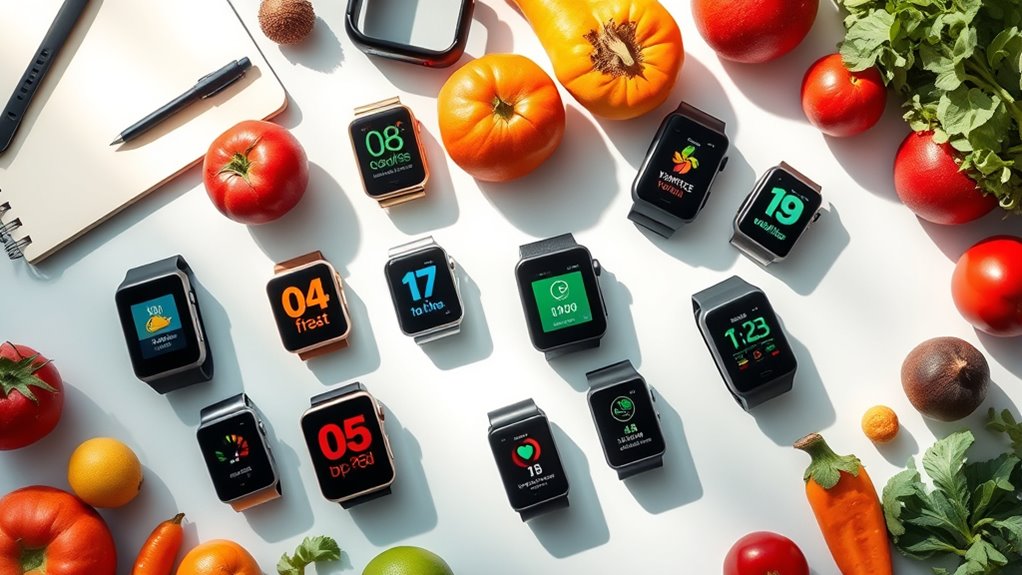

Teen calorie trackers come in three very different forms: app-connected smartwatches that estimate calories burned all day, screen-free digital watches with simple step-and-calorie counters, and paper food journals that track the intake side of the equation. My top pick is the Fitpolo Smart Watch, because its 105 sport modes and continuous heart rate tracking give the most accurate burn estimates for active teens, with no phone dependency beyond setup. If you want a budget-friendly wearable, the Choiknbo Fitness Tracker covers heart rate, SpO2, and sleep tracking for a fraction of the complexity, while the Diet & Nutrition Logbook is the best choice if your goal is calorie awareness rather than obsession with numbers. The main tradeoff in this category is connectivity versus simplicity: app-based trackers offer richer data but invite screen time and calorie fixation, while non-Bluetooth watches and journals keep things low-key but less precise. Keep reading for the full breakdown of all 14 options.

Give the gift of listening to the whole family
- Choose a 1-, 3-, 6- or 12-month membership
- They pick the audiobooks they love
- Easy to send by email
Complete the kit


Key Takeaways
- Smartwatch-style trackers (Fitpolo, Choiknbo, ENGERWALL) dominated the top of my ranking because continuous heart rate tracking produces far more realistic calorie-burn estimates than step-count-only watches.
- Five of the fourteen products are nearly identical non-Bluetooth LED pedometer watches, so the real decision there is wristband size, color, and alarm features — not tracking accuracy.
- The two paper journals in this lineup are the only options that track calories eaten rather than calories burned, making them the safer choice for teens with any history of disordered eating.
- Two products (the BIGGERFIVE Brave 2 and Focwony watches) are aimed at younger kids (ages 5–15 and 5–13), so teens on the older or taller end may find the bands too small.
- Waterproofing varies meaningfully: IP68-rated trackers like the Fitpolo, Choiknbo, and Cloudpoem survive swim practice and showers, while the basic LED pedometer watches should stay out of the pool.
| Fitness Tracker with 24/7 Heart Rate, Blood Pressure and Sleep Monitor, 1.10-inch AMOLED Display |  | Best Overall | Display: 1.10-inch AMOLED HD touch color screen | Heart Rate Monitoring: 24/7 continuous | Blood Pressure Monitoring: Yes (reference only) | VIEW ON AMAZON | See Our Full Breakdown |
| BIGGERFIVE Brave 2 Kids Smart Watch Fitness Tracker, 1.8-inch HD Touchscreen |  | Best for Younger Teens | Display: 1.8-inch HD touchscreen | Activity Tracking: Steps, distance, calories, active minutes | Sports Modes: 80 | VIEW ON AMAZON | See Our Full Breakdown |
| Diet & Nutrition Logbook: Macro Tracker & Daily Food Journal, Jumbo Size, 150 Pages |  | Best for Building Real Nutrition Awareness | Product Type: Diet & nutrition logbook | Page Count: 150 pages | Size: Jumbo | VIEW ON AMAZON | See Our Full Breakdown |
| Cloudpoem Fitness Tracker with Heart Rate, Sleep Tracking, Step Counter, and IP68 Waterproof |  | Best Budget Pick | Display: 1-inch touchscreen | Metrics: Heart rate, sleep, steps, distance, calories | GPS: None | VIEW ON AMAZON | See Our Full Breakdown |
| Focwony Kids LED Digital Fitness Tracker Watch for Ages 5-15, Purple |  | Best Screen-Free-App Option | Age Range: 5-15 years | Metrics: Steps, distance, calories burned | App Required: No | VIEW ON AMAZON | See Our Full Breakdown |
| Non-Bluetooth LED Fitness Tracker Watch for Kids, Digital Pedometer with Step Counting, Distance, Calories, Stopwatch, and Alarm Clock |  | Best Battery Life | Recommended Age: 5-15 years | Connectivity: Non-Bluetooth, no app required | Display: LED touchscreen | VIEW ON AMAZON | See Our Full Breakdown |
| Non-Bluetooth LED Fitness Tracker Watch for Kids |  | Simplest Setup Pick | Connectivity: Non-Bluetooth | Display: LED digital | Features: Steps, distance, calories, stopwatch, alarm clock | VIEW ON AMAZON | See Our Full Breakdown |
| Non-Bluetooth LED Fitness Tracker Watch for Kids |  | Best Warranty Backing | Connectivity: Non-Bluetooth | Display: LED | Battery: 55 mAh lithium polymer, about 1 hour charge time | VIEW ON AMAZON | See Our Full Breakdown |
| ENGERWALL Fitness Tracker with Heart Rate, Sleep & Activity Tracking |  | Best for Data-Driven Teens | Water Resistance: IP68 | Sports Modes: 16 | Battery Life: 5-7 days | VIEW ON AMAZON | See Our Full Breakdown |
| Non-Bluetooth LED Fitness Tracker Watch for Kids and Teens |  | Best Screen-Free-Lifestyle Pick | Connectivity: Non-Bluetooth, no app required | Display: LED | Wrist Fit: 5.2-7.2 inches (13-18 cm) | VIEW ON AMAZON | See Our Full Breakdown |
| Kids Fitness Tracker Watch with Pedometer, No App Required, Outdoor Sport Digital Watch for Boys & Girls Ages 5-13 |  | Best Phone-Free Pick for Younger Teens | Age Range: 5-13 years | App Required: No | Phone Required: No | VIEW ON AMAZON | See Our Full Breakdown |
| Ceiba Tree Food & Fitness Workout Journal, 6.1″ x 8.5″ |  | Best Analog Option for Calorie Awareness | Product Type: Food and fitness journal | Size: 6.1 x 8.5 inches | Binding: Spiral hardcover | VIEW ON AMAZON | See Our Full Breakdown |
| Choiknbo Fitness Tracker Watch with Heart Rate, Blood Oxygen, Sleep Monitoring, Step Counter, IP68 Waterproof |  | Best Budget Wellness Tracker for Teens | Health Monitoring: Heart rate, blood oxygen, sleep tracking | Fitness Tracking: Steps, calories, distance, active minutes | Display: Bright touch screen, curved rectangular face | VIEW ON AMAZON | See Our Full Breakdown |
| Fitpolo Smart Watch for Women, Android & iPhone Compatible with Alexa Built-in, 1.8″ HD Screen, IP68 Waterproof |  | Best Premium Pick for Data-Hungry Teens | Screen: 1.8-inch HD touchscreen, 102+ watch faces | Sports Modes: 105+ | Health Monitoring: Heart rate, SpO2, sleep, stress, menstrual cycle | VIEW ON AMAZON | See Our Full Breakdown |
| teen calorie tracker | Water Resistance | Display | Battery Life |
|---|---|---|---|
| Fitness Tracker with 24/7 Hear | IP68 | 1.10-inch AMOLED HD touch color screen | Up to 7 days use, 15 days standby |
| BIGGERFIVE Brave 2 Kids Smart | IP68, 1 meter | 1.8-inch HD touchscreen | — |
| Diet & Nutrition Logbook: Macr | — | — | — |
| Cloudpoem Fitness Tracker with | IP68, 1 meter | 1-inch touchscreen | — |
| Focwony Kids LED Digital Fitne | IP67 | — | 12-20 days per charge |
| Non-Bluetooth LED Fitness Trac | IP65 | LED touchscreen | About 12-20 days (50 days standby) |
| Non-Bluetooth LED Fitness Trac | — | LED digital | 12-20 days |
| Non-Bluetooth LED Fitness Trac | — | LED | — |
| ENGERWALL Fitness Tracker with | IP68 | — | 5-7 days |
| Non-Bluetooth LED Fitness Trac | IP65 | LED | 12-20 days (about 50 days standby) |
| Kids Fitness Tracker Watch wit | IP68 (not for swimming or bathing) | — | — |
| Ceiba Tree Food & Fitness Work | — | — | — |
| Choiknbo Fitness Tracker Watch | IP68 waterproof | Bright touch screen, curved rectangular face | — |
| Fitpolo Smart Watch for Women | IP68 waterproof | — | 7 days typical use, 30 days standby |
More Details on Our Top Picks
Fitness Tracker with 24/7 Heart Rate, Blood Pressure and Sleep Monitor, 1.10-inch AMOLED Display
This option stands out as the most complete health picture in the lineup, thanks to 24/7 heart rate, blood pressure, and sleep staging alongside calorie tracking. For a teen who actually wants to understand how activity, rest, and stress connect, it offers more depth than the Cloudpoem tracker, which skips blood pressure entirely. The 25 sports modes plus connected GPS make it the better fit for team practices and running routes, provided the phone comes along. Tradeoffs are real: the data is reference-only, not medical-grade, and the AMOLED display is smaller than the BIGGERFIVE Brave 2’s 1.8-inch screen. Compared with app-free options like the Focwony kids watch, this pick demands regular app use to unlock its insights, which suits motivated teens but frustrates casual users.
Pros:- 24/7 heart rate, blood pressure, and sleep staging give a fuller wellness picture than basic step counters
- 25 sports modes with connected GPS support varied workouts and route tracking
- IP68 water resistance and up to 7-day battery handle daily teen wear
- Smart notifications and hydration reminders keep habits on track without checking a phone
Cons:- Health readings are reference-only and not a substitute for medical advice
- GPS requires carrying a paired phone — no built-in positioning
- Meaningful insights live in the companion app, adding a step for less engaged users
Best for: Teens who want detailed heart rate, sleep, and calorie insights and will consistently use a companion app
Not ideal for: Families wanting a phone-independent tracker or medically reliable blood pressure readings
- Display:1.10-inch AMOLED HD touch color screen
- Heart Rate Monitoring:24/7 continuous
- Blood Pressure Monitoring:Yes (reference only)
- Sports Modes:25
- GPS:Connected GPS via phone
- Water Resistance:IP68
- Battery Life:Up to 7 days use, 15 days standby
- Compatibility:Android 5.0 and iOS 9.0 or above
Our verdict“The pick for a teen who wants the richest mix of calorie, heart, and sleep data in one wearable and doesn’t mind app-dependent tracking.”
BIGGERFIVE Brave 2 Kids Smart Watch Fitness Tracker, 1.8-inch HD Touchscreen
The Brave 2 splits the difference between toy and tool better than anything else here. Its phone-free core tracking — steps, distance, calories, active minutes, heart rate, and sleep — means a younger teen can log activity without owning a smartphone, while the 1.8-inch touchscreen is far easier to read than the 1-inch Cloudpoem display or the button-driven Focwony. With 80 sports modes, it covers more activities than the 25-mode AMOLED tracker, though its health data is shallower — no blood pressure or sleep staging detail to match the top pick. The silent, parent-controlled puzzle games are a genuine differentiator for families worried about distraction. The catch: full functionality leans on the BIGGERFIVE app, and 1-meter water resistance rules out serious swimming.
Pros:- Tracks steps, calories, active minutes, heart rate, and sleep without needing a phone
- Large 1.8-inch HD touchscreen is the most readable display in this group
- 80 sports modes cover far more activities than similarly priced trackers
- Silent, parent-controlled puzzle games add engagement without classroom disruption
Cons:- Full feature set requires the BIGGERFIVE app and a compatible smartphone
- IP68 rated to only 1 meter — not suitable for swim training
- GPS is borrowed from the paired phone rather than built in
Best for: Parents of kids and younger teens who want engaging, phone-optional fitness tracking with light parental oversight
Not ideal for: Swimmers or older teens wanting advanced health metrics like blood pressure or SpO2
- Display:1.8-inch HD touchscreen
- Activity Tracking:Steps, distance, calories, active minutes
- Sports Modes:80
- Health Monitoring:Heart rate, sleep
- Water Resistance:IP68, 1 meter
- Watch Faces:100+ cloud dials, custom photo dials
- Compatibility:Android 6.0+, iOS 9.0+
Our verdict“The sweet spot for tweens and young teens who want a fun, readable tracker that works with or without a phone.”
Diet & Nutrition Logbook: Macro Tracker & Daily Food Journal, Jumbo Size, 150 Pages
Every wearable here estimates calories burned; none of them track what actually goes in. This jumbo logbook fills that gap by making a teen write down food, macros, calories, and exercise by hand — and that friction is the point. Research on habit formation favors manual journaling precisely because writing forces attention that automatic tracking removes. Compared with the AMOLED tracker or Brave 2, it offers no heart rate or step data, but it teaches portion awareness and macro literacy no wrist device can. Pair it with any tracker above and the combination beats either alone. The tradeoffs are obvious: 150 pages run out for long-term users, and a teen who won’t write things down will abandon it within a week. It suits motivated teens working with a coach, parent, or nutritionist.
Pros:- Manual entry builds food awareness that automatic trackers skip entirely
- Structured macro, calorie, and exercise sections keep records organized
- Jumbo format gives ample writing space for detailed daily logs
- No charging, no app, and no screen — usable anywhere
Cons:- Requires consistent manual effort, which many teens won’t sustain
- 150 pages limit long-term use before replacement
- No automatic data capture — calories burned must be estimated or copied from another device
Best for: Teens building mindful eating habits who benefit from writing food down, especially alongside a wearable
Not ideal for: Anyone who wants automatic tracking or has inconsistent journaling discipline
- Product Type:Diet & nutrition logbook
- Page Count:150 pages
- Size:Jumbo
- Tracking Sections:Macros, daily food, calories, exercise
- Intended Use:Weight loss and nutrition tracking
- Power Required:None
Our verdict“The right companion for a motivated teen ready to log meals by hand and learn what a wearable can’t teach.”
Cloudpoem Fitness Tracker with Heart Rate, Sleep Tracking, Step Counter, and IP68 Waterproof
The Cloudpoem covers the calorie-tracking fundamentals — heart rate, sleep, steps, and calories burned — without the extras that push other picks upmarket. Compared with the AMOLED tracker, it drops blood pressure, sports modes, and GPS, but for a teen who mainly wants a daily calorie and step number, that simplicity is a feature rather than a flaw. Its 1-inch display is smaller and less engaging than the Brave 2’s big touchscreen, which cuts both ways: less screen appeal, fewer distractions. Message notifications, an alarm, and a stopwatch round out a lean package backed by a 1-year warranty, something most competitors here don’t advertise. The real costs are the absence of any GPS and water resistance capped at 1 meter, so runners mapping routes and pool swimmers should look elsewhere.
Pros:- Covers the core calorie equation — heart rate, steps, and sleep — at an accessible price point
- Smartphone notifications, alarm, and stopwatch add everyday utility
- IP68 rating handles sweat, rain, and hand-washing
- 1-year warranty offers protection most kid-focused trackers don’t
Cons:- No GPS at all, connected or built-in
- Small 1-inch display is harder to read mid-activity
- Water resistance limited to 1 meter — no swimming
Best for: Budget-conscious buyers who want reliable calorie, step, heart rate, and sleep basics without paying for extras
Not ideal for: Runners who want route tracking or teens who swim regularly
- Display:1-inch touchscreen
- Metrics:Heart rate, sleep, steps, distance, calories
- GPS:None
- Notifications:Smartphone message alerts
- Extras:Alarm clock, stopwatch
- Water Resistance:IP68, 1 meter
- Warranty:1 year
Our verdict“A sensible no-frills choice for teens who just want their daily calorie and step count without extra cost or complexity.”
Focwony Kids LED Digital Fitness Tracker Watch for Ages 5-15, Purple
For families deliberately delaying smartphones, the Focwony is the cleanest answer here: no app, no Bluetooth, no account — steps, distance, and calories display directly on the watch. That stands in contrast to the Brave 2, which needs the BIGGERFIVE app for full features, and it makes this pick genuinely independent in a way even the Cloudpoem can’t match. The 12-20 day battery beats every smart tracker in the lineup, largely because button controls and an LED display sip power. The tradeoff is data depth: no heart rate, no sleep tracking, no GPS, and no way to export history. Compared with the logbook, it captures activity automatically but tells you nothing about food. IP67 handles splashes and rain, though pool swimming is off the table. This is a starter tracker, and a good one.
Pros:- Completely app- and phone-free — steps and calories show right on the watch
- 12-20 day battery life outlasts every smart tracker in this group
- Soft silicone strap and simple button controls suit younger wrists
- IP67 water resistance covers rain, hand-washing, and sweat
Cons:- No heart rate, sleep tracking, or data export — calories are estimates only
- Button-only navigation feels dated next to touchscreen rivals
- IP67 rating excludes swimming and submersion
Best for: Kids and teens ages 5-15 whose parents want activity tracking with zero apps, accounts, or phone dependency
Not ideal for: Teens who want heart rate, sleep data, or workout history they can review over time
- Age Range:5-15 years
- Metrics:Steps, distance, calories burned
- App Required:No
- Controls:Buttons
- Battery Life:12-20 days per charge
- Water Resistance:IP67
- Strap:Soft silicone
Our verdict“The best pick for a first tracker when the goal is a simple, phone-free step and calorie count with minimal fuss.”
Non-Bluetooth LED Fitness Tracker Watch for Kids, Digital Pedometer with Step Counting, Distance, Calories, Stopwatch, and Alarm Clock
Among the four standalone no-app watches in this roundup, this model stands out for its exceptional battery endurance — up to 20 days of active use and around 50 days on standby. For a teen who forgets to charge things, that gap matters more than any smart feature. Compared with the ENGERWALL S5, which needs recharging every 5-7 days, this watch trades app-based data history and heart rate monitoring for weeks of uninterrupted calorie and step tracking. The touchscreen LED display is a small step up from button-only rivals, and the food-grade silicone strap suits sensitive skin. The tradeoff is real, though: IP65 water resistance means no swimming, and there is no way to export or review long-term data. This pick makes the most sense for teens who want a low-maintenance daily habit tracker rather than a analytics tool.
Pros:- Up to 20 days of working time with roughly 50 days of standby
- Fully standalone operation with no phone, app, or account required
- Touchscreen LED display is easier to navigate than button-only rivals
- Skin-friendly food-grade silicone strap fits wrists 5.2-7.2 inches
Cons:- IP65 rating cannot handle swimming or submersion
- No Bluetooth or GPS means no data history beyond what’s on the watch
- Micro USB charging is dated compared with newer magnetic connectors
Best for: Teens who constantly forget to charge devices and only need basic daily step and calorie counts
Not ideal for: Swimmers and data-driven teens who want charts, history, or heart rate insights — the IP65 rating and lack of app syncing rule those out
- Recommended Age:5-15 years
- Connectivity:Non-Bluetooth, no app required
- Display:LED touchscreen
- Water Resistance:IP65
- Battery Life:About 12-20 days (50 days standby)
- Charging:Micro USB, about 1 hour
- Wrist Fit:5.2-7.2 inches (13-18 cm)
Our verdict“This is the pick for teens who value set-it-and-forget-it battery life over any kind of data analysis.”
Non-Bluetooth LED Fitness Tracker Watch for Kids
If the appeal of a teen calorie tracker is zero setup friction, this watch delivers the cleanest experience of the standalone bunch. There is no Bluetooth pairing, no account, no app — it starts counting steps and calories the moment it’s worn. Compared with the similar B09HSG117T, this model covers the same core functions with a slightly more pared-back spec sheet, which makes it better suited to younger teens or first-time wearers who might feel overwhelmed by extra menus. The food-grade silicone strap keeps it comfortable for all-day wear, and the 12-20 day battery comfortably outlasts the ENGERWALL S5’s 5-7 days. The main frustration: charging requires popping the module out of the strap, which gets tedious over months of use. And like its siblings here, it only shows data on the watch face, so teens wanting weekly trends should look at app-connected options instead.
Pros:- Completely standalone — no phone, app, or pairing needed
- Comfortable skin-friendly silicone strap sized for kids and teens
- 12-20 day battery life per charge
- Backed by a 12-month warranty
Cons:- Charging requires removing the watch module from the strap
- Limited to basic metrics — no heart rate, sleep, or GPS
- LED display is harder to read in bright sunlight than LCD or AMOLED screens
Best for: Parents buying a first fitness watch for a younger teen who wants nothing to manage or configure
Not ideal for: Teens who want to review weekly calorie trends — without Bluetooth there’s no history beyond the current day on screen
- Connectivity:Non-Bluetooth
- Display:LED digital
- Features:Steps, distance, calories, stopwatch, alarm clock
- Recommended Age:5-15 years
- Strap Material:Food-grade silicone
- Battery Life:12-20 days
- Warranty:12 months
Our verdict“A fuss-free starter tracker for teens who just need daily numbers, not analytics.”
Non-Bluetooth LED Fitness Tracker Watch for Kids
This model sits in the middle of the standalone pack, and what separates it is the 12-month worry-free warranty — a meaningful safety net when the buyer is a rough-and-tumble teen. Next to the B09QS27Q8D, the feature set is nearly identical: steps, distance, calories, stopwatch, and alarm with no phone required, plus the same 55 mAh battery delivering 12-20 days of use. The difference is positioning — where that sibling emphasizes battery specs, this one is the safer purchase for parents worried about strap snaps or charging failures months down the road. The tang buckle clasp is secure for smaller wrists from 5.2 inches, and the ABS case survives typical playground treatment. What you give up is everything app-based: no heart rate like the ENGERWALL S5, no sleep tracking, and only IP65 splash resistance, so pool days are off the table.
Pros:- 12-month worry-free warranty covers defects and everyday wear
- Fully standalone operation with automatic step and calorie tracking
- Durable ABS case with a comfortable food-grade silicone strap
- Fits small wrists from 5.2 inches with a secure tang buckle
Cons:- Only IP65 water resistance — cannot be worn swimming
- No Bluetooth syncing, so data lives only on the watch
- Battery life varies noticeably with frequent LED use
Best for: Parents who want post-purchase protection on a simple tracker for an active, accident-prone kid
Not ideal for: Teens tracking training for sports — no heart rate, GPS, or workout modes limit its usefulness for athletics
- Connectivity:Non-Bluetooth
- Display:LED
- Battery:55 mAh lithium polymer, about 1 hour charge time
- Working Time:About 12-20 days
- Wrist Fit:5.2-7.2 inches (13-18 cm)
- Case Material:ABS, silicone
- Warranty:12 months
Our verdict“The low-risk standalone choice when warranty coverage matters as much as the tracking itself.”
ENGERWALL Fitness Tracker with Heart Rate, Sleep & Activity Tracking
This is where the roundup splits. Against the four standalone LED watches — including the B09HSG5NT9 — the ENGERWALL S5 is the only option in this batch that turns calorie counting into an actual health picture. It adds heart rate, blood oxygen, blood pressure, body temperature, and sleep quality tracking, then syncs everything to the Runmefit app for daily, weekly, and monthly views. For a teen learning how activity, sleep, and diet interact, that feedback loop is the whole point. The IP68 waterproof rating also handles swimming, which every non-Bluetooth pick here fails at. Tradeoffs are honest ones: battery life drops to 5-7 days, and GPS only works through a paired phone, so it’s not a standalone running watch. It also requires a smartphone and app account, which parents limiting screen time may not want.
Pros:- IP68 waterproof design survives swimming and hand washing
- Full health monitoring: heart rate, SpO2, blood pressure, temperature, and sleep
- 16 sports modes with connected GPS route tracking
- App sync provides daily, weekly, and monthly progress charts
Cons:- GPS depends entirely on carrying a paired phone
- Cannot be worn in hot baths, saunas, or soaked for long periods
- 5-7 day battery life pales next to the 20-day standalone watches in this roundup
Best for: Teens serious about fitness who want heart rate, sleep, and calorie trends visible in an app over weeks and months
Not ideal for: Younger kids or teens without a smartphone — the app dependency makes its best features unusable
- Water Resistance:IP68
- Sports Modes:16
- Battery Life:5-7 days
- Charging:USB-A
- App:Runmefit
- Notifications:Calls, messages, social app alerts via Bluetooth
- Warranty:1 year manufacturer
Our verdict“The clear choice for teens ready to move from step counting to real, app-based health data — as long as a phone is part of the equation.”
Non-Bluetooth LED Fitness Tracker Watch for Kids and Teens
This final standalone model plays a specific role: it’s for families deliberately avoiding phone-linked wearables. Compared with the ENGERWALL S5, it gives up heart rate, sleep tracking, and waterproofing — but it also removes notifications, social media alerts, and the pull of yet another app, which many parents count as a feature, not a loss. Against its sibling B09HSFM3W7, the package is nearly the same: automatic steps, distance, and calories, a stopwatch and alarm, and 12-20 days of battery from a one-hour micro USB charge. The 12-month warranty matches the better-covered options here, and the tang buckle fits wrists down to 5.2 inches. The catch is the basic LED display and the hard ceiling on what it can do — a motivated teen will outgrow it within a season, and swimmers can’t wear it at all.
Pros:- Zero digital distractions — no notifications, apps, or paired phone
- 12-20 day battery life with a one-hour recharge
- Comfortable food-grade silicone strap sized for ages 5-15
- Includes a 12-month warranty
Cons:- IP65 rating only — no swimming or showering
- Basic LED display shows limited information at a glance
- No data export or history beyond the current day
Best for: Families keeping teens off apps and notifications while still building a daily step and calorie habit
Not ideal for: Teens who already own a smartphone and want richer data — the ENGERWALL S5 offers far more for the same category of wrist
- Connectivity:Non-Bluetooth, no app required
- Display:LED
- Wrist Fit:5.2-7.2 inches (13-18 cm)
- Water Resistance:IP65
- Battery Life:12-20 days (about 50 days standby)
- Charging:Micro USB, about 1 hour
- Target Age:5-15 years
- Warranty:12 months
Our verdict“A screen-hygiene-friendly tracker that keeps calorie counting simple, as long as swimming and data trends aren’t priorities.”
Kids Fitness Tracker Watch with Pedometer, No App Required, Outdoor Sport Digital Watch for Boys & Girls Ages 5-13
This tracker stands out for what it doesn’t need: no phone, no app, no account. After a one-time manual entry of height and weight, it counts steps, calories, and mileage entirely on the wrist, which makes it a natural fit for younger teens whose parents want to avoid app ecosystems and social feeds. Compared with the Choiknbo tracker, it sacrifices heart rate and sleep data in exchange for total independence from a smartphone. The silent vibration alarms are a thoughtful touch for school days, and the zinc alloy case feels sturdier than the plastic bodies on most kids’ LED trackers in this lineup. The tradeoff is accuracy: without continuous heart rate, calorie estimates are rougher, and the IP68 rating covers splashes but not swimming.
Pros:- No smartphone or app required for full step, calorie, and distance tracking
- Up to three silent vibration alarms work in school and quiet settings
- Durable zinc alloy case with IP68 splash and rain resistance
- Bonus functions like stopwatch, calendar, and mileage add everyday utility
Cons:- Calorie accuracy is limited without continuous heart rate monitoring
- IP68 rating is not suitable for swimming or bathing
- Manual height and weight entry is required at setup and as the child grows
Best for: Parents of kids aged 5-13 who want basic activity tracking without a phone, app, or monthly account setup
Not ideal for: Teens who want heart rate, sleep tracking, or smartphone notifications — this watch has none of those
- Age Range:5-13 years
- App Required:No
- Phone Required:No
- Functions:Time, calendar, alarm, stopwatch, pedometer, calories, mileage
- Alarm Type:Silent vibration, up to 3 alarms
- Water Resistance:IP68 (not for swimming or bathing)
- Case Material:Zinc alloy with metal back cover
- Strap:Silicone with hook & loop clasp
Our verdict“Choose this if your teen needs a genuinely phone-free tracker for basic steps and calories; skip it if sleep or heart rate data matters.”
Ceiba Tree Food & Fitness Workout Journal, 6.1″ x 8.5″
Every wrist tracker in this roundup estimates calories burned — none of them address the other half of the equation: what goes in. This journal fills that gap, pairing food logging with workout and measurement pages over a structured 61-day program. For a teen working with a coach, doctor, or parent on eating habits, writing things down builds a kind of awareness that a step counter like the Kids Fitness Tracker Watch simply cannot. The hardcover spiral binding lies flat for easier writing, and the included exercise diagrams help beginners learn movement patterns. The real limitation is scale: 61 days means buying a new book roughly every two months, and there is zero automation — every entry takes pen-and-paper effort, which some teens will abandon.
Pros:- Combines food, calorie, workout, and progress tracking in one place
- Structured pages for goals, measurements, and calendar keep beginners on track
- Exercise diagrams help target specific muscle groups correctly
- Compact hardcover with spiral binding that lies flat while writing
Cons:- Only covers 61 days, requiring frequent repurchase for long-term habits
- Fully manual — no syncing, reminders, or automatic data capture
Best for: Teens (and families) building mindful eating habits with a structured, screen-free 61-day program
Not ideal for: Anyone who wants automatic tracking — every data point here requires manual writing, and the journal runs out after 61 days
- Product Type:Food and fitness journal
- Size:6.1 x 8.5 inches
- Binding:Spiral hardcover
- Pages:132 pages (61 sheets)
- Tracking Duration:61 days
- Page Types:Measurements, goals, calories, calendar, progress, food, workouts
- Extras:Exercise diagrams for muscle-group targeting
Our verdict“This pick makes the most sense for teens who need to understand their eating habits, not just their step count, and who will actually stick with pen and paper.”
Choiknbo Fitness Tracker Watch with Heart Rate, Blood Oxygen, Sleep Monitoring, Step Counter, IP68 Waterproof
Sitting between the phone-free kids’ trackers and the full-featured Fitpolo smart watch, this model hits a practical middle ground for teens. It delivers the core wellness trio — heart rate, blood oxygen, and sleep tracking — plus steps, calories, distance, and active minutes, at a fraction of the complexity. Compared with the Kids Fitness Tracker Watch, the step up is real: continuous heart rate makes calorie estimates far more credible, and sleep data adds a dimension kids’ watches skip entirely. Unlike the Fitpolo, though, there is no voice assistant, calling, or GPS, and notifications only work when tethered to a phone. The slim silicone design suits smaller teen wrists well, and the IP68 rating handles showers and sweaty workouts. It is a solid everyday tracker, not a sports watch.
Pros:- Heart rate and sleep monitoring produce more accurate calorie estimates than step-only kids’ trackers
- Smart notifications for calls, messages, and apps when paired with a phone
- IP68 waterproof for workouts, showers, and daily wear
- Lightweight slim design with a comfortable adjustable silicone strap
Cons:- Requires a phone connection for notifications and deeper app insights
- No built-in GPS or advanced sport modes for structured training
Best for: Teens who want heart rate, sleep, and calorie tracking in a simple, comfortable wrist tracker without paying for smartwatch extras
Not ideal for: Serious athletes — no GPS or dedicated sport modes means run and ride data will be basic
- Health Monitoring:Heart rate, blood oxygen, sleep tracking
- Fitness Tracking:Steps, calories, distance, active minutes
- Display:Bright touch screen, curved rectangular face
- Notifications:Calls, messages, app alerts (phone required)
- Water Resistance:IP68 waterproof
- Strap:Soft adjustable silicone
- Intended Users:Women and men
Our verdict“This is the value sweet spot for teens ready to graduate from a kids’ step counter to real wellness tracking without smartwatch complexity.”
Fitpolo Smart Watch for Women, Android & iPhone Compatible with Alexa Built-in, 1.8″ HD Screen, IP68 Waterproof
For the teen who treats fitness like a project, this is the most capable option in the roundup. The 105+ sport modes dwarf the general activity tracking on the Choiknbo, and the health suite goes further too — adding stress and menstrual cycle tracking alongside heart rate, SpO2, and sleep. The 1.8-inch HD screen is noticeably easier to read than smaller fitness bands, and Bluetooth calling with Alexa gives it genuine smartwatch function rather than just notification mirroring. Battery life holds up at around 7 days of typical use, so it survives a school week per charge. The compromises are real: texting is one-way (you cannot reply), GPS leans on a paired phone, and health sensors are non-medical grade — fine for trends, not diagnosis.
Pros:- 105+ sport modes cover virtually any activity a teen might try
- Health monitoring spans heart rate, SpO2, sleep, stress, and cycle tracking
- Bluetooth 5.3 calling plus built-in Alexa voice assistant
- 7-day typical battery life with 30 days standby, backed by a 5-year warranty
Cons:- Cannot send or reply to text messages from the watch
- GPS works only through a connected smartphone
- Health tracking is non-medical grade and unsuitable for diagnosis
Best for: Motivated teens who want deep sport tracking, full health metrics, and smartwatch features like Alexa and Bluetooth calling
Not ideal for: Younger kids or minimalists — the feature load is overkill, and parents may not want Alexa and calling on a child’s wrist
- Screen:1.8-inch HD touchscreen, 102+ watch faces
- Sports Modes:105+
- Health Monitoring:Heart rate, SpO2, sleep, stress, menstrual cycle
- Connectivity:Bluetooth 5.3 calling, Alexa voice assistant, 8-10m range
- Battery Life:7 days typical use, 30 days standby
- Compatibility:iOS 9.0+, Android 6.0+
- Water Resistance:IP68 waterproof
- Wrist Fit:145-200mm (5.7-7.9 inches)
- Warranty:5 years
Our verdict“The most feature-complete pick here — worth it for a dedicated teen athlete, overkill for someone who just needs steps and calories.”

How We Picked
I evaluated each product on four factors that matter most for teens: calorie-estimation accuracy (does it measure heart rate or just count steps?), age-appropriate fit and design (band sizing, screen readability, style a teen will actually wear), friction of daily use (app requirements, charging frequency, phone compatibility), and emotional safety (whether the design encourages healthy awareness or obsessive number-watching). I also weighed durability basics like waterproofing, since teens rarely remove a watch before swimming or showering.
The ranking logic follows from that: heart-rate-capable smartwatches placed highest because they answer the core question — how many calories did I burn — with reasonable accuracy. Simple LED pedometer watches ranked mid-pack as honest, low-cost tools for younger or screen-limited teens, with placement between them determined by sizing, features, and band quality. The food journals landed in their own niche near the top for teens whose goal is mindful eating rather than fitness metrics, because they solve the other half of the calorie equation no wearable can touch.
| teen calorie tracker | Water Resistance |
|---|---|
| Fitness Tracker with 24/7 Hear | IP68 |
| BIGGERFIVE Brave 2 Kids Smart | IP68, 1 meter |
| Diet & Nutrition Logbook: Macr | — |
| Cloudpoem Fitness Tracker with | IP68, 1 meter |
| Focwony Kids LED Digital Fitne | IP67 |
| Non-Bluetooth LED Fitness Trac | IP65 |
| Non-Bluetooth LED Fitness Trac | — |
| Non-Bluetooth LED Fitness Trac | — |
| ENGERWALL Fitness Tracker with | IP68 |
| Non-Bluetooth LED Fitness Trac | IP65 |
| Kids Fitness Tracker Watch wit | IP68 (not for swimming or bathing) |
| Ceiba Tree Food & Fitness Work | — |
| Choiknbo Fitness Tracker Watch | IP68 waterproof |
| Fitpolo Smart Watch for Women | IP68 waterproof |
Factors to Consider When Choosing Teen Calorie Trackers
Before picking a specific model, it helps to understand the bigger picture: what a wearable can actually measure, what it can’t, and how the device itself shapes a teen’s relationship with food and exercise. These are the factors I’d weigh first.Calories Burned vs. Calories Eaten
The most common mistake buyers make here is assuming a wrist tracker counts calories in — it doesn’t. Every wearable in this category estimates calories burned using step counts, heart rate, and activity algorithms, and those estimates can be off by a wide margin, especially for activities the watch doesn’t recognize. If your teen’s actual goal is weight management or sports nutrition, the intake side matters just as much, which is where a food journal or logbook fills a gap no smartwatch covers. Some families pair the two: a wearable for activity motivation and a simple paper log for meals. Just know that a wristwatch alone gives you half the picture, and the half it gives is an estimate, not a measurement.
App Connectivity and Screen Time
App-connected trackers sync data to a phone, which unlocks nicer charts and history — but it also means your teen needs a compatible smartphone and the discipline not to live inside another app. If you’re deliberately limiting screen time, or the device is for a middle-schooler without a phone, the non-Bluetooth LED watches in this roundup are the smarter call. They show steps and calories right on the wrist with nothing to sync. On the flip side, app-based watches like the Fitpolo let parents or coaches review weekly trends, which can be useful for school athletes. Decide which tradeoff fits your household before comparing specs, because this single factor eliminates about half the options on sight.
Age, Wrist Size, and Band Comfort
Several trackers in this category are marketed for kids ages 5–13 or 5–15, and that age range matters more than it sounds. Bands sized for young children often max out too small for teens, especially athletic teens with larger wrists, leaving the sensor sitting awkwardly and producing worse readings. Heart rate sensors also need consistent skin contact — a loose, too-small band means gaps in the data. Check the stated band length and screen size before buying anything labeled “kids.” A 1.8-inch display, like the ones on the BIGGERFIVE Brave 2 and Fitpolo, is comfortable for most teens, while the sub-1.2-inch screens read more like a kids’ toy.
Heart Rate Tracking and Accuracy
If calorie burn is the whole point, heart rate is the feature that separates real trackers from pedometers. Step-only devices assume a fixed calories-per-step value, which wildly underestimates burn from cycling, swimming, lifting, or team sports where steps are minimal. Continuous heart rate monitoring lets the device account for intensity, so a soccer practice registers differently from a walk to school. Watches adding SpO2 and sleep tracking (Choiknbo, ENGERWALL, Cloudpoem) give an even fuller recovery picture for teens in training. If your teen plays anything other than running-based sports, don’t buy a step-only watch and expect meaningful numbers.
Emotional Safety and Healthy Habits
This is the factor no spec sheet mentions, and it deserves real weight. Teens are at elevated risk for disordered eating, and a device that flashes a calorie number all day can quietly feed an unhealthy fixation for some personalities. Signs to watch for include checking the watch after every bite, cutting meals to hit a number, or anxiety on days the watch is off. The paper journal approach tends to encourage reflection rather than gamified scoring, and simple step counters frame movement as fun instead of deficit. If there’s any history of body-image concern in your family, talk to a pediatrician before introducing any calorie-counting device — and consider whether a plain activity tracker without calorie display is the better starting point.
Durability, Water Resistance, and Charging
Teens are hard on gear, so build quality and water resistance decide whether a tracker survives its first season. IP68 waterproofing — found on the Fitpolo, Choiknbo, and Cloudpoem — handles showers, rain, and pool swimming; watches without a stated rating should stay dry. Charging habits matter too: basic LED pedometer watches often run months on a replaceable coin cell, while full smartwatches need charging every few days and die mid-week if forgotten. Also check band material — silicone bands with weak quick-release pins are the first thing to break. A cheaper tracker your teen actually keeps charged and worn beats a feature-packed one sitting dead in a drawer.
Frequently Asked Questions
Are calorie trackers accurate for teenagers?
Not fully — and it helps to set expectations before buying. Wrist-based trackers estimate calorie burn from steps and heart rate using algorithms built largely around adult data, so numbers for growing teens are approximate at best. Devices with continuous heart rate monitoring (like the Fitpolo or Choiknbo) are noticeably closer than step-only pedometer watches, which miss non-walking activity entirely. For most teens, the day-to-day trend matters more than any single number, and treating the figure as a rough guide keeps the relationship with the device healthy. If precise nutrition data is needed for a sport, a sports dietitian will outperform any consumer wearable.
Should a teen track calories at all?
It depends on the teen and the goal, and this is worth an honest family conversation first. For an athlete trying to fuel training or a teen building general fitness awareness, lightweight tracking can be genuinely educational. The risk arises when a constant calorie number encourages restrictive eating — teens are statistically more vulnerable to this than adults, and pediatricians generally urge caution with any calorie-counting tool in adolescence. A paper food journal like the Diet & Nutrition Logbook is a gentler entry point than a wrist display because it requires deliberate reflection rather than passive number-watching. If there’s any history of disordered eating or body-image struggles, skip trackers with prominent calorie displays and consult a professional first.
Do these trackers require a smartphone?
Only the app-connected ones do. The smartwatch-style options — Fitpolo, Choiknbo, ENGERWALL, and Cloudpoem — need a phone for initial setup, data syncing, and features like notifications or Bluetooth calling, so they’re a poor fit for a teen without a compatible device. The non-Bluetooth LED watches (several near-identical models in this lineup) show steps, distance, and calories right on the display with zero pairing, and typically run months on a replaceable battery. The paper journals obviously need nothing but a pen. Match the connectivity to your teen’s actual phone situation rather than buying features they can’t use.
Is a fitness watch or a food journal better for a teen trying to manage weight?
They solve different halves of the equation, so the honest answer is whichever gap is bigger. A fitness watch measures activity and estimated burn but says nothing about what your teen eats — and diet usually drives weight change more than exercise. A structured food journal builds the skill of noticing portions, macros, and hunger cues, which tends to have longer-lasting value than a step count. Many families start with the journal for a month to establish awareness, then add a wearable only if activity becomes the focus. For teens who find writing tedious, the jumbo-size logbooks with pre-printed daily pages lower the friction considerably.
What’s a reasonable budget difference between the cheap LED watches and the smart-style trackers?
Since exact prices shift constantly, think in tiers rather than dollar figures. The non-Bluetooth LED pedometer watches occupy the lowest tier and deliver steps, calories, a stopwatch, and an alarm with no charging hassle — genuinely good value for younger or first-time users. The mid-tier heart rate trackers add accuracy, sleep data, and app sync for a moderate step up. The full-featured smartwatches like the Fitpolo, with Bluetooth calling, Alexa, and 105 sport modes, sit at the top and make sense mainly for teens who will actually use those extras. My advice: buy the cheapest tier that includes heart rate if burn accuracy matters, and reserve the premium tier for teens who’ve already proven they’ll wear a tracker daily.
Conclusion
Matching the right tracker to the right teen is what this whole comparison comes down to. For the best overall pick, the Fitpolo Smart Watch wins on accuracy, sport coverage, and everyday usefulness — ideal for an active teen with a smartphone. The best value goes to the non-Bluetooth LED pedometer watches, which deliver the core step-and-calorie experience with months of battery life and zero setup; any of the near-identical models will do, so pick on color and band size. The best premium choice is also the Fitpolo if budget allows, with the Choiknbo as a strong runner-up that covers heart rate, SpO2, and sleep at a more accessible tier. For beginners and younger teens, the Focwony or BIGGERFIVE Brave 2 offer a friendly on-ramp — just verify the band fits an older or taller teen. And for a completely different need — teens focused on healthy eating habits rather than workout stats — the Diet & Nutrition Logbook and the Ceiba Tree Food & Fitness Journal are the standout picks, and the gentler choice where calorie displays could do more harm than good. Whatever you choose, prioritize a device your teen will comfortably wear or use every day over one with the longest spec sheet.