
TL;DR
Parents seeking safer travel gear are turning to nontoxic strollers to minimize exposure to harmful chemicals like PFAS and VOCs. Key criteria include GREENGUARD Gold certification, lightweight designs for air travel, and compatibility with infant car seats. The Nuna VIAA Cabn is highlighted as a top choice for its balance of style, safety certifications, and compact folding.
Nontoxic travel strollers are gaining traction among parents in 2026 who prioritize material safety and travel convenience. Recent consumer guides highlight that these strollers minimize exposure to volatile organic compounds (VOCs) and PFAS, while offering lightweight, IATA-compliant designs suitable for airplane overhead bins. The shift reflects a growing demand for gear that balances chemical transparency with the practical needs of frequent flyers.

Give the gift of listening to the whole family
- Choose a 1-, 3-, 6- or 12-month membership
- They pick the audiobooks they love
- Easy to send by email
The primary driver for choosing a nontoxic stroller is the reduction of harmful substances in materials that infants touch directly. Traditional strollers often use synthetic foams and chemical treatments for waterproofing and stain resistance, which can off-gas or transfer microplastics. In contrast, certified options utilize organic natural fibers like cotton or wool, and fabrics verified by GREENGUARD Gold or OEKO-TEX standards. These certifications indicate low chemical emissions and the absence of PFAS, often referred to as “forever chemicals.”
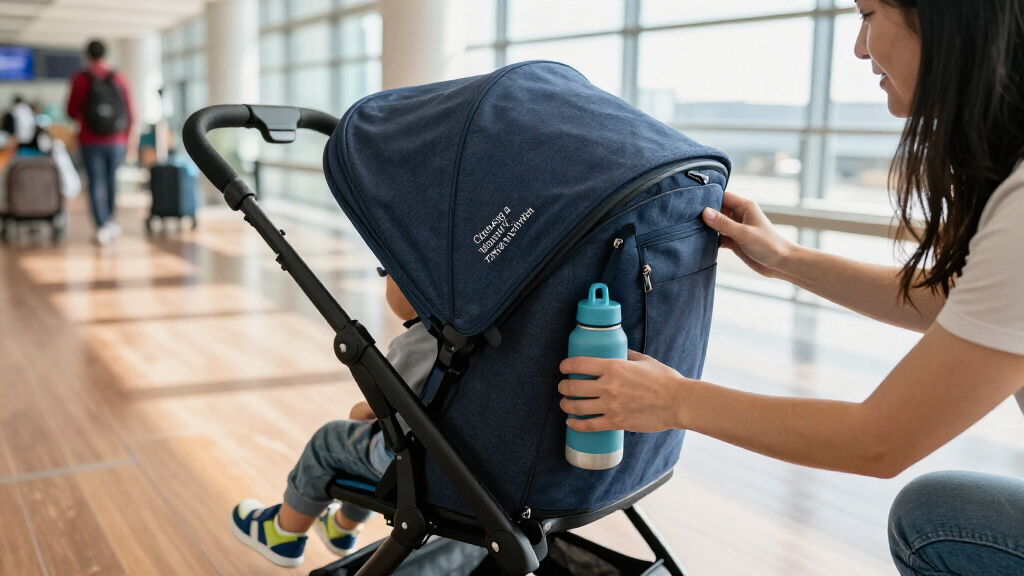
Practical functionality remains a critical factor for travel models, especially for tall parents who need extra legroom and handle height. The top picks for 2026 are defined by their weight, often under 17 pounds, allowing for one-handed lifting in busy terminals. Folding mechanisms are designed for single-push operation, ensuring compact storage. Compatibility with existing infant car seats is also a standard requirement, preventing the need for additional adapters or complex setups, as seen in our guide to the best travel system strollers. The Nuna VIAA Cabn is cited as a leading example, weighing 16.3 pounds and fitting in overhead bins, with a capacity for children up to 50 pounds, making it a strong contender among the best compact travel strollers.
2026 FIELD GUIDE · TRAVEL GEAR
Choosing a Nontoxic Travel Stroller
Five top picks for parents balancing material transparency, cabin friendly convenience, and everyday usability. Start with verified certifications and real folded dimensions; “nontoxic” is a useful goal, not a guarantee of zero chemicals.
FEATURED MODEL
16.3 lb Nuna VIAA Cabn, as reported in the supplied guideCHILD CAPACITY
50 lb Reported maximum for the featured modelTRAVEL TARGET
<17 lb A practical benchmark for lifting and transitVERIFY FIRST
3 checks Certification · folded size · car-seat fit01 / THE SHORTLIST
Five picks, one clear caveat
The source highlights Nuna VIAA Cabn but does not name four other models. Use these shortlist slots to compare verified candidates rather than treating unsupported product names as recommendations.
FEATURED · SOURCE NAMED
Nuna VIAA Cabn
Reported at 16.3 lb, with overhead-bin fit and a 50 lb child capacity. Confirm current specifications, certifications, and airline fit with the manufacturer.
Best documented pick in the supplied guideCANDIDATE 02 · VERIFY
Certification-led option
Compare products with current GREENGUARD Gold or OEKO-TEX documentation and clear fabric and coating disclosures.
CANDIDATE 03 · VERIFY
Lightweight fold
Check the listed weight and folded dimensions, then confirm whether your usual airlines accept cabin storage.
CANDIDATE 04 · VERIFY
Car-seat compatible
Confirm exact infant-seat models and whether adapters are included, sold separately, or not supported.
CANDIDATE 05 · VERIFY
Everyday travel balance
Compare recline, storage, handle height, legroom, and service support alongside material claims.
Selection note: Only Nuna VIAA Cabn is named in the supplied source. The remaining four entries are comparison profiles, not product endorsements; current model-level evidence was not provided.
02 / WHY PARENTS COMPARE
Health claims meet travel needs
Material choices and portability answer different concerns. Neither certification nor a cabin-size claim replaces checking the details that matter to your family.
MATERIALS
Look for testable claims
GREENGUARD Gold addresses chemical emissions. OEKO-TEX and GOTS cover defined textile criteria. Ask what parts of the stroller are included and review the current certificate or test scope.
TRAVEL
Make the fold work in real life
Low weight, one-hand folding, and compact dimensions can ease airport transfers. Overhead-bin access varies by aircraft and airline, so compatibility is never universal.
03 / BUYER’S FIELD NOTES
Read the label, then verify
“Nontoxic” is not a single regulated product standard. Treat it as a prompt to investigate, not as proof that a stroller is free of synthetics or chemicals.
- ✓Certification scope: confirm which fabrics or components are covered and whether the document is current.
- ✓PFAS statement: look for explicit, model-specific manufacturer language and supporting details.
- ✓Travel dimensions: compare the folded stroller with current airline rules for your aircraft and route.
- ✓Car-seat pairing: check approved seat models, adapter needs, and setup instructions.
- ✓Safety history: search CPSC recall notices and review the manufacturer’s current safety information.
“Babies spend a lot of time in their strollers. It’s a confined space that their skin touches directly.”
— The Good Trade Editors
04 / AT A GLANCE
What to compare side by side
Use this quick matrix to separate a verified product feature from a claim that still needs checking.
| Decision point | What the guide says | What to verify |
|---|---|---|
| Materials | Low-VOC and PFAS-conscious options are gaining interest. | Current test scope, component coverage, and explicit PFAS language. |
| Weight | Many travel models target under 17 lb. | Exact model weight and whether accessories change it. |
| Cabin storage | Some designs are marketed as overhead-bin friendly. | Folded dimensions plus the airline and aircraft rules for your trip. |
| Car-seat use | Compatibility is a key travel-system consideration. | Approved seat list, adapter requirements, and installation guidance. |
| Featured model | Nuna VIAA Cabn: 16.3 lb and up to 50 lb reported. | Confirm current specs, availability, certification, and recall status. |
05 / COMMON QUESTIONS
Four quick answers
A practical starting point for comparing claims with your family’s travel routine.
What does GREENGUARD Gold mean?
It indicates testing against strict chemical-emission criteria for indoor environments. Check the listing and scope to see which product components are covered.
Are nontoxic strollers heavier?
Not necessarily. Travel designs can be lightweight regardless of material claims. Compare the measured weight of the exact model you plan to buy.
Can a travel stroller be an everyday stroller?
Often, yes. Consider storage, comfort, terrain, and durability; compact models may offer less space than full-size strollers.
How can I check a PFAS-free claim?
Look for explicit manufacturer statements tied to the model and materials, plus supporting documentation. Vague “clean” or “nontoxic” wording is not verification.
Health and Travel Efficiency Benefits
Choosing a nontoxic travel stroller addresses two distinct parental concerns: infant health and logistical ease. Health-wise, reducing contact with endocrine disruptors and VOCs is significant because infants have higher absorption rates through skin and inhalation due to their proximity to stroller fabrics. The use of natural fibers also reduces the likelihood of skin irritation compared to synthetic alternatives.
From a travel perspective, the IATA compatibility of these models eliminates the stress of gate-checking large equipment. Parents can keep their lightweight strollers in the cabin, reducing the risk of damage or loss. This dual benefit of safety certification and portability makes these products a strategic investment for families who travel frequently.
Products Worth Considering

Graco Extend2Fit 3-in-1 Convertible Car Seat, Cullen

Graco Turn2Me 3-in-1 Rotating Convertible Car Seat, Cambridge

Graco Extend2Fit 2-in-1 Convertible Car Seat, Kenzie
As an affiliate, we earn on qualifying purchases.
Evolution of Stroller Material Standards
Over the past decade, the baby gear industry has seen a shift toward transparent material sourcing. Previously, flame retardants and waterproofing agents were standard without disclosure of their chemical composition. Today, brands like Nuna, founded in 2017, have responded to consumer demand by obtaining rigorous certifications such as GOTS (Global Organic Textile Standard) and GREENGUARD. This evolution has led to a market where low-toxicity is a competitive differentiator rather than a niche feature. The development of recycled fabrics and PFAS-free coatings has allowed manufacturers to maintain durability and stain resistance without relying on harmful chemicals.
“Babies spend a lot of time in their strollers. It’s a confined space that their skin touches directly (and, on top of that, they might touch or even nibble on the fabric or frame).”
— The Good Trade Editors
Limitations of Current Safety Claims
While certifications provide a baseline for safety, it is important to note that no stroller is completely free of synthetics or chemicals. The term “nontoxic” is not strictly regulated in the same way pharmaceuticals are, leading to potential confusion among consumers. Additionally, airline policies regarding overhead bin sizes can vary, particularly on smaller regional aircraft, which may have minimal or no overhead storage. Parents must verify specific airline dimensions before relying on a stroller’s IATA compatibility claim.
Verifying Airline and Product Specs
Parents considering a purchase should compare folded dimensions against their most frequent airline’s specifications. It is advisable to check for product recalls via the Consumer Product Safety Commission (CPSC) before finalizing a decision. As the market evolves, further third-party testing and updated material certifications will likely become more prominent in product marketing. Consumers should continue to monitor brand transparency reports for updates on chemical sourcing.
Key Questions
What does GREENGUARD Gold certification mean for a stroller?
It indicates that the product has been tested for chemical emissions and meets strict criteria for low VOC levels, making it safer for indoor use and sensitive individuals.
Are nontoxic strollers heavier than regular ones?
Not necessarily. Modern travel strollers are designed to be lightweight, often under 17 pounds, regardless of material certification. Brands prioritize weight reduction for travel convenience.
Can I use a travel stroller as my everyday stroller?
Yes, many travel strollers double as everyday models due to their ease of use. However, they may have less storage capacity compared to larger, bulkier strollers designed for daily errands.
How do I know if a stroller is truly PFAS-free?
Look for explicit manufacturer statements and third-party certifications like OEKO-TEX or specific PFAS-free labels. Be cautious of vague marketing terms without verifiable data.
Source: rss