
TL;DR

Turn the school run and nap time into listening time
- Thousands of audiobooks, podcasts and originals
- Listen on your phone, tablet or Echo — also offline
- Cancel anytime
Kids Halloween costume sets bundle an outfit with matching pieces such as a cape, hat, mask, or prop. Before buying, check the size chart, included accessories, care instructions, and current CPSC recall information; then test the costume with the shoes and layers your child will actually wear. A simple, comfortable set can make a more successful Halloween than an elaborate one that slips, scratches, or blocks your child’s view.
A costume can look perfect on the package and still turn into a scratchy, slippery problem after one lap around the block. Your child may love the glittering cape; you may notice the hem dragging over the front steps. A good kids Halloween costume set needs to work for both of you.
This guide helps you compare what comes in a set, choose a fit that leaves room to move, and check safety without losing the fun. You’ll also find practical ways to stay on budget, handle accessories, and give a costume another life after October 31. Think of buying a set like packing for a chilly evening outing: the outfit matters, but so do the layers, shoes, and little things you’ll need along the way.
Read the product listing to confirm exactly which costume pieces are included.
Use the manufacturer’s size chart and test the costume over real Halloween layers and shoes.
Check age guidance, inspect masks and small parts, and search CPSC recalls by brand and model.
Compare total cost and likely repeat use, not just the advertised price.
Rehearse walking, visibility, and bathroom-friendly removal before the event.
What a Costume Set Includes—and What It Leaves Out
A kids Halloween costume set is a coordinated outfit sold with one or more matching accessories, such as a cape, hat, mask, belt, or toy prop. Check the listing carefully: a dramatic character photo does not mean every pictured item comes in the box. That simple check can save you a rushed trip for a missing hat the day before a school parade.
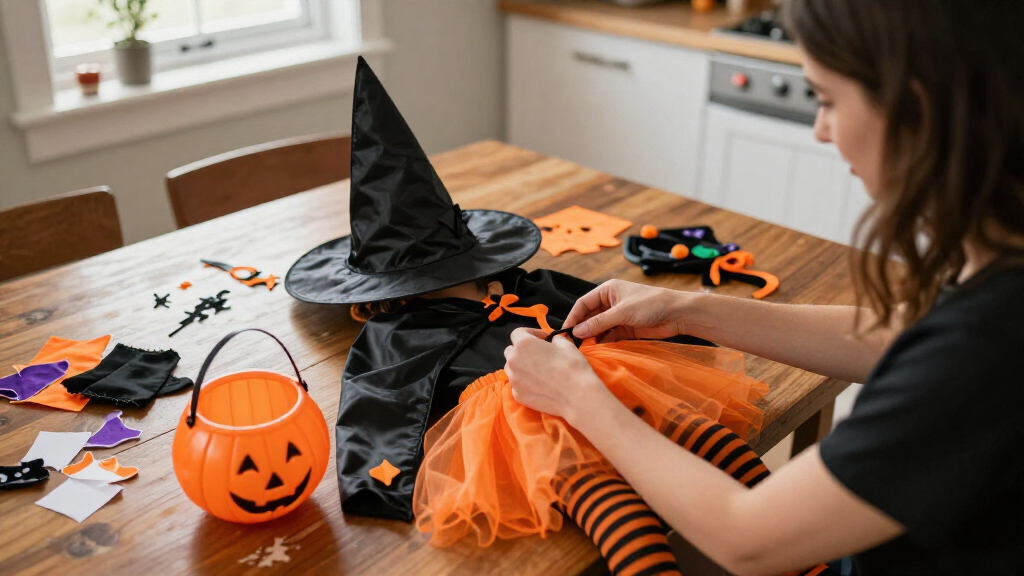
Costume sets often bundle the pieces that make a theme recognizable, but they vary widely. A superhero set may include a printed jumpsuit and fabric mask; a witch set might include a dress and hat but no tights, shoes, or broom. Think of the bundle like a meal kit: it supplies the main ingredients, but you may still need to add a few things from home.
Before you buy, read the product description and look for a clear list of included pieces. Check whether the item is a full outfit or an accessory pack, and whether the pictured shoes, gloves, or makeup are sold separately. For example, if your child wants to dress as a friendly ghost for a school event, a simple white costume and soft hat may be all you need; a separate plastic lantern could add cost and become one more thing to carry.
- Count the pieces: outfit, headwear, mask, cape, gloves, and props.
- Check the basics: are shoes, tights, or warm layers included?
- Look at care instructions: a hand-wash-only set takes more effort than a machine-washable one.
When the set is s a comprehensive match for your plans—school, trick-or-treating, or dress-up at home—you can avoid paying for extras your child will never use. The best bundle is the one that covers the needs of the evening, not just the picture on the package.
kids Halloween costume sets with accessories
As an affiliate, we earn on qualifying purchases.
As an affiliate, we earn on qualifying purchases.
Choose a Theme Your Child Will Actually Wear
Kids Halloween costume sets work best when your child likes the character or idea and can comfortably wear the outfit for the planned event. Popular options include superheroes, animals, storybook characters, and classic monsters, but a familiar favorite often beats a trend that looks exciting for five minutes. Ask what your child wants to be, then check whether the set suits their age and the setting.
For a preschool parade, a soft animal hoodie may be easier to manage than a full-face mask and several loose accessories. A tween who wants a movie character might prefer a detailed set with a cape or belt, especially if they plan to wear it again for pretend play. The difference is a little like choosing a backpack: a fun color helps, but the straps and weight determine whether your child wants to carry it.
Consider where the costume will go. A bright, easy-to-spot outfit can help your child stand out on a dim sidewalk, while a long trailing cape may snag on steps or brush against a stroller wheel. If the costume is for a school event, check the school’s rules about masks, toy weapons, or dramatic makeup before checkout. A dragon outfit that works for a neighborhood walk may not fit a classroom dress code.
Let your child help choose between a few practical options. You might say, “Would you rather wear the striped cat set or the green dinosaur?” That gives them a real choice while keeping you focused on comfort and suitability. Aim for a kids halloween costume your child can move in, recognize, and enjoy—not just one that photographs well beside a pumpkin.
- Ask your child to try the outfit idea on for a few minutes before tags come off.
- Match the design to the event, weather, and your child’s comfort with masks or makeup.
- Check age guidance and any school or venue rules before buying.
Compare Sets by Fit, Comfort, and Price
The best value comes from a set your child can wear comfortably, not simply the lowest sticker price. Costumes commonly range from around $20 budget options to $50 or more for premium sets, though prices change by retailer, theme, and season. Compare what you get for the price: a basic tunic may need extra pieces, while a bundle with reusable accessories could be a better deal.
Use the maker’s size chart rather than relying only on your child’s usual clothing size. Measure height and, when the chart asks for it, chest and waist; then compare the numbers with the listed garment range. Leave room for a thin warm layer if the costume will be worn outdoors. A child who fits a size small in a T-shirt may need a different costume size because the cut, fabric, and intended layers differ.
Here’s a useful side-by-side check. Imagine one $22 costume with a thin pullover and a $38 set with a lined top and a reusable hat. If your child will wear the first only once, it may suit your budget; if the second can handle school dress-up days and imaginative play, the added cost may make sense. Neither is automatically better—the real question is what your family will use.
| What to compare | Budget set | Higher-priced set |
|---|---|---|
| Included pieces | Often the main outfit; check the listing | May bundle more accessories |
| Fit details | Use the size chart and inspect the cut | Still requires careful measuring |
| Repeat wear | May suit one evening or light play | May offer sturdier details, but verify |
| Best value when | You need a simple, affordable look | Your child will reuse the pieces |
Look closely at the fabric and seams, too. A scratchy neckline can bother a child more than a slightly plain design, and a loose hem may catch underfoot. Reviews can help you spot fit patterns, but treat them as clues rather than a guarantee: children’s builds and comfort preferences vary.
Check Safety Before the Costume Leaves the Package
Before your child wears a costume, inspect the outfit and accessories for hazards, check the label, and search current U.S. Consumer Product Safety Commission (CPSC) recall notices. Safety can’t be judged from a glossy product photo: seams, cords, small parts, and visibility matter once the costume is on. A quick home check is especially useful when a set includes a mask, a long cape, or a prop.
Read the costume’s age guidance and match accessories to your child’s age and abilities. Small detachable pieces can pose a choking risk for young children, while masks or headwear may make it harder to see or hear. Try the mask at home and ask your child to look down, turn, and walk; if the eye openings or fit limit their view, choose face paint used according to its label or skip the mask.
Check that hems do not drag and that capes, ties, and straps do not create snagging or tripping hazards. Test the full outfit on a clear path, including the shoes your child will wear. For example, a floor-length robe may look grand in the bedroom but sweep across wet leaves outside. A shorter version or a simple alteration can keep the look while making movement easier.
Do a full-dress rehearsal: outfit, accessories, shoes, and any warm layers. If your child can’t see clearly, walk freely, or remove a piece easily, adjust the costume before Halloween night.
Costume labeling and material details vary, so follow the manufacturer’s instructions rather than assuming every set has the same features. Check the product and retailer information for relevant safety details, and look up the exact brand and model in CPSC recall notices. If you have questions about a young child’s costume or a material sensitivity, ask your pediatrician for guidance.
Make the Costume Work for a Cold, Busy Halloween
A costume that feels fine indoors can become uncomfortable outside, so test it with the layers and shoes your child will actually wear. October evenings can bring chilly air, damp sidewalks, and long waits at doorways. A costume works like a small outfit puzzle: each layer needs to fit with the others, or a sleeve bunches up and a boot catches on the hem.
Try the full look at least a few days before the event. Have your child put on their base layer, costume, coat if needed, and shoes, then walk, sit, raise their arms, and climb a step. If the waistband pinches over leggings or a cape slides off a coat, you have time to adjust. For instance, a child wearing a puffy jacket beneath a superhero top may need a larger size or a cape that fastens securely over the outer layer.
Keep accessories simple when your child has a lot to carry. A soft hat can be easier than a stiff mask, and a small treat bag may be more manageable than a bulky prop. If you’re planning a neighborhood route, think about bathroom breaks too: a costume with a complicated back fastening can frustrate a child who needs to use the restroom quickly.
Use this short rehearsal routine to catch problems early:
- Put on every layer your child expects to wear outdoors.
- Check movement: walk, turn, bend, and step up safely.
- Test visibility: confirm masks and hats do not block the view.
- Practice removal: make sure a parent or child can take off tricky pieces without a struggle.
Comfort is not a luxury add-on. It helps your child enjoy the evening instead of spending the walk tugging at sleeves or asking you to carry half the costume.
Spend Less and Give the Costume Another Life
You can find a memorable costume without paying for a complicated set your child wears once. Compare prices early, browse secondhand shops, and check whether a simple outfit can be built from clothing you already own. A black shirt, striped leggings, and cardboard ears can become a cat costume; adding a store-bought tail may finish the look for less than a full packaged set.
Timing can affect selection and price, but there is no guaranteed sale date. Shopping in September often gives you more sizes and themes to choose from, while later discounts may appear when retailers clear seasonal stock. Waiting can save money, but the tradeoff is fewer choices—especially for popular characters or less common sizes. Set a budget and decide which pieces matter most before the costume aisle starts to sparkle.
Look at the set’s after-Halloween potential. A cape can join the dress-up box, a soft animal tunic can become cozy playwear if its label allows, and a plain hat may work for school events. On the other hand, elaborate light-up or sound-effect accessories may need batteries and careful storage, and delicate trim may not hold up to repeated play. Read care instructions before washing; a quick toss into a hot laundry cycle can damage printed details or glued decorations.
Some brands offer recycled or organic materials, but check the product description for specific claims instead of assuming that “eco-friendly” means a costume will last longer. You can also pass a clean costume to a younger sibling or swap with another family. For example, a neighbor’s astronaut set may trade neatly for your child’s dragon outfit, giving both costumes a second trip around the block.
Keep the package or take a photo of the care label before storing the outfit. A labeled bin keeps accessories together, so next year you won’t find the hat in a drawer and the matching cape under the bed.
Frequently Asked Questions
How do I choose the right size for a kids Halloween costume set?
Measure your child and compare the results with the manufacturer’s size chart, rather than relying only on their regular clothing size. Try the set over the layers and shoes they’ll wear outside; a costume that fits over a T-shirt may feel tight over a sweater.
What should I check before my child wears a costume?
Inspect seams, hems, cords, detachable pieces, masks, and props, and check the label’s age guidance. Try the full outfit at home to confirm your child can see and move, and search CPSC recall notices for the product’s brand and model.
Are accessories always included in a costume set?
No. Product photos may show shoes, gloves, props, or makeup that the listing sells separately. Read the included-items list closely and price any extras before you decide the bundle fits your budget.
When should I shop for a Halloween costume?
Shopping in September often gives you a broader choice of sizes and themes, though prices and stock vary by retailer. Waiting for late-season markdowns can save money, but popular styles may sell out first.
How can I make a costume more comfortable for a cold night?
Test the costume with the actual base layer, coat, and shoes your child will wear, then check that sleeves and hems do not bunch or drag. Choose simple, secure accessories and adjust the fit before the event rather than trying to fix it on the sidewalk.
Can a Halloween costume set be reused after October?
Often, yes: capes, hats, and tunics can join a dress-up box or be passed to another child. Follow the care label, store matching pieces together, and check for loose seams or damaged accessories before another wear.
Conclusion
Choose the set your child can move in, see through, and enjoy for the whole outing. Check what the package includes, try every layer at home, and look up current CPSC recall information before the costume comes out for Halloween.
When the porch lights glow and the candy bag starts to rustle, comfort matters more than one extra accessory. Pick a costume that lets your child be the character—and still be a kid.
Cold & flu season Picks
humidifiers
As an affiliate, we earn on qualifying purchases.