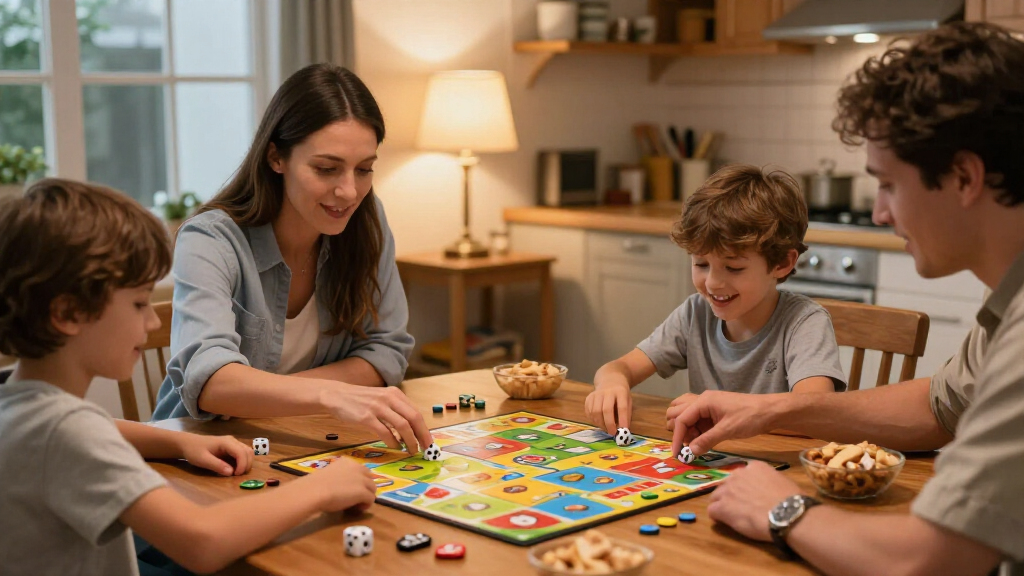

The best family board game for game night is one that keeps every generation at the table laughing, and after comparing 15 popular options, TAPPLE earns the top spot for its fast rounds, simple rules, and appeal across ages. Close behind are Herd Mentality, which turns group thinking into comedy, and Do You Really Know Your Family?, a card game built specifically for mixed-age family play. The main tradeoff you’ll face is between games young kids can actually win, games that entertain adults, and games short enough to hold everyone’s attention on a weeknight. Party-style card games tend to deliver the most laughs per minute, while classic boards like Candy Land and Sorry! favor younger players and can test adult patience. Keep reading for the full ranked breakdown, including who each game suits best and which ones to skip.

Get baby and family essentials delivered free — and shop member deals
- Fast, free delivery on millions of items
- Access to Prime Big Deal Days deals on October 6–7
- Prime Video, Amazon Music and more included
Complete the kit


Key Takeaways
- Word and party games dominated the top of the ranking because they scale across ages better than roll-and-move classics, which mostly serve players under eight.
- The biggest differentiator was elimination of downtime: TAPPLE, Blank Slate, and Hedbanz keep everyone engaged every turn, while Sorry! and Trouble leave players waiting long stretches between moves.
- Games with a shared-answer or group-vote mechanic (Herd Mentality, Do You Really Know Your Family?, Our Family is So Weird) produced the strongest family-bonding payoff, something pure competition games couldn’t match.
- Classic licensed games like Yahtzee and Connect 4 offer the best long-term durability and replay depth, but they cap out at four players, which is a real constraint for bigger families.
- Guess the Gibberish and Taboo ranked lower for mixed ages because reading speed and vocabulary create an uneven playing field between kids and adults.
| Grab the Mic Karaoke Party Game |  | Best Party Pick for Larger Groups | Brand: Lucky Egg | Model: LE24 | Players: 2–12 | VIEW LATEST PRICE | See Our Full Breakdown |
| Hasbro Gaming Yahtzee Dice Game |  | Best Classic Value | Brand: Hasbro Gaming | Players: 2 or more | Recommended age: 8 and up | VIEW LATEST PRICE | See Our Full Breakdown |
| Hasbro Gaming Taboo Classic Word Guessing Party Game |  | Best for Teens and Adults | Brand: Hasbro Gaming | Players: 4 or more | Age range: 13 years and up | VIEW LATEST PRICE | See Our Full Breakdown |
| Sorry! Classic Board Game for Kids Ages 6 and Up |  | Best for Younger Kids | Brand: Hasbro Gaming | Recommended age: 6 and up | Players: Each player gets 4 pawns | VIEW LATEST PRICE | See Our Full Breakdown |
| Do You Really Know Your Family? Family Card Game |  | Best for Conversation and Connection | Manufacturer: ASM Holdings LLC | Model number: 91533 | Age range: Kids 8+, teens, and adults | VIEW LATEST PRICE | See Our Full Breakdown |
| Hasbro Connect 4 Game, 2025 Edition |  | Best Two-Player Duel | Players: 2 | Recommended age: 6 years and up | Included discs: 42 (21 red, 21 yellow) | VIEW LATEST PRICE | See Our Full Breakdown |
| WHAT DO YOU MEME? Guess the Gibberish Family Card Game |  | Best for Teens and Tweens | Players: 2 or more | Recommended age: 12+ | Cards: 400 | VIEW LATEST PRICE | See Our Full Breakdown |
| Hasbro Gaming Trouble Board Game for Kids Ages 5 and Up |  | Best for Young Kids | Players: 2–4 | Recommended age: 5 and up | Game options: Classic gameplay or Power Up Spaces | VIEW LATEST PRICE | See Our Full Breakdown |
| Herd Mentality Family Party Board Game |  | Best for Big Groups | Brand: Big Potato | Players: 4–20+ | Recommended age: 10 years and up | VIEW LATEST PRICE | See Our Full Breakdown |
| Blank Slate Party Game |  | Best Group Word Game | Brand: USAopoly | Genre: Family, Party, Word | Number of players: 3–8 | VIEW LATEST PRICE | See Our Full Breakdown |
| Spin Master Hedbanz Picture Guessing Game, 2nd Edition |  | Best Party Guessing Game | Edition: 2nd edition | Players: 2–6 | Recommended age: 6 years and up | VIEW LATEST PRICE | See Our Full Breakdown |
| Centtechi Wooden Hexagon Tower Game for Kids |  | Best for Preschoolers | Material: Beech wood | Included components: Hexagon tower, 36 sticks, die, 6 balls | Number of players: 2–6 | VIEW LATEST PRICE | See Our Full Breakdown |
| Our Family is So Weird: A Family Card Game to Decide Who’s Most Likely To |  | Best for Teens and Extended Family | Number of cards: 150 | Dry-erase boards: 6 | Dry-erase markers: 6 | VIEW LATEST PRICE | See Our Full Breakdown |
| Hasbro Gaming Candy Land Board Game for Kids |  | Best First Board Game | Game type: Board game | Players: Not specified | Recommended age: 3 years and up | VIEW LATEST PRICE | See Our Full Breakdown |
| USAopoly TAPPLE Family Word Game |  | Best Fast-Paced Word Game | Age range: 8+ | Players: Not specified | Included components: Portable TAPPLE wheel with built-in timer, 36 cards, instructions | VIEW LATEST PRICE | See Our Full Breakdown |
| family board games for game night | Players | Recommended age |
|---|---|---|
| Grab the Mic Karaoke Party Gam | 2–12 | 8+ |
| Hasbro Gaming Yahtzee Dice Gam | 2 or more | 8 and up |
| Hasbro Gaming Taboo Classic Wo | 4 or more | — |
| Sorry! Classic Board Game for | Each player gets 4 pawns | 6 and up |
| Do You Really Know Your Family | — | — |
| Hasbro Connect 4 Game | 2 | 6 years and up |
| WHAT DO YOU MEME? Guess the Gi | 2 or more | 12+ |
| Hasbro Gaming Trouble Board Ga | 2–4 | 5 and up |
| Herd Mentality Family Party Bo | 4–20+ | 10 years and up |
| Blank Slate Party Game | — | — |
| Spin Master Hedbanz Picture Gu | 2–6 | 6 years and up |
| Centtechi Wooden Hexagon Tower | — | 3 years and up |
| Our Family is So Weird: A Fami | 3+ | — |
| Hasbro Gaming Candy Land Board | Not specified | 3 years and up |
| USAopoly TAPPLE Family Word Ga | Not specified | — |
More Details on Our Top Picks
Grab the Mic Karaoke Party Game
Most games in this roundup cap out at four to six players, which makes Grab the Mic stand out immediately: it handles up to twelve players, making this option the one to beat when cousins, neighbors, or extended family pile onto game night. The core mechanic — grabbing a foam microphone and singing a lyric containing a revealed word — turns the evening into something closer to a talent show than a board game.
The tradeoff is real, though. Where Yahtzee rewards quiet strategy, this game rewards confidence and a decent memory for song lyrics. Shy kids or tone-conscious adults may sit out rounds, and the lyric-recall pressure can frustrate younger players. Compared with Taboo, which leans on vocabulary, this one leans on performance — pick it only if your group enjoys being loud.
Pros:- Supports up to 12 players, the largest group capacity in this lineup
- Multiple game modes keep repeat plays feeling different
- Fast-paced format keeps energy high across generations
- Includes everything needed: word cards, foam mic, board, and tokens
Cons:- Requires recalling song lyrics under time pressure, which excludes non-music listeners
- Physical comedy format can embarrass self-conscious players
Best for: Families hosting bigger gatherings of 6–12 people who love music and don’t mind singing in front of relatives
Not ideal for: Quiet households or families with shy kids — the singing requirement makes participation feel like a spotlight
- Brand:Lucky Egg
- Model:LE24
- Players:2–12
- Recommended age:8+
- Word cards:120 cards (250 words)
- Included components:Word cards, foam microphone, game board, player tokens, instructions
- Material:Cardboard
Our verdict“This is the pick for loud, crowded family nights where singing badly is half the fun — skip it if your crew prefers calm strategy.”
Hasbro Gaming Yahtzee Dice Game
If game night at your house mixes a 9-year-old, a teenager, and a grandparent, Yahtzee solves the age-gap problem better than anything else here. The rules take two minutes to teach, and the decision layer — which combination to chase and when to sacrifice a category — gives adults something to chew on while kids just enjoy shaking the cup.
Compared with Sorry!, which can drag when players keep getting bumped back to start, Yahtzee keeps everyone scoring on every turn, so nobody sits idle. The tradeoff: luck dominates more than strategy-minded players like to admit, and back-to-back games can feel repetitive for teens raised on faster fare like Tapple. It’s also a scorekeeping game, so someone has to do the math. Still, as a durable, no-setup classic, this pick makes the most sense for mixed-age households.
Pros:- Teaches in minutes, playable by kids, teens, and adults together
- Blends luck with genuine scoring decisions each turn
- Works with just two players, unlike group-required games like Taboo
- Compact and portable for travel game nights
Cons:- Dice luck can decide games regardless of skill
- Requires manual scorekeeping, which younger kids can’t manage alone
- Repetitive for players accustomed to faster party formats
Best for: Multi-generational families who want a low-cost, zero-setup game that works with just two players
Not ideal for: Groups that dislike luck-driven outcomes or players who find manual scorekeeping tedious
- Brand:Hasbro Gaming
- Players:2 or more
- Recommended age:8 and up
- Game type:Dice and strategy game
- Components:5 dice, dice cup, scorepad
Our verdict“The safest default buy in this roundup — a classic that fits any mixed-age table, as long as dice luck doesn’t sour the mood.”
Hasbro Gaming Taboo Classic Word Guessing Party Game
Taboo earns its spot as the older-kids pick because it does what Hedbanz and Grab the Mic do — get people shouting guesses — but with a layer of verbal skill that keeps teenagers and adults genuinely engaged. With 848 guess words across 212 cards, it outlasts smaller-deck games before repeats become predictable.
The catch is the 13+ age rating, the highest in this lineup. Younger siblings will struggle to give clues under the forbidden-word constraints, so this model is better suited to families with teens than those with elementary-aged kids. It also demands a minimum of four players, unlike Yahtzee‘s flexible two-player format. One thoughtful touch: physical accessories like the squeaker and sand timer can be swapped for online tools, though that means handing someone a smartphone mid-game — a mixed blessing for screen-wary parents.
Pros:- 848 guess words give it the longest replay life of any card game here
- Team format builds energy and keeps everyone involved each round
- Optional online timer and buzzer streamline gameplay
- Card-based design travels well for parties and trips
Cons:- Requires at least four players, ruling out small households
- Online tools need a web-enabled device, which adds screen time
- 13+ rating excludes the younger kids most family game nights include
Best for: Families with teens and adults who love wordplay and can reliably field teams of four or more
Not ideal for: Families with kids under 13 — the forbidden-word mechanic frustrates younger clue-givers
- Brand:Hasbro Gaming
- Players:4 or more
- Age range:13 years and up
- Cards:212
- Guess words:848
- Included accessories:Sand timer, squeaker, scorepad
- Online tools:Timer, buzzer, and scorepad
Our verdict“The best choice once the kids are teenagers — deep word content and team energy, provided you can fill four chairs.”
Sorry! Classic Board Game for Kids Ages 6 and Up
When the game night table includes a six-year-old, Sorry! is the bridge pick. Its age rating of 6 and up sits below Yahtzee‘s 8+ threshold and well under Taboo‘s 13+, while the card-draw movement means a first-grader can play competently against a parent without feeling steamrolled.
The defining feature — and drawback — is the send-back mechanic. Sending an opponent’s pawn all the way home creates the biggest cheers and the biggest meltdowns in this roundup. Compared with Trouble, which shares the bump-back concept but uses the Pop-o-Matic die, Sorry! adds slide spaces and card-driven choices that give it slightly more texture. The real weakness is documentation: no stated play time or player count on the box description, so plan for a loose 30–45 minutes and confirm your copy’s rules before inviting extra players.
Pros:- 6+ age rating makes it the most accessible pick here for young kids
- Card draws create varied moves and light strategy each turn
- Slide spaces and bump-backs generate big reactions and excitement
- Familiar classic that grandparents likely already know how to play
Cons:- Getting sent back to start can upset younger or competitive players
- No published play time or player count in product details, requiring a rules check
Best for: Families with kids aged 6–10 who want a race-to-finish board game that adults can also enjoy
Not ideal for: Households with sore losers — the send-back-to-start mechanic causes regular frustration and tears
- Brand:Hasbro Gaming
- Recommended age:6 and up
- Players:Each player gets 4 pawns
- Game type:Family board game
- Mechanics:Card draws, slide spaces, bump-backs
Our verdict“The right board game for families whose youngest player is six or seven — just brace for the drama when pawns get sent home.”
Do You Really Know Your Family? Family Card Game
Every roundup needs one game that isn’t really about winning, and this is it. Where Taboo and Grab the Mic pit players against each other, Do You Really Know Your Family? is built to surface stories — the questions and silly challenges are designed to make family members reveal things the table didn’t know. The payoff isn’t points; it’s the conversation that spills past the last card.
That focus is also its limit. Compared with Yahtzee, which works fine with visiting friends or a spouse, this game only makes sense when actual family members play — the questions presume shared history. There’s no board, no timer pressure, and no strategy, so competitive players may find it slight. But for a household that wants game night to double as quality time, this pick makes the most sense for turning screens off and talk on.
Pros:- Questions and challenges genuinely get family members talking and laughing
- Rules take under five minutes to learn with no setup
- Works across a wide span of ages, from 8-year-olds to grandparents
- Card-only format makes it easy to bring on trips
Cons:- Almost no strategy or competitive tension, which leaves some players bored
- Designed strictly for family groups — it falls flat with friends or mixed company
Best for: Parents who want game night to spark real conversations and laughs between kids, teens, and adults
Not ideal for: Competitive players or mixed groups with non-family guests — it has no strategy and depends on shared family history
- Manufacturer:ASM Holdings LLC
- Model number:91533
- Age range:Kids 8+, teens, and adults
- Components:Cards
- Material:Cardstock
- Item type:Family card game
Our verdict“Buy this if the goal of game night is connection rather than competition — skip it if your crew plays to win.”
Hasbro Connect 4 Game, 2025 Edition
Most family game night picks on this list — like Trouble or Herd Mentality — need a crowd, but this one stands out as a genuine head-to-head strategy duel that even a six-year-old can grasp in one round. The 2025 refresh is the version worth grabbing: the grid folds into a handled carrying case with built-in disc storage, which fixes the classic edition’s most annoying problem of loose discs scattered across a closet shelf. Score trackers settle the “best of five” arguments without tally-keeping on paper.
The tradeoff is real, though: with a hard cap of two players, it can’t anchor a full family night the way Blank Slate can. This pick makes the most sense for households where siblings or a parent-child pair want a quick, satisfying contest between bigger group games.
Pros:- Familiar drop-a-disc strategy that teaches planning ahead
- Foldable case with disc storage and handle travels easily
- Built-in score trackers settle multi-round matches
- Rounds are short enough for repeat play
Cons:- Strictly two players, so it sidelines the rest of the family
- Limited replay depth for older kids who outgrow the strategy
Best for: Parents and kids, or sibling pairs, who want a fast strategic duel that travels well
Not ideal for: Families of four or more looking for a single game everyone plays together — it’s strictly a two-player format
- Players:2
- Recommended age:6 years and up
- Included discs:42 (21 red, 21 yellow)
- Scoring:First player to win 4 rounds is the champion
- Storage:Foldable carrying case with built-in disc storage
- Setup:One-motion setup
Our verdict“Buy this as your designated two-player matchup game, not your main family night centerpiece.”
WHAT DO YOU MEME? Guess the Gibberish Family Card Game
Where Taboo Classic rewards fast talkers and Blank Slate rewards intuitive thinking, this game rewards players who can hear hidden phrases in nonsense strings — a skill tweens and teens tend to dominate. The 400-card deck means it takes many sessions before repeats appear, and the built-in clue system on card backs means younger or more hesitant players aren’t left stranded when a phrase stumps them. The one-minute sand timer adds a frantic energy that bigger board games in this roundup, like Trouble, can’t match.
The catch is the 12+ age recommendation — this is better suited to families with middle-schoolers than those with little ones. It’s also a deck-and-timer kit rather than a board, so households wanting a tactile centerpiece may prefer something with pieces to move.
Pros:- 400 cards give it serious longevity before repeats
- Clues on card backs keep weaker players in the game
- Compact deck travels well for road trips and vacations
- Scaled for 2 players up to large groups
Cons:- 12+ age floor excludes younger siblings
- Reading-heavy gameplay leaves non-readers sitting out
Best for: Families with tweens and teens who want a loud, fast word-decoding race
Not ideal for: Families with kids under 12 — the gibberish decoding is genuinely too difficult for young readers
- Players:2 or more
- Recommended age:12+
- Cards:400
- Timer:1-minute sand timer
- Included:Gameplay instructions
Our verdict“This is the pick when your game night crowd skews teenage and you want the room laughing at nonsense phrases.”
Hasbro Gaming Trouble Board Game for Kids Ages 5 and Up
Compared with Candy Land, which is pure luck with no decisions at all, Trouble gives young players a bit of agency — which pieces to move, when to chase an opponent — while staying simple enough for a five-year-old. The Pop-O-Matic bubble remains the star: it’s satisfying to press and, more practically, keeps the die from disappearing under the couch, a chronic problem with loose-dice games like Yahtzee. Two gameplay modes (classic and Power Up Spaces) let the game grow slightly with the kids.
The honest downside is that adults will tire of it long before the kids do — the decisions are shallow, and a four-player cap means it doesn’t scale for bigger gatherings. Consider it a starter game in the collection, not the main event, with something like Herd Mentality waiting in the wings for when company arrives.
Pros:- Rules are learnable in under five minutes by young kids
- Pop-O-Matic bubble keeps the die contained
- Two gameplay modes add mild variety
- Quick setup and short play sessions suit bedtimes
Cons:- Heavy luck element makes it repetitive for anyone over 8
- Caps out at 4 players, so it can’t host bigger family gatherings
Best for: Families with kids aged 5–8 who need a first “real” board game with simple choices
Not ideal for: Groups with older kids or adults only — the luck-heavy gameplay won’t hold their interest past a round or two
- Players:2–4
- Recommended age:5 and up
- Game options:Classic gameplay or Power Up Spaces
- Die roller:Pop-O-Matic bubble
- Type:Race-and-chase board game
Our verdict“Pick this for the youngest players at the table; skip it if your crew has aged past second grade.”
Herd Mentality Family Party Board Game
Most games in this roundup top out at four or eight players — Blank Slate maxes at 8, Trouble at 4 — but this one handles 4 to 20+ players, making it the clear choice for holidays, cousins’ visits, and any night the whole extended family shows up. The mechanic is refreshingly simple: everyone answers a question secretly, and you win a cow if your answer matches the majority. No turns to wait through, no complex rules to explain, and rounds wrap in about 20 minutes.
The wrinkle is the pink cow of doom: land an odd-one-out answer and you’re stuck with it until someone else slips up, which younger or more sensitive players may find frustrating. Compared with Blank Slate, it’s less about cleverness and more about guessing the crowd, so strategy-minded players should adjust expectations.
Pros:- Scales from 4 to 20+ players without rule changes
- Simultaneous play means no bored waiting between turns
- Rounds finish in about 20 minutes
- 20 bonus questions extend replay value
Cons:- The pink cow penalty can frustrate kids who land odd answers
- Needs a genuine group of at least 4 to work at all
Best for: Hosts who regularly entertain large mixed-age groups and need a game everyone can join instantly
Not ideal for: Small households of 2–3 people — the herd mechanic collapses without a real crowd to match
- Brand:Big Potato
- Players:4–20+
- Recommended age:10 years and up
- Playing time:20 minutes
- Genre:Family, Party
- Edition:Kids Edition
- Contents:Main game with 20 extra questions
Our verdict“If your game nights regularly involve a dozen people, nothing else on this list can seat them all.”
Blank Slate Party Game
This option stands out as the sweet spot between TAPPLE’s speed-based word play and Guess the Gibberish’s teen-skewed chaos: it works for ages 8 and up, seats 3–8 players, and rewards thinking like other people rather than thinking fast. Matching another player’s completion of a word cue — writing “cake” when someone else writes “cake” instead of “bake” — creates the exact “we’re on the same wavelength” moments family game nights are for. The 250 double-sided cue cards (500 prompts) and dry-erase slates keep it reusable and tidy.
Two caveats: everyone must be comfortable writing short words, so pre-readers are out. And unlike Herd Mentality, which plays 20+, it caps at 8 — fine for most families, but a limit for big holiday gatherings.
Pros:- 500 word cues across 250 double-sided cards for long-term replay
- Dry-erase slates make reset and cleanup nearly instant
- Scales smoothly from a trio up to 8 players
- Rules take one minute to teach
Cons:- Requires writing, excluding kids who can’t yet spell
- Hard 8-player ceiling limits very large gatherings
Best for: Families with kids 8+ who enjoy wordplay and want a game that scales from 3 to 8 players
Not ideal for: Families with pre-readers — every player must write a word to participate
- Brand:USAopoly
- Genre:Family, Party, Word
- Number of players:3–8
- Age range:8+
- Playing time:About 30 minutes
- Included components:Scoreboard, 8 dry-erase slates, 250 double-sided word cue cards, rules
- Language:English
- Edition:Standard Edition
Our verdict“The best all-around word game here for mixed-age families — as long as everyone at the table can hold a marker.”
Spin Master Hedbanz Picture Guessing Game, 2nd Edition
This option stands out for pure group energy — headbands, a timer, and the silly theater of guessing what is on your own forehead. Where Candy Land is quiet turn-taking, Hedbanz gets everyone talking at once, which is exactly what a lively game night needs. The yes-or-no format means a six-year-old and a grandparent can compete on roughly equal footing, and the updated headband designs add charm without changing the familiar formula. The tradeoff: gameplay is light on strategy, so adults may tire of it faster than kids do, and rounds can drag if players ask unfocused questions. Compared with Tapple, which rewards quick vocabulary recall, Hedbanz rewards social instinct — a better fit for mixed-age groups than word-game enthusiasts.
Pros:- Simple yes-or-no gameplay works across a wide age range
- Six themed headbands and 69 cards give plenty of variety
- Supports up to 6 players for bigger family groups
- Fast first-to-three-cards win condition keeps rounds short
Cons:- Requires at least 2 players, so it is not a solo option
- Little strategic depth for older players
- Publisher does not specify a game duration
Best for: Families with kids 6–12 who want a loud, social game that grandparents and siblings can play together
Not ideal for: Strategy-focused households or adult-only groups who will find the guessing loop repetitive after a few rounds
- Edition:2nd edition
- Players:2–6
- Recommended age:6 years and up
- Winning condition:First to guess 3 cards correctly
- Cards included:69 picture cards, 3 sample question cards
- Components:6 headbands, 6 headplates, 16 scoring badges, timer, instructions
- Headband designs:Dinosaur, narwhal, robot, flower, butterfly, brain
Our verdict“This pick makes the most sense for families who want laughter and interaction over tactics — the social centerpiece of a kids-included game night.”
Centtechi Wooden Hexagon Tower Game for Kids
Most games in this roundup require reading, voting, or vocabulary — this one only requires a steady hand. The beech wood build and counting-based stick removal make it a rare fit for preschoolers, occupying the age slot below Candy Land‘s territory and well under the 14+ gate of Our Family is So Weird. Pulling sticks while balls wobble teaches turn-taking and fine motor skills disguised as play. The tradeoffs are real: rounds are short and simple, older siblings will outgrow it quickly, and the small sticks and balls demand supervision around toddlers despite the toddler-friendly age label — a contradiction the listing itself does not resolve. Compared with plastic alternatives, the wood construction genuinely elevates it as a keepsake-style gift.
Pros:- Beech wood with water-based paint feels durable and safe
- Combines play with counting and hand-eye coordination
- Compact size travels well for restaurants and trips
- No batteries or reading required
Cons:- Small sticks and balls pose a choking risk for the youngest players
- Listed age ranges are inconsistent between materials
- Limited long-term replay value as kids grow
Best for: Parents of 3–6 year olds who want a screen-free game that builds motor skills and counting practice
Not ideal for: Families with children over 8, who will find the gameplay too simple after a handful of rounds
- Material:Beech wood
- Included components:Hexagon tower, 36 sticks, die, 6 balls
- Number of players:2–6
- Recommended age:3 years and up
- Dimensions:7.09 × 4.71 × 0.1 inches
- Batteries:Not required
- Play style:Manual
Our verdict“Choose this for the preschool crowd at your table — and pair it with a deeper game for the older kids.”
Our Family is So Weird: A Family Card Game to Decide Who’s Most Likely To
This is the roundup’s pick for households with teenagers, filling the gap that kid-focused titles like Hedbanz and Candy Land leave wide open. The dry-erase voting boards are the clever part — instead of passively drawing cards, everyone writes a name, argues their case, and the game becomes a roast of your own relatives. With 150 prompts and support for big groups, it shines at reunions where Do You Really Know Your Family? would cover similar ground with a softer touch. The tradeoff is the hard 14+ age gate: the humor skews toward teen and adult sensibilities, so younger siblings will be left out, and it needs at least 3 players to generate any comedic momentum.
Pros:- Dry-erase boards make voting personal and interactive
- 150 prompt cards sustain many gatherings
- Easy to learn in under five minutes
- Scales well for large extended-family groups
Cons:- Ages 14 and up only, excluding younger siblings
- Requires at least 3 players
- Humor depends on family dynamics — quiet groups may find it flat
Best for: Families with teens and extended relatives who want a conversation-fueling game for gatherings and reunions
Not ideal for: Families with kids under 14, who cannot meaningfully participate in the voting humor
- Number of cards:150
- Dry-erase boards:6
- Dry-erase markers:6
- Players:3+
- Ages:14+
- Game type:Voting party card game
Our verdict“If your game night skews teenage-and-up and thrives on inside jokes, this is the strongest conversation starter on the list.”
Hasbro Gaming Candy Land Board Game for Kids
For a child’s very first board game, nothing in this lineup competes on accessibility — no reading, no timer, no strategy, just colored cards and a race to the castle. Where Tapple demands vocabulary under pressure and Hedbanz requires question-asking logic, Candy Land lets a three-year-old play entirely independently, which is why it endures generation after generation. The no-reading design is the deciding factor for parents of pre-readers. The tradeoff is honest: adults will be bored within ten minutes, gameplay is pure luck with zero decisions, and the unspecified player count means larger families may need to improvise. Treat it as a developmental stepping stone rather than a game the whole family will request — one to graduate from, not to grow into.
Pros:- Playable at age 3 with zero reading required
- Colorful cards and board hold young attention
- Simple rules teach turn-taking fundamentals
- Durable classic design that survives rough handling
Cons:- Pure luck gameplay with no decisions to make
- Player count not specified by the publisher
- Adults will find it repetitive quickly
Best for: Parents introducing a 3–5 year old to board games for the first time
Not ideal for: Families with school-age kids and adults expecting shared entertainment — the luck-only format offers nothing for older players
- Game type:Board game
- Players:Not specified
- Recommended age:3 years and up
- Reading required:No
- Game pieces:Gingerbread man pawns
- Play style:Card-driven race, luck-based
Our verdict“Buy this as your preschooler’s entry point to game night — then pass it down once they outgrow it.”
USAopoly TAPPLE Family Word Game
This pick makes the most sense for families who want adrenaline over endurance. The ten-second timer on the portable wheel turns word recall into a pressure cooker — a sharper, faster experience than the leisurely pace of Candy Land and less dependent on vocabulary depth than classic word games, since any fitting word counts. With 144 categories across 36 cards, it avoids the repetition problem that plagues shorter party games, and the self-storing wheel means cleanup takes seconds, a genuine advantage over box-heavy board games like Sorry!. The tradeoffs: the timer is genuinely stressful for slower thinkers and younger kids, the 8+ age floor excludes the preschool crowd, and word games inherently favor strong readers. Compared with Taboo, Tapple trades nuance for speed and portability.
Pros:- Fast rounds keep energy high across a game night
- 144 categories deliver strong replayability
- Portable wheel stores its own cards for travel
- Simple rules that new players grasp immediately
Cons:- Ten-second timer can frustrate slower or younger players
- Ages 8 and up excludes younger siblings
- Player count not specified by the publisher
Best for: Families with word-loving kids 8 and up who enjoy timed competition and quick rounds
Not ideal for: Players who crumble under time pressure or families with pre-readers, who cannot participate meaningfully
- Age range:8+
- Players:Not specified
- Included components:Portable TAPPLE wheel with built-in timer, 36 cards, instructions
- Categories:144 across 36 cards
- Edition:Standard Edition
- Model year:2022
- Brand:USAopoly
Our verdict“For quick-fire word battles that fit in a backpack, this beats every slower, boxier alternative in the lineup.”
How We Picked
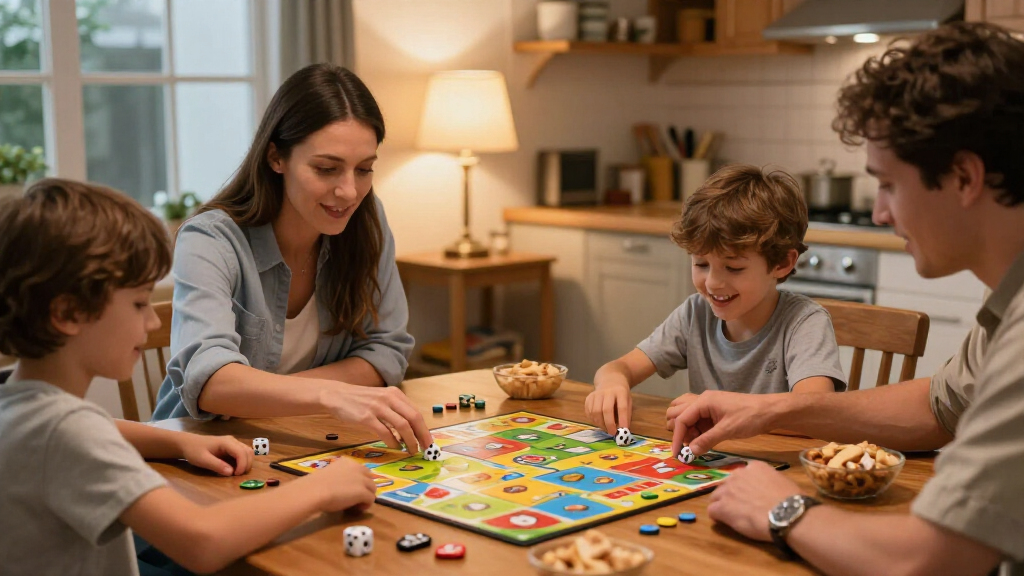
I judged every game in this lineup against the same question: will a mixed-age family actually want to play it more than twice? That meant scoring each option on age flexibility (can a 7-year-old and a parent both genuinely enjoy it), play time (games under 30 minutes scored higher for weeknight viability), player count flexibility (games capping at four players lost points for larger families), and rules complexity (the best family games teach in under five minutes). I also weighed replay variety, because a game that plays identically every session goes stale fast on a weekly game night.
The ranking logic follows those scores, but weighted for the game-night context specifically. A game that a child can win fairly, like Herd Mentality or Blank Slate, outranks a mechanically deeper game that favors adults, like Taboo, because family game night fails the moment one person always dominates. Physical durability and component quality factored in as a tiebreaker, since games aimed at young kids, like Trouble and Candy Land, need to survive enthusiastic handling.
Factors to Consider When Choosing Family Board Games For Game Night
Before picking a game off this list, it helps to understand what actually makes a family game night succeed or flop. These are the factors that shaped my rankings, and they should shape your purchase too.Match the Game to Your Youngest Player, Not Your Oldest
The most common buying mistake is choosing a game pitched at the adults and hoping the kids keep up. Games like Taboo and Guess the Gibberish rely on vocabulary and reading speed, which means children end up as spectators rather than competitors. A better approach is to pick games where the mechanic itself levels the field: guessing games like Hedbanz, or shared-answer games like Herd Mentality, where a lucky or funny answer beats a smart one. If your youngest is under six, lean toward Candy Land, Trouble, or Connect 4, and accept that the adults are there for the kids’ enjoyment, not their own. Families with kids eight and up can realistically pick anything on this list.
Play Time Matters More Than You Think
Game night enthusiasm has a shelf life of roughly 30 to 45 minutes for most families, especially with younger kids involved. Games that stretch past an hour, or that a losing player can’t gracefully exit, tend to end in frustration rather than fun. Quick-play formats like TAPPLE and Blank Slate let you play several rounds or quit cleanly at any point. Classics like Yahtzee run longer but break naturally into turns, so boredom is less punishing. Before buying, check both the stated play time and whether the game ends on a fixed condition or could theoretically run forever, because open-ended games with young kids rarely finish.
Player Count Limits Will Bite You
Many popular family games cap at four players, and that number shrinks fast once a parent wants to join or a friend stays for dinner. Connect 4, Trouble, and Sorry! all hit this wall, while card-based games like Do You Really Know Your Family? and Our Family is So Weird typically handle six or more. If your household is five or more people, treat a four-player maximum as a dealbreaker unless you plan rotation tournaments, which younger kids rarely tolerate well. Party games scale best; word games sit in the middle since more players usually just means longer waits between turns.
Cooperative Beats Competitive for Sensitive Kids
Know your family’s tolerance for losing. Knock-off mechanics in Sorry! and Trouble generate big drama, and some children find being sent back to start genuinely upsetting. Games with no direct confrontation, like Blank Slate or Herd Mentality, sidestep this entirely because everyone answers simultaneously and losing feels like a group joke rather than a personal defeat. Conversation-style games like Do You Really Know Your Family? barely register as competition at all. If sibling rivalry runs hot in your house, this factor should outweigh replay depth or clever mechanics.
Build a Small Rotation, Not One Perfect Game
No single game serves every mood: Yahtzee suits a quiet two-person evening, Herd Mentality suits a rowdy group of six, and Candy Land exists purely for the preschooler. Families who buy one game expecting it to carry every night end up disappointed within a month. A smarter strategy is pairing one quick party game, one classic strategy-lite game, and one conversation game, which together cover nearly every configuration of players and energy levels. This is also why I ranked versatility so heavily in the lineup; a game that only works in one narrow scenario is a weaker purchase than a slightly less brilliant game that works in three.
Component Quality Determines Longevity
Family games get handled by children, and thin card stock, flimsy boards, and tiny pieces are the most common failure points. Card games like Blank Slate and Our Family is So Weird live or die on their dry-erase boards and markers, which dry out and need replacing. Wooden options like the Centtechi Hexagon Tower typically outlast cardboard equivalents by years. Also check whether replacement parts are realistically available; a game that becomes unplayable after one lost die is a weaker long-term value than its shelf price suggests.
Frequently Asked Questions
What’s the best family board game if my kids are different ages?
Games with simultaneous play or group answers handle age gaps best, because nobody has to wait for a turn or read quickly. Herd Mentality and Blank Slate are the strongest picks here: everyone writes an answer at once, and younger kids can win with a silly response just as easily as adults win with a clever one. Herd Mentality has a slight edge for bigger gaps since it requires no writing at all, while Blank Slate suits kids who can spell comfortably. Avoid games where speed determines the winner, like TAPPLE or Taboo, when playing with a child under eight, because adults will almost always answer first.
Are classic games like Candy Land and Sorry! worth buying, or too boring for adults?
They’re worth it, but only for a specific window. From roughly ages four to seven, these games are genuinely valuable because a young child can follow every rule and win without any adult handicap. The tradeoff is that they offer adults almost nothing, since both games are luck-driven with no decisions to make. Once your youngest hits eight or nine, these boxes tend to sit on the shelf, so treat them as a stage purchase rather than a forever game. If budget is tight and your kids are already seven or older, skip the roll-and-move classics entirely and go straight to a party game.
Which game on this list works best for a family of five or six?
Card-based and party-style games are your safest bets since they typically support six or more players. Do You Really Know Your Family?, Our Family is So Weird, and Herd Mentality all handle bigger groups well, and their mechanics actually improve with more players because more answers mean funnier results. By contrast, Connect 4, Trouble, Sorry!, and Yahtzee cap out at four or so, which forces someone to sit out. If your group regularly exceeds six, Herd Mentality is the standout because the write-one-answer format scales without adding downtime.
Do I need a word game or a party game for regular weekly game nights?
If game night is a recurring event, a party game with fresh content each round will hold up longer than a fixed word game. TAPPLE and Blank Slate generate different answers every session because the prompts and players change, while Guess the Gibberish and question-based card games can run dry once you’ve seen all the cards, sometimes within a month of weekly play. Yahtzee is the notable exception among classics: its randomness gives it near-infinite replay value despite having no content variety at all. A practical fix for content-limited games is to have a second title ready to rotate in when the first starts feeling stale.
What’s a good family game for a child who hates losing?
Look for games where losing is shared, funny, or barely registered as losing. Herd Mentality is ideal because the penalty for a wrong answer is a pink cow in front of you, which plays as a running joke rather than a punishment. Do You Really Know Your Family? works similarly well since the goal is learning about each other, not beating anyone. Games to avoid for this child are Sorry! and Trouble, where opponents directly send pieces back to start and losses feel personal. Connect 4 sits in the middle: losing is quick and the rematch is instant, which softens the sting considerably.
Conclusion
The right pick depends entirely on who’s sitting at your table. For most families, TAPPLE is the best overall choice: it plays in short bursts, scales from kids to grandparents, and never produces a dull turn. For best value, Blank Slate delivers party-game energy at a lower commitment, and its answer pads are cheap to replace when they run out. Families prioritizing connection over competition should choose Do You Really Know Your Family?, which turns game night into a conversation, while Herd Mentality is my pick for larger, rowdier groups of five or six. For beginners and very young players, Candy Land and Trouble are the safest first games, and Hedbanz bridges the gap once kids hit five or six. Finally, if you want one game that outlives every childhood phase, Yahtzee is the premium long-haul investment, and Connect 4 is the perfect compact travel option. Whatever you choose, buy for your youngest player’s abilities and your oldest player’s patience, and game night will take care of itself.
Fall Picks
fall essentials
As an affiliate, we earn on qualifying purchases.