
TL;DR
Baby safety gates prevent falls and accidents by blocking access to hazardous areas. Choosing the right type, installing properly, and keeping gates in good condition are key to safety. Recent innovations make gates more effective and easier to use than ever.
Choose hardware-mounted gates for stairways; they’re the safest option.
Regularly inspect and tighten hardware to prevent safety lapses.
Look for gates with narrow bar spacing and at least 30 inches in height.
Recent smart features, like sensors and automatic closing, add peace of mind.
Proper installation is critical — follow all instructions and test stability.
What Makes a Baby Safety Gate Safe and Effective?
Baby safety gates are designed to prevent infants and toddlers from accessing dangerous spots like stairs, kitchens, or rooms with small objects. Their safety hinges on sturdy construction, correct installation, and thoughtful design. For example, a gate with narrow bar spacing — less than 3 inches — stops tiny heads and bodies from slipping through. Height matters too; most safe gates stand at least 30 inches tall to prevent climbing over. The materials should be smooth, with no sharp edges that could cause injuries.
Imagine a metal gate with a secure locking latch, standing firm against a toddler’s push, versus a flimsy plastic one that wobbles. The difference is safety. Proper installation is key. A poorly mounted gate can come loose or be dislodged, creating a false sense of security. Always check that your gate meets safety standards like ASTM F1004 or EN 1930 — these ensure the gate has passed rigorous testing for strength and durability.
As an affiliate, we earn on qualifying purchases.
Which Type of Baby Safety Gate Fits Your Home Best?
Choosing the right type depends on your home layout and your child’s age and activity level. Here’s a quick comparison:
| Gate Type | Best For | Pros | Cons |
|---|---|---|---|
| Pressure-mounted | Doorways on non-load-bearing walls | Easy to install, no hardware needed, portable | Less secure on stairs, can be dislodged |
| Hardware-mounted | Stairways, high-traffic areas | Very secure, withstands tugging | Requires tools and drilling, permanent installation |
| Walk-through | Everyday access for parents | Convenient, often one-handed operation | Depends on lock quality |
| Expandable/Freestanding | Play areas, irregular spaces | Flexible, no installation needed | Less sturdy, not always suitable for stairs |
For stairs, go with a hardware-mounted gate — it’s anchored securely, reducing the risk of accidental dislodging, which can lead to dangerous falls. For doorways, pressure-mounted gates might suffice if you need a temporary or portable solution, but remember they are less stable under pressure. Matching the gate type with your specific needs ensures safety without sacrificing convenience or aesthetics. Consider the tradeoffs: hardware mounts are more secure but less portable, while pressure mounts are easier to move but may compromise safety on stairs or uneven surfaces.
What Are the Latest Innovations Making Gates Safer and Easier?
Baby safety gates aren’t just barriers anymore. Recent advances aim to boost safety and convenience. For instance, smart gates now include sensors that alert parents if the gate is tampered with or if a child climbs over. Automatic closing gates gently swing shut behind your toddler, preventing accidental openings. Many models now feature one-handed operation — perfect when your arms are full of baby gear or groceries.
Sleek designs are also trending. Transparent mesh panels or minimalist frames blend into your decor, making the gates less obtrusive and more visually appealing. Environmentally friendly, non-toxic materials not only keep your baby safe from harmful chemicals but also align with eco-conscious living. Modular, adjustable gates grow with your child, offering flexibility as your little explorer learns new skills. These innovations reflect a shift toward smarter, safer, and more stylish solutions that adapt to modern parenting needs.
How to Install Your Baby Safety Gate the Right Way
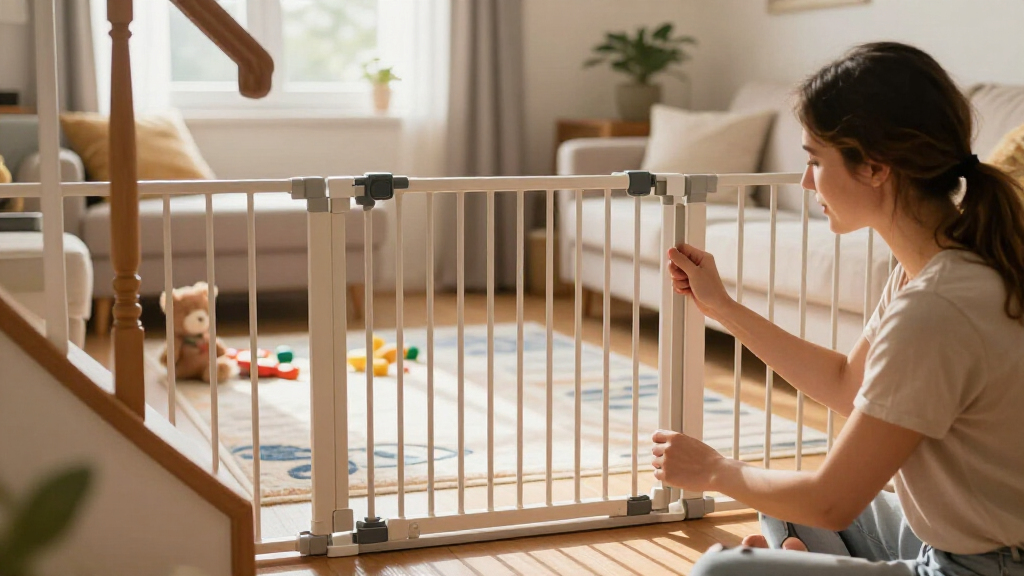
Installing a safety gate correctly is the biggest step toward ensuring it does its job. Here’s a simple process:
- Read the manufacturer’s instructions carefully. Each gate has specific mounting requirements, and ignoring these can compromise safety.
- Choose the right location — ideally, the top or bottom of stairs for hardware-mounted gates, or doorways for pressure-mounted. Proper placement minimizes risks of falls or dislodging.
- Use the appropriate hardware and anchors. For stairs, always secure with screws into wall studs or anchors rated for the weight and force exerted by children. For walls, ensure anchors are sturdy enough to withstand tugging, preventing the gate from coming loose.
- Ensure the gate is flush against the wall or frame, with no gaps or wobbling. Gaps can trap small limbs or cause the gate to become unstable.
- Test it by applying gentle pressure. It should stand firm without shifting or coming loose. Regularly revisit these tests, especially after cleaning or moving furniture, to maintain safety.
Imagine a parent carefully following these steps — their child safe, and peace of mind intact. Regularly checking the installation and hardware integrity ensures the gate continues to serve its purpose effectively, preventing potential accidents before they happen.
What Safety Features Should You Prioritize When Buying?
When shopping for a baby safety gate, focus on key safety features that keep your child secure. First, look for sturdy construction made of metal or high-quality plastic, which can withstand tugging and impact. Next, ensure the latch mechanism is child-proof — meaning, it’s easy for you to operate but challenging for a toddler to open, preventing accidental escapes. Height is vital; at least 30 inches tall prevents climbing over and discourages attempts to bypass the barrier.
Bar spacing should be less than 3 inches to stop a child’s head or body from slipping through, reducing the risk of entrapment or injury. Rounded, smooth edges prevent accidental scrapes or cuts during active play. And if you want extra peace of mind, consider gates with tamper-proof locks or sensors that alert you if the gate is disturbed or if a child attempts to climb or push it open. These features add layers of safety, especially in busy households or for children with higher mobility or curiosity.
For example, some smart gates now connect to your phone, notifying you if your toddler tries to climb or push the gate open, allowing you to respond promptly. Incorporating these safety features helps create a comprehensive safety net tailored to your child’s development and your household needs.
How Often Should You Check and Maintain Your Gate?
Baby safety gates aren’t set-and-forget. Regular inspections are your best defense against accidents. Every month, give the gate a thorough check: ensure screws are tight, the latch still works smoothly, and there are no cracks or damage. If the gate wobbles or the lock feels loose, replace or repair it immediately. Over time, wear and tear can compromise the gate’s structural integrity, making it less reliable in critical moments.
Imagine a busy parent who notices a crack in their plastic gate after a few months. Addressing small issues early prevents big safety failures later, such as the gate collapsing or opening unexpectedly. Also, clean the gate regularly to remove dust, sticky residues, or debris that could interfere with locking mechanisms or cause slipping. Maintaining the gate also involves checking for sharp edges or loose parts that could pose injury risks.
Remember, children grow fast. A gate that fit perfectly at 12 months might become too short, fragile, or less secure by 24 months. Reassess its suitability periodically, and replace or upgrade as your child’s size and activity level change, ensuring continuous safety coverage.
Frequently Asked Questions
What type of safety gate is best for stairs?
For stairs, hardware-mounted gates are best because they’re securely attached to the wall or door frame, preventing dislodging even if your child pulls or pushes. Pressure-mounted gates are less stable on stairs and should be avoided in such high-risk areas.
How do I ensure my safety gate is installed safely?
Follow the manufacturer’s instructions carefully. Use the correct anchors and screws, ensure the gate is flush against the wall or frame, and test it by applying gentle pressure. Regularly check for looseness or damage, especially after cleaning or moving furniture.
Are pressure-mounted gates safe for all areas?
Pressure-mounted gates are suitable for doorways on non-load-bearing walls but are less secure on stairs. Use them with caution in stair areas and always double-check stability regularly.
What safety standards should I look for?
Look for gates that meet recognized safety standards like ASTM F1004 or EN 1930. These standards ensure the gate has been tested for strength, durability, and safety features.
Can I use outdoor safety gates?
Some gates are designed for outdoor use — check product specifications for weather resistance, UV protection, and rust-proof materials. Always verify outdoor suitability before installation outside your home.