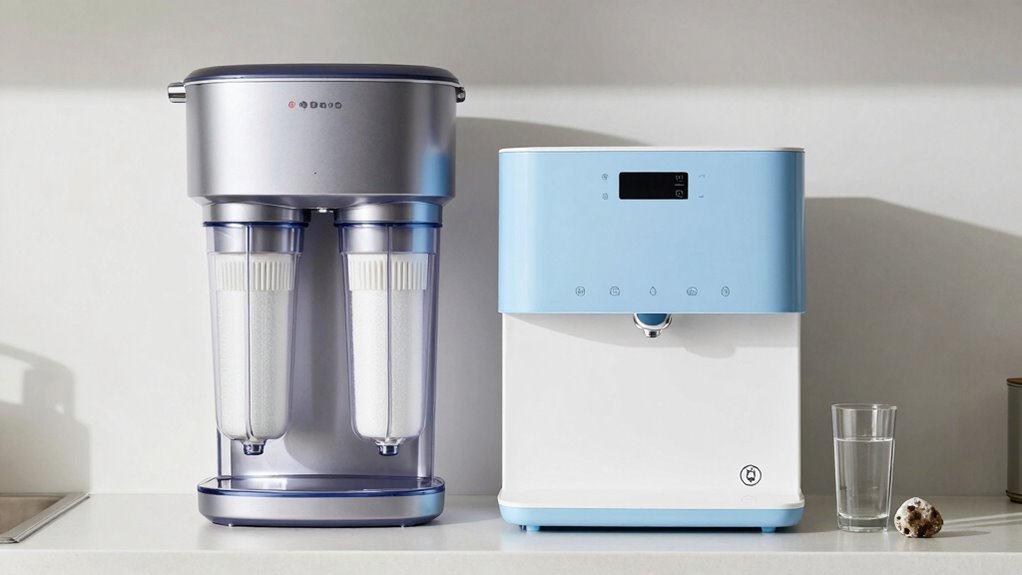

Whole-house water filters and softeners serve different purposes; filters remove chlorine, sediments, bacteria, and organic contaminants, improving taste, odor, and safety. Softeners focus on reducing mineral buildup from calcium and magnesium, preventing scale and soap scum. Depending on your water problems, you might need one or both systems. Knowing their differences helps you choose the right solution to meet your household needs—continue to explore how each can benefit your home.
Key Takeaways
- Whole-house water filters remove chlorine, sediments, bacteria, and improve taste, while softeners primarily target mineral buildup and scale.
- Filters enhance water safety and clarity but do not reduce hardness; softeners specifically address calcium and magnesium minerals.
- Filters generally require filter replacements every few months; softeners need salt refills and resin regeneration.
- Combining both systems provides comprehensive treatment, addressing contaminants and hard water issues simultaneously.
- Choice depends on primary water concerns—use filters for purity and softeners for mineral-related problems.

Express Water Whole House Water Filter System, Ultimate Protection, 3-Stage
- Whole House Water Filtration: 3-stage process for entire home
- Reduces Heavy Metals & Contaminants: Chlorine, lead, arsenic, PFAs, more
- Protects Pipes & Appliances: Prevents scale buildup and damage
As an affiliate, we earn on qualifying purchases.
As an affiliate, we earn on qualifying purchases.
What Household Water Problems Can Water Treatment Fix?
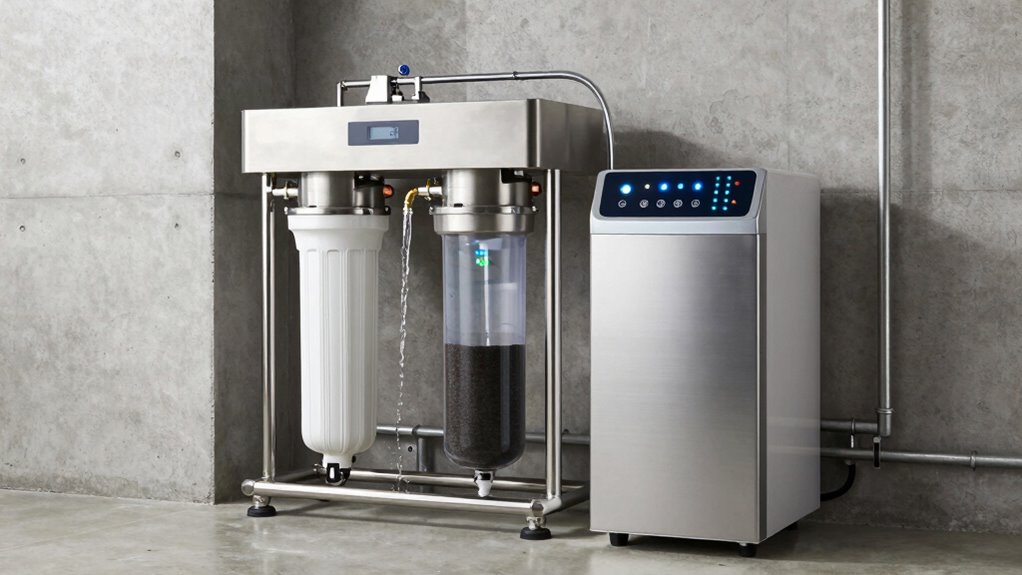
Many common household water issues can be effectively addressed with proper water treatment. One key problem is pH imbalance, which can cause corrosion or scale buildup in your pipes and appliances. Water treatment systems can perform pH adjustment, ensuring your water remains neutral and safe for use. Sediment removal is another essential service, especially if your water contains dirt, rust, or other particles. Sediment can clog pipes, damage fixtures, and reduce the lifespan of appliances. By installing a whole-house water filter or treatment system, you can eliminate these contaminants at the source, improving water clarity and protecting your plumbing. Addressing pH levels and removing sediments enhances water quality, making it safer, cleaner, and more comfortable for everyday use. Additionally, understanding the various water treatment options available can help you choose the most effective solution for your household needs. Proper water treatment can also help in water softening, which reduces mineral buildup and extends the life of your plumbing fixtures. For example, pH balance plays a crucial role in maintaining the integrity of your plumbing system and preventing costly repairs. Implementing comprehensive water treatment solutions can also contribute to overall water safety, ensuring your household receives clean and healthy water daily.
What Is a Whole-House Water Filter and How Does It Improve Water Quality?
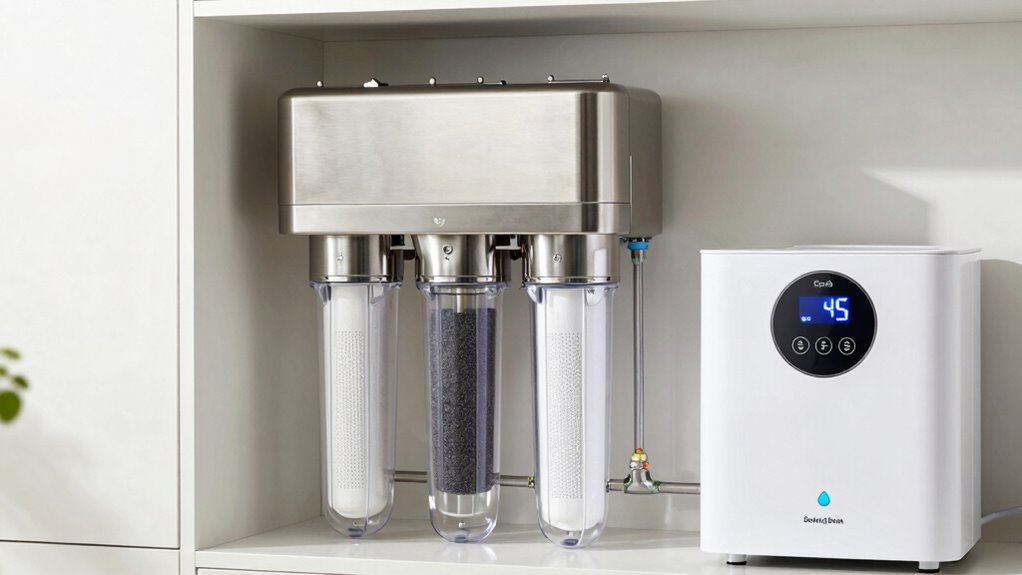
A whole-house water filter uses advanced filtration technologies to remove contaminants from your water before it reaches your taps. By doing so, it considerably improves the taste, smell, and safety of your water. Understanding how these filters work can help you choose the right system to enhance your water quality. Additionally, considering components like filter calibration can ensure optimal performance and longevity of the filtration system. Incorporating natural light and wellness touches in your home can also enhance your overall water experience by creating a healthier living environment. Implementing topical authority in your research can further guide you toward selecting the most effective filtration options. Regular maintenance and performance monitoring are essential for sustaining water quality over time. Proper air quality assessment can also support your efforts to maintain a healthy indoor environment alongside water filtration.
Filtration Technologies Used
Whole-house water filters use advanced filtration technologies to remove contaminants from your water before it reaches your taps. They rely on a variety of filtration media and purification methods to improve water quality effectively. Some common technologies include:
- Activated Carbon – Absorbs chlorine, odors, and organic compounds, enhancing taste and smell.
- Sediment Filters – Trap dirt, rust, and other particles, protecting plumbing and appliances.
- Reverse Osmosis – Uses pressure and semi-permeable membranes to eliminate dissolved solids and harmful chemicals.
These purification methods guarantee your water is cleaner and safer for everyday use. By choosing the right filtration media, you target specific contaminants, making your whole-house filtration system customizable to your water’s unique needs.
Benefits to Water Quality
Because water passes through multiple filtration stages before reaching your taps, a whole-house water filter significantly improves your water quality. It helps maintain proper pH balance, preventing water from becoming too acidic or alkaline, which can damage pipes and appliances. Additionally, it effectively reduces odors caused by sulfur, chlorine, or organic materials, making your water taste and smell cleaner. This filtration process also removes contaminants like sediments, chlorine, and heavy metals, ensuring safer, clearer water throughout your home. By addressing these issues at the source, your water becomes healthier for drinking, cooking, and bathing. Implementing a comprehensive filtration system can further enhance water purity and protect your household appliances. Regular maintenance of your filtration system is essential to keep it functioning effectively over time. Understanding water quality helps you make informed decisions about maintaining a safe and healthy home environment. Knowing the types of contaminants in your water can guide you in selecting the most effective filtration options. Moreover, utilizing advanced filtration technologies can optimize the removal of specific pollutants, providing even better water quality. Overall, a whole-house water filter provides consistent, high-quality water, enhancing your home’s comfort and protecting your plumbing system.
What Is a Water Softener, and How Does It Fix Hard Water?
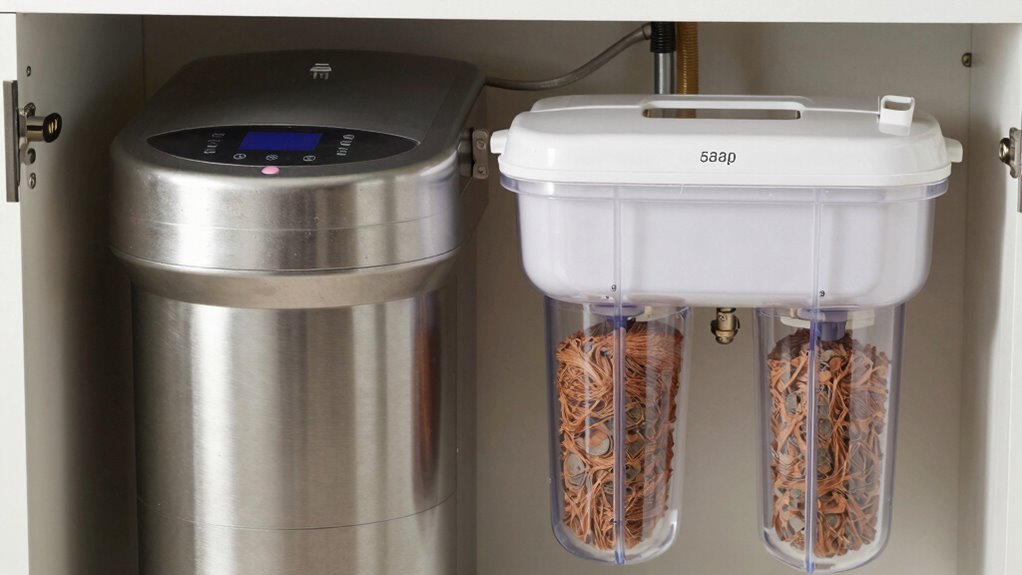
Hard water occurs when minerals like calcium and magnesium build up in your plumbing and appliances, causing scale, soap scum, and reduced efficiency. A water softener addresses this by using mineral removal to replace these hard minerals with sodium or potassium ions through a process called ion exchange. This effectively softens your water and improves water conditioning. Here’s how it works:
- Ion Exchange: Hard minerals are exchanged for softer ions, preventing scale buildup.
- Regeneration Cycle: The resin beads are cleaned with salt brine to maintain effectiveness.
- Improved Performance: Soft water prolongs appliance life, enhances soap lathering, and reduces soap scum.
Which Water Treatment Solution Is Best for Your Needs: Filtering or Softening?
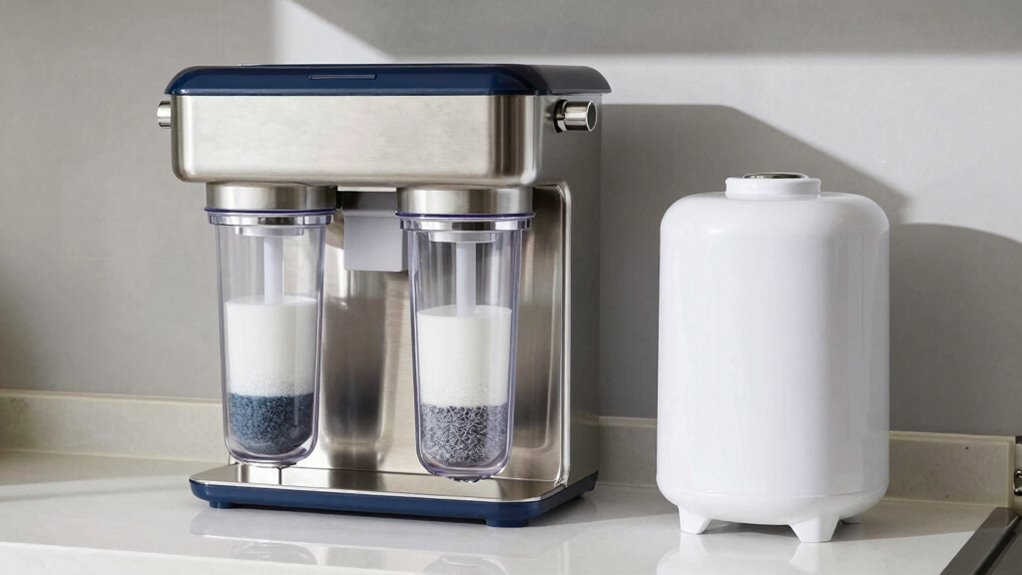
Choosing the right water treatment method depends on your specific water quality issues and household needs. If you want to improve water clarity, eliminate odors, and remove contaminants, a water filter is ideal for water purification. It effectively reduces sediments, chlorine, and other impurities. On the other hand, if your concern is hard water causing scale buildup and mineral deposits, a water softener is better, as it removes minerals like calcium and magnesium. Consider the following table:
| Goal | Best Solution | Key Benefit |
|---|---|---|
| Water purification | Whole-house water filters | Remove contaminants, improve taste |
| Mineral removal | Water softeners | Prevent scale buildup |
| Overall water quality | Combination systems | All-encompassing treatment |
Understanding the benefits of foam rolling can also support overall wellness and recovery, especially when managing hydration and physical stress. Choose based on whether you prioritize mineral removal or contaminant filtration.
What Are the Main Benefits and Limitations of Water Filters and Softeners?
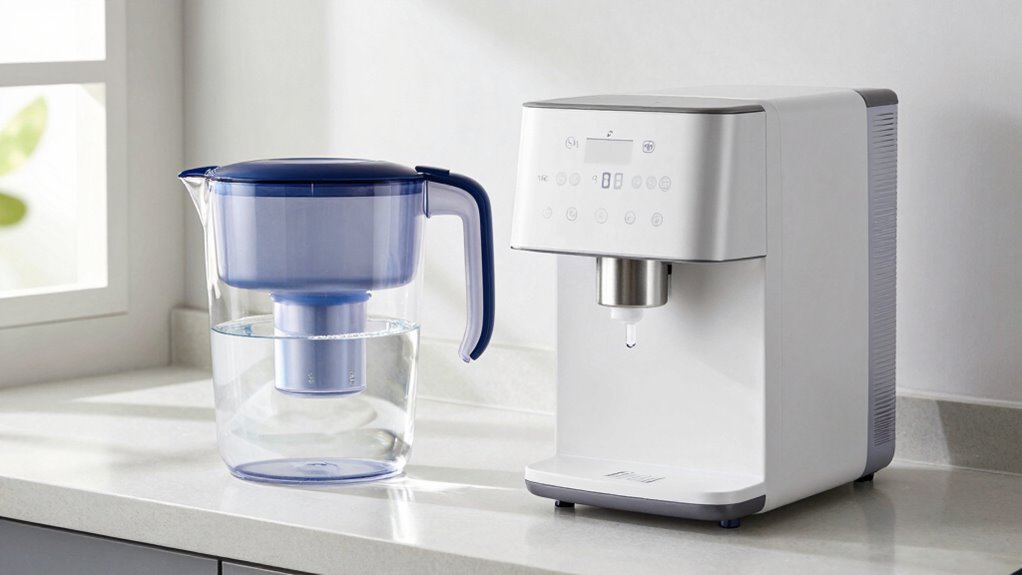
Water filters can substantially improve your water quality by removing contaminants, but they often require regular maintenance and replacement costs. Proper filter maintenance is essential to ensure optimal performance and water safety. Regular filter replacement helps prevent bacterial growth and ensures contaminants are effectively removed. Softeners effectively reduce hard water issues like scale buildup, though they may add to your ongoing expenses and maintenance tasks. Additionally, some systems incorporate natural filtration systems to further enhance water purity without chemicals. Understanding these benefits and limitations helps you choose the right solution for your home’s needs.
Water Quality Improvements
Water filters and softeners both deliver significant improvements to your water quality, but they do so in different ways. Water filters excel at removing chlorine, bacteria, and sediments, giving you cleaner, better-tasting water. They also support mineral enhancement by preserving beneficial minerals like calcium and magnesium. Additionally, understanding the maintenance requirements of each system can help you choose the best option for your needs. Regular filter replacement is necessary to maintain optimal performance, which highlights the importance of system upkeep for longevity. Proper water treatment ensures that your water remains safe and pleasant to use. Here are some key benefits:
- Chlorine removal for better taste and odor.
- Mineral enhancement to maintain healthy minerals.
- Reduced scale buildup, especially with softeners.
Limitations include filters needing frequent replacement and softeners sometimes removing beneficial minerals. Both systems improve water quality but serve different purposes.
Maintenance and Cost
While both water filters and softeners offer important benefits, their maintenance and ongoing costs differ markedly. Water filters typically require less maintenance, with filter replacements every few months depending on usage, which keeps the maintenance requirements straightforward. Softeners, on the other hand, need regular salt refills and occasional resin bed regeneration, increasing upkeep. The cost comparison shows filters usually have lower initial and ongoing expenses, but they may need more frequent replacements. Softeners may have higher upfront costs and ongoing salt purchases, but they last longer and reduce scale buildup. Additionally, understanding water treatment options can help you select the most suitable system for your specific needs. Ultimately, your decision depends on your water quality needs and budget, but understanding these maintenance requirements helps you plan for long-term expenses and choose the most cost-effective solution.
Should You Use Both a Water Filter and a Water Softener?
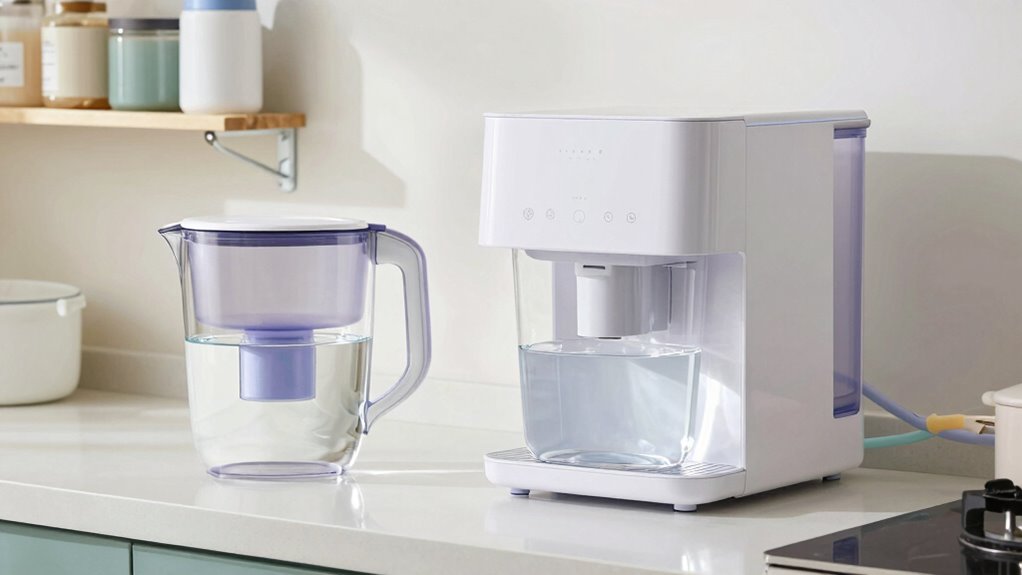
Deciding whether to use both a water filter and a water softener depends on your household’s specific water quality issues. If you’re concerned about water purity and protecting your appliances, combining both can be beneficial. Here’s why:
- Enhanced Water Purity: A filter reduces contaminants like chlorine, sediment, and bacteria, improving taste and safety. Water quality improvements can significantly impact your health and overall household comfort.
- Protecting Appliances: Softening water prevents mineral buildup, extending appliance lifespan. Incorporating a water treatment system ensures comprehensive protection for your home’s plumbing.
- Comprehensive Solution: Using both systems ensures you address multiple issues simultaneously, providing cleaner, softer water for your entire home.
- Addressing Water Quality Issues is essential for ensuring the best water for your household needs.
While installing both might seem like an investment, it can conserve money long-term by maintaining water quality and reducing the need for repairs or replacements. This approach offers a balanced solution to improve overall water quality and appliance longevity.
How Do You Decide Between Installing a Water Filter or a Softener?

Choosing between installing a water filter or a softener depends on the specific issues you’re facing with your water supply. If you’re concerned about odor removal or pH balance, a water filter is typically the right choice. It can improve taste, remove odors, and balance pH levels. On the other hand, if you suffer from hard water causing scale buildup and soap scum, a water softener is more effective. Consider this comparison:
| Issue | Recommended Solution |
|---|---|
| Odor removal | Water filter |
| pH imbalance | Water filter |
| Hard water scaling | Water softener |
| Soap scum | Water softener |
Deciding depends on whether your main concern is contaminants and odor or mineral deposits and hardness.
Frequently Asked Questions
Can Water Softeners Remove Contaminants Like Chlorine and Lead?
Water softeners mainly target hard minerals like calcium and magnesium, so they’re not designed to remove contaminants like chlorine and lead. For better water quality, you’ll want a system that specifically targets these pollutants, such as a whole-house filter. While softeners improve system effectiveness by preventing scale buildup, they don’t improve water safety from chemicals. Consider a combination system for thorough protection and ideal water quality.
How Often Should I Replace Filters or Resins in These Systems?
You should replace filters or resins based on their filter lifespan, which typically ranges from 3 to 6 months for filters and up to 10 years for resins, depending on usage and water quality. Regular maintenance guarantees peak performance. Check manufacturer guidelines for your specific system, and keep an eye on water flow and quality; if you notice a drop, it’s time for resin replacement or filter change.
Do Water Softeners Add Sodium to Household Water?
Water softeners do add sodium to household water through the ion exchange process. This sodium addition can affect the water taste, making it slightly salty, especially if you’re on a low-sodium diet. If you’re concerned about sodium levels, you can opt for a potassium-based alternative or install a separate filter to remove excess sodium. Always check your water’s sodium content if taste or health is a concern.
Are There Health Considerations When Using Water Filters or Softeners?
You should consider health effects and chemical exposure when using water filters or softeners. Water softeners can add sodium, which may impact those on low-sodium diets, while filters can remove harmful contaminants, reducing chemical exposure. Regular maintenance guarantees safe water quality. If you’re concerned about health effects, choose filters that target specific contaminants and consult with a professional to find the best solution for your household.
What Maintenance Is Required for Both Systems Over Time?
Think of your water system as a garden needing regular watering. For both filters and softeners, you’ll need to change filters annually and replenish salt in softeners every 4-6 weeks. Regular maintenance keeps systems running efficiently, prolonging their lifespan and reducing costly repairs. Maintenance costs vary, but staying on top of these tasks guarantees your system stays effective and lasts longer, saving you money and stress in the long run.
Conclusion
Did you know over 85% of homes have water quality issues? Choosing between a water filter and a softener depends on your specific needs. Filters can remove contaminants like chlorine and lead, while softeners tackle hard water minerals. In many cases, using both provides the best protection. Assess your water problems carefully, and you’ll guarantee cleaner, better-tasting water for your household—making a smart investment in your home’s health and comfort.