Air purifiers can improve your baby’s indoor air quality, but they aren’t a complete solution. They mainly filter out allergens, dust, and pollutants, especially if they have HEPA filters, but won’t eliminate all toxins or chemical vapors. Proper placement, maintenance, and understanding their limits are key to safe use. To keep your little one truly protected, it’s important to combine air purifiers with other health measures, which you’ll discover as you learn more.
Key Takeaways
- Air purifiers can improve indoor air quality but do not eliminate all pollutants or chemical vapors harmful to babies.
- HEPA filters are safest and most effective for capturing allergens without releasing ozone or harmful chemicals.
- Proper placement, regular maintenance, and complementary measures like ventilation are essential for safety and effectiveness.
- They should be part of a broader strategy, including source control and humidity management, to protect infants’ health.
- Consult healthcare professionals if symptoms persist or worsen, as purifiers alone may not address underlying health issues.
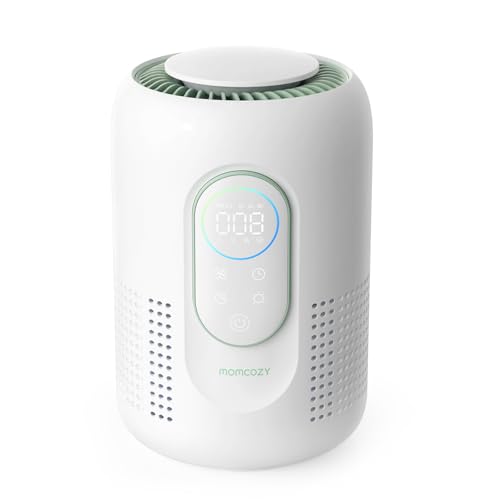
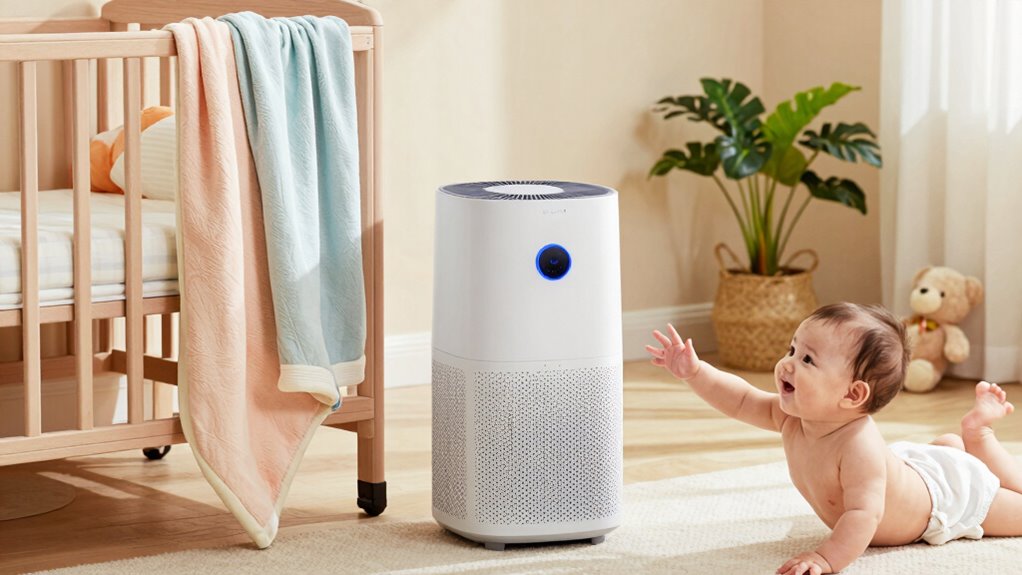
Momcozy Air Purifier for Bedroom with Dimmable Night Light for Small Room
- Quad-Layer Filtration System: 4-stage filtration for comprehensive air cleaning
- Real-Time PM2.5 Monitoring: Displays live air quality levels
- Ultra-Quiet Sleep Mode: Operates at 21 dB for peaceful sleep
As an affiliate, we earn on qualifying purchases.
As an affiliate, we earn on qualifying purchases.
What Are Air Purifiers and How Do They Help Keep Babies Safe?
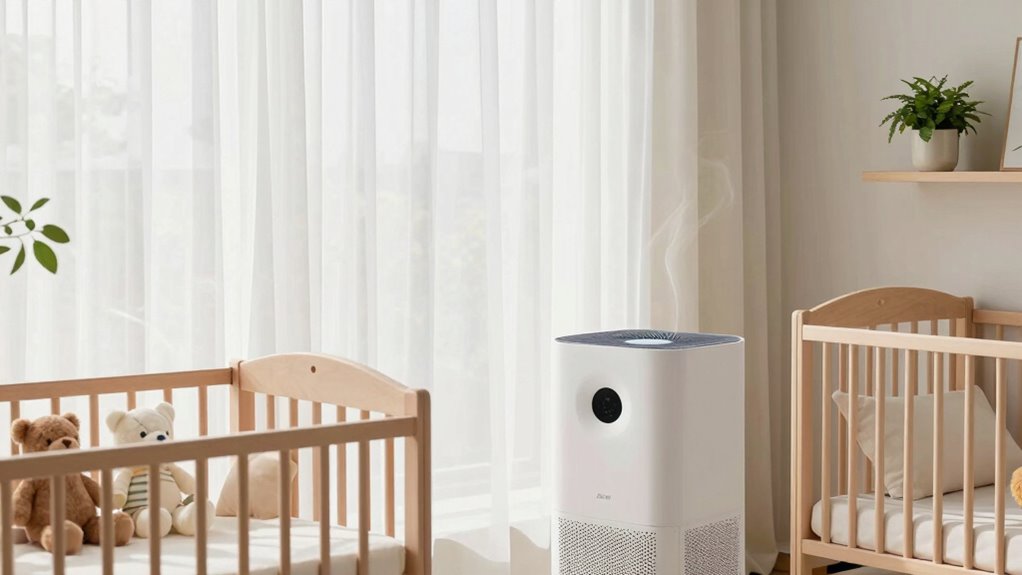
Air purifiers are devices that filter out harmful pollutants from the air, creating a cleaner and safer environment. The core of their effectiveness lies in air purifier technology, which typically includes HEPA filters, activated carbon, and sometimes UV light. These components work together to remove allergens, dust, pet dander, and airborne toxins, reducing potential health risks, especially for babies. When you choose an air purifier, you also consider its environmental impacts, such as energy consumption and filter disposal. Modern models are designed to be energy-efficient, minimizing their ecological footprint. By improving indoor air quality, air purifiers help protect your little one from respiratory issues and allergies, ensuring a healthier space for growth and development. Additionally, air purifier technology continues to evolve, offering more efficient and sustainable options for families concerned about indoor air safety. A good understanding of indoor air quality factors can help you select the most suitable device for your home environment, including how technological advancements are shaping the future of air purification. For example, innovations like smart sensors enable real-time monitoring of air quality, allowing for more precise and effective purification. Furthermore, understanding the filter maintenance process ensures your device functions optimally over time.
Do Air Purifiers Really Improve Indoor Air Quality for Babies?
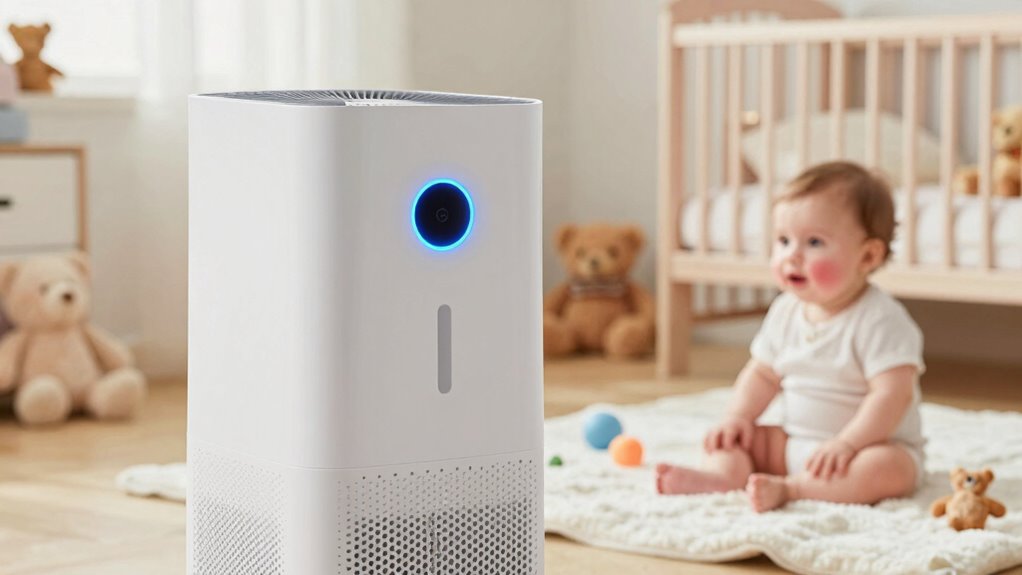
Many parents wonder if air purifiers truly make a difference in indoor air quality for their babies. Sadly, some air purifier myths suggest they can completely eliminate all pollutants, which isn’t true. While they can reduce allergens, dust, and certain airborne particles, they don’t guarantee perfect indoor air safety. An air purifier isn’t a magic fix for every indoor air issue. It’s important to understand that proper ventilation, cleaning, and minimizing sources of pollution are just as vital. Relying solely on an air purifier may lead to false security. Instead, use it as part of a thorough approach to improve indoor air quality. This way, you’re making the most of its benefits without falling for common air purifier myths that overpromise.
Which Types of Air Purifiers Are Safe and Effective for Infants?
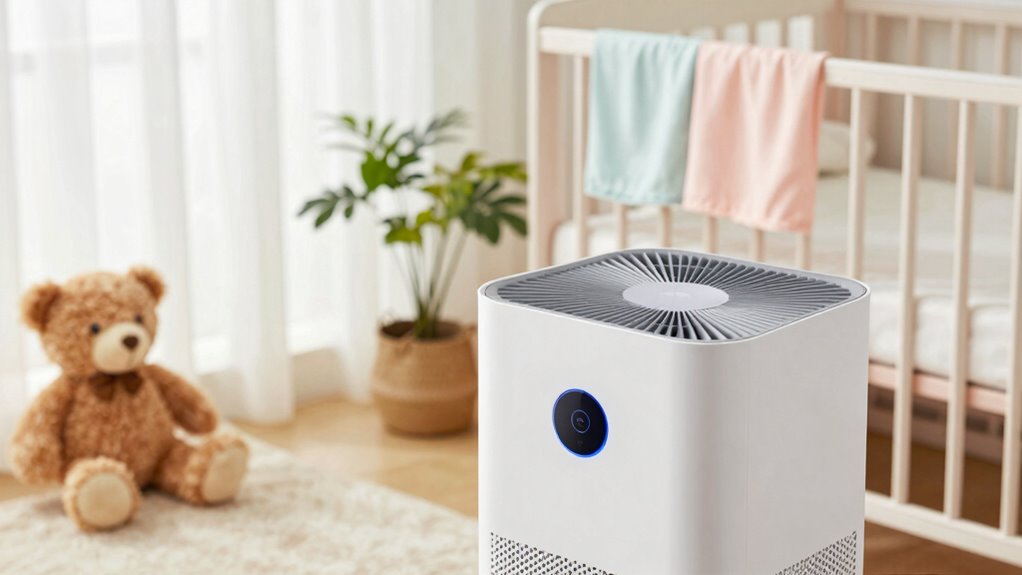
When choosing an air purifier for your infant, safety and effectiveness should be your top priorities. Look for models with HEPA filters, which trap pollutants without releasing harmful ozone or chemicals. Confirm the device is appropriately sized for your room and easy to install, emphasizing proper air purifier installation to maximize efficiency. For infant sleep safety, select a purifier with quiet operation and automatic shut-off features to prevent disruptions. Avoid devices with UV sterilizers or ionizers that produce ozone, as these can be harmful to your baby. Regular maintenance, such as filter changes, is essential to keep the purifier functioning effectively. Additionally, understanding inspiring leadership and management insights can help you make confident, well-informed decisions about your infant’s environment. Ensuring that the air quality remains optimal can significantly impact your infant’s health and comfort. Paying attention to product safety standards can further guide you toward choosing reliable and safe air purifiers. To further promote a safe environment, consider choosing devices with certified safety features to ensure compliance with health regulations. Incorporating user-friendly controls can also help in managing the device easily and maintaining consistent operation. By choosing the right type and guaranteeing proper installation, you can create a safer, cleaner environment for your infant’s health and restful sleep.
What Are the Safety Risks and Limitations of Using Air Purifiers for Babies?
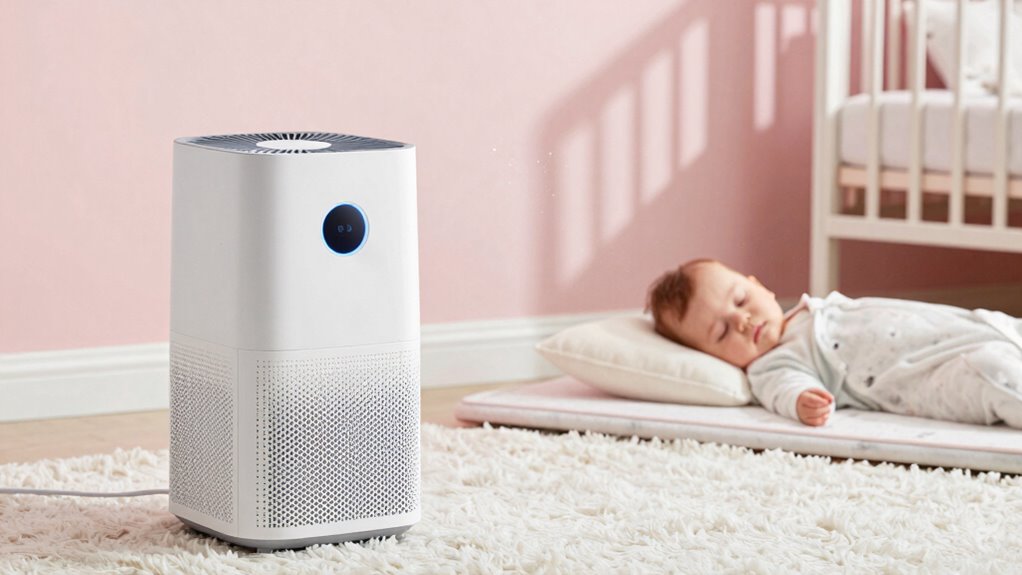
While air purifiers can improve your baby’s air quality, there are safety risks to take into account. Chemical emissions from some units might pose health concerns, especially for sensitive infants. Additionally, proper maintenance is essential to ensure the purifier operates safely and effectively. To maximize safety, consider choosing units that incorporate natural filtration systems, which can reduce reliance on potentially harmful chemicals. Regular filter maintenance and avoiding harsh cleaning chemicals can further minimize health risks associated with air purifier use around infants. Being aware of automation challenges and potential limitations can also help in selecting the safest and most effective air quality solutions for your baby. Moreover, understanding air purifier certification standards can help you select safer, more reliable units designed with baby safety in mind. Implementing proper usage guidelines can further enhance safety and performance.
Chemical Emissions Risks
Although air purifiers can improve indoor air quality, they may also emit chemical substances that pose safety risks for babies. Chemical off gassing from some units can release VOC concerns, which may irritate sensitive lungs or cause other health issues. These emissions often come from plastics, filters, or components used in the device. To understand potential risks, consider this table:
| Aspect | Details | Risks for Babies |
|---|---|---|
| Chemical Off Gassing | Release of VOCs from plastics and components | Respiratory irritation, allergies |
| Filter Materials | Some contain chemical binders or synthetic fibers | Chemical exposure risks |
| Emission Duration | Off gassing may occur during initial use or over time | Lingering chemical exposure |
| Safety Standards | Not all devices meet strict VOC concerns regulations | Increased health risks for infants |
| Precautions | Choose units with low VOC emissions or certified for safety | Minimize chemical risks for your baby |
Additionally, selecting safe and certified air purifiers can significantly reduce the potential for harmful emissions. It is also advisable to consider units with low VOC emissions to further protect your baby’s health. Furthermore, paying attention to material sourcing and manufacturing standards can help consumers choose safer options. Being aware of regional flavors and material sources can help consumers choose safer options.
Proper Maintenance Challenges
Proper maintenance of air purifiers is crucial to guarantee they remain safe and effective for your baby, but it also presents certain challenges. Regular filter replacement is essential to prevent the buildup of dust, mold, or bacteria that could harm your little one. Forgetting to change filters can reduce the device’s effectiveness and potentially release contaminants into the air. Additionally, device placement matters—placing the purifier too close to your baby’s crib or in high-traffic areas may pose safety risks or limit airflow. You need to monitor the purifier’s condition, ensure filters are replaced on schedule, and position it correctly to avoid accidents or reduced performance. Device positioning is key to maximizing safety while maintaining clean, healthy air for your baby. Proper maintenance practices also involve understanding cloud service vulnerabilities that could impact device functionality and safety. Regularly checking the manufacturer’s guidelines can help mitigate these safety risks and ensure optimal operation. Staying informed about indoor air quality basics can further help you maintain a healthier environment for your little one.
How Do I Choose the Best Air Purifier for My Baby’s Room?
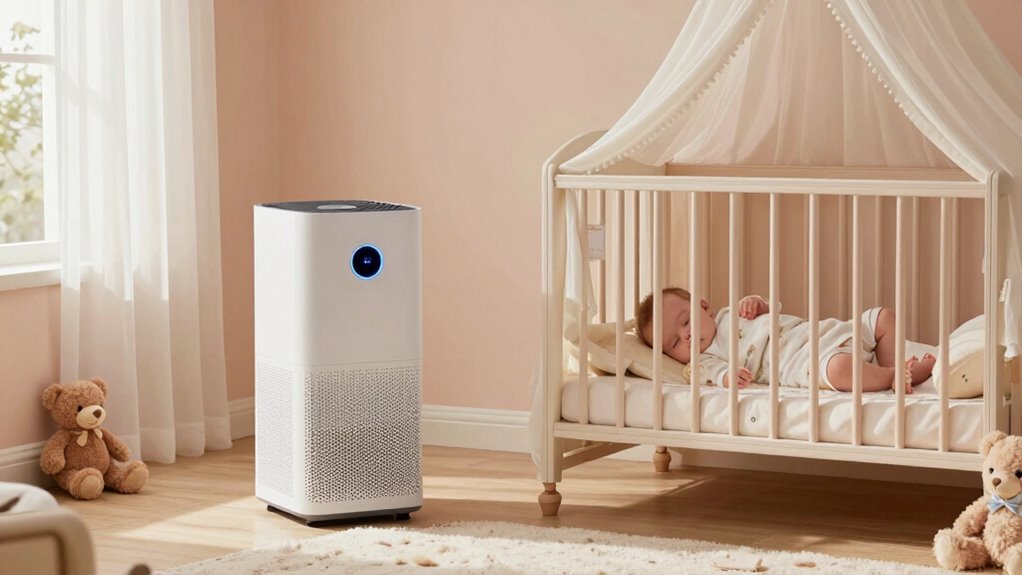
Choosing the right air purifier for your baby’s room involves considering several important factors. First, don’t fall for common air purifier myths that suggest all models are equally effective; focus on those proven to reduce allergens. Look for units with strong allergen reduction capabilities, especially if your baby has allergies or asthma. Consider the size of your baby’s room and choose an air purifier that can adequately cover that space. Noise level is also important—pick a quiet model to avoid disturbing sleep. Easy filter replacement and maintenance are essential for ongoing effectiveness. Additionally, understanding how air purification technology works can help you select a device that effectively improves indoor air quality. Knowing the different filtration methods can guide you toward choosing a more efficient purifier. Being aware of air quality indicators can help you monitor your indoor environment more accurately. Familiarizing yourself with air quality monitoring devices can further ensure you maintain a healthy environment for your baby. For optimal results, consider how technological features enhance the purifier’s performance and ease of use. By carefully evaluating these factors, you’ll select an air purifier that truly benefits your baby’s health and peace of mind.
Are HEPA Filters the Best Choice for Baby Air Purifiers?
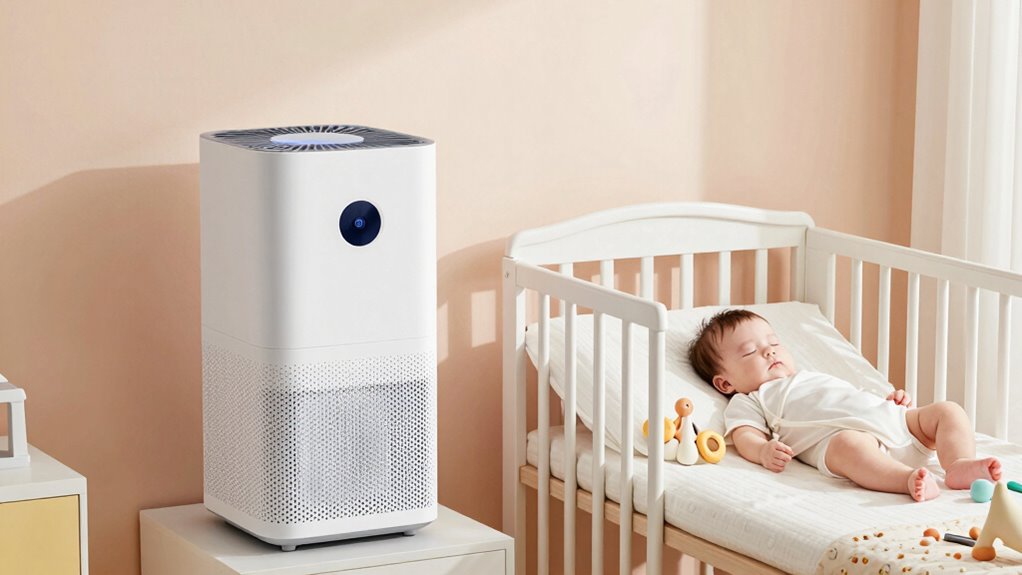
HEPA filters are widely regarded as one of the most effective options for cleaning the air in your baby’s room. They excel at capturing small particles, including dust, pet dander, pollen, and bacteria, making them ideal for addressing indoor pollutant sources. This air purifier technology is proven to improve air quality and reduce allergens. While other filters, like activated carbon, target odors and gases, HEPA filters focus on particulate removal, which is vital for respiratory health. For a baby’s sensitive lungs, HEPA filters provide peace of mind by ensuring that airborne contaminants are minimized. Additionally, proper drying and cleaning of water-damaged areas can prevent mold growth that contributes to indoor air pollution. Overall, they’re considered the best choice for maintaining a cleaner, safer environment in your baby’s space.
How Much Do Baby Air Purifiers Cost, and Are They Worth It?
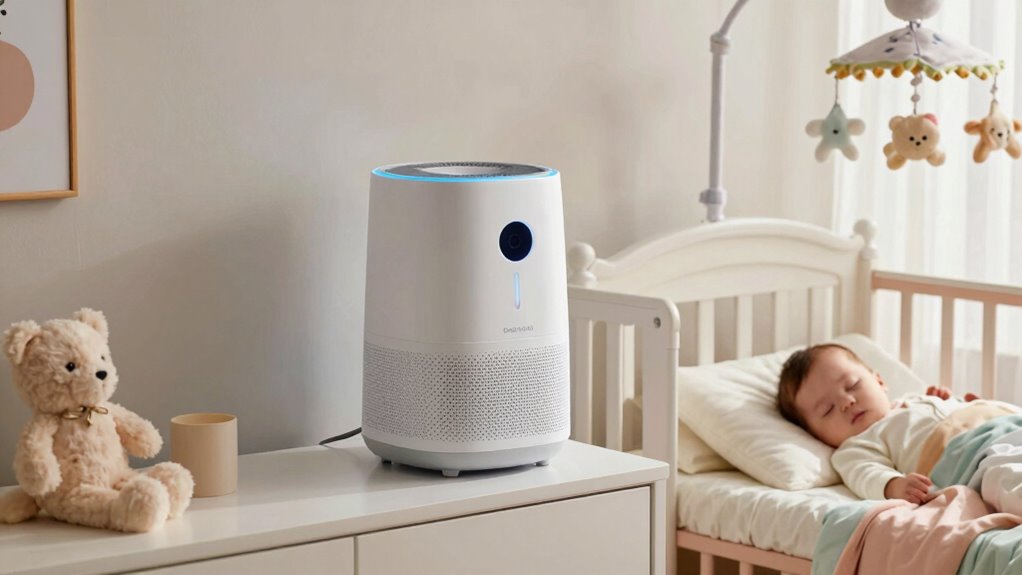
Baby air purifiers vary widely in price, ranging from budget-friendly models around $50 to high-end units costing over $300. While some air purifier myths suggest that pricier models are always better, a thorough cost benefit analysis shows that many affordable options effectively improve indoor air quality. Consider factors like filter replacement costs, energy consumption, and room size to determine if the investment aligns with your needs. Higher-priced units often boast advanced features, but they aren’t necessarily essential for a baby’s safety. If your main goal is to reduce allergens or pollutants, a mid-range purifier with a HEPA filter might be sufficient. Ultimately, deciding whether a baby air purifier is worth it depends on your specific environment and how much value you place on cleaner indoor air.
Can Air Purifiers Replace Other Indoor Air Quality Measures?
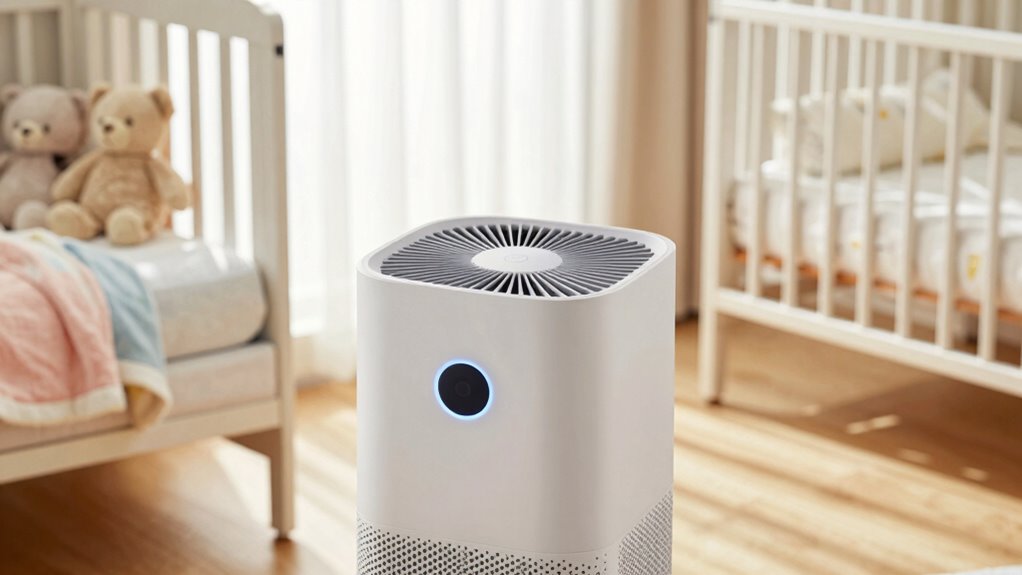
While air purifiers can substantially improve indoor air quality, they shouldn’t be seen as a complete substitute for other measures. Air purifier limitations mean they can’t eliminate all pollutants, especially larger particles or chemical vapors. Relying solely on an air purifier overlooks essential alternative air quality measures, like proper ventilation, reducing sources of indoor pollutants, and controlling humidity. These measures work together to create a healthier environment for your baby. For example, increasing fresh air exchange helps dilute indoor contaminants that purifiers might miss. Using air purifiers as part of a thorough approach ensures better protection. Remember, no single device can handle every indoor air quality challenge, so combining multiple strategies is your best bet for a safe, healthy space for your little one.
Common Mistakes to Avoid When Using Air Purifiers Near Babies
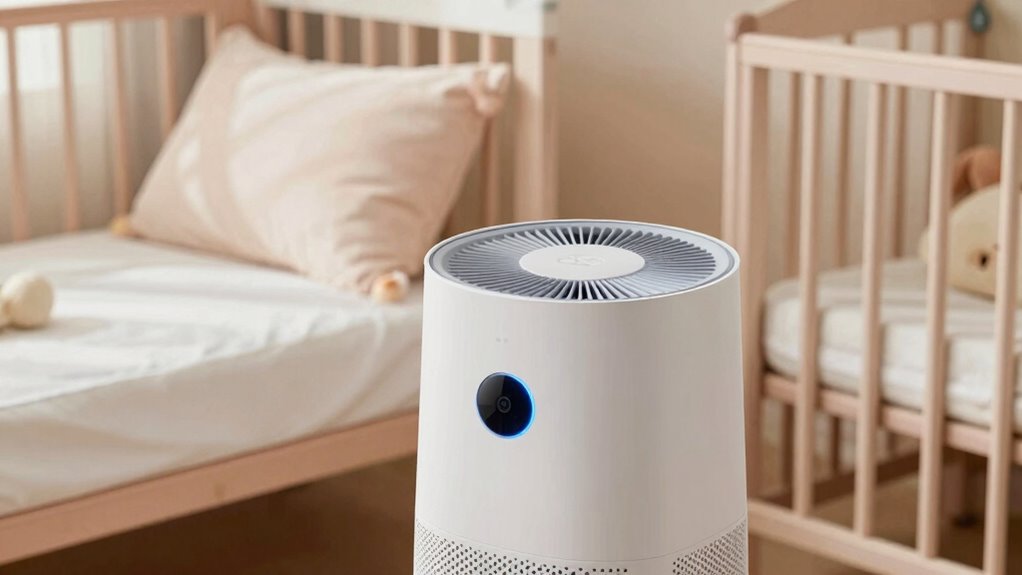
Using an air purifier correctly is key to ensuring your baby’s safety and health, but many parents make common mistakes that can reduce its effectiveness. One air purifier myth is that any model will do—you need a device suited for a nursery’s size and air quality needs. Avoid placing the purifier near windows, vents, or clutter, which can hinder airflow. Follow safe usage tips, such as keeping the purifier out of your baby’s reach and regularly changing filters. Overusing or underusing the device can also diminish benefits. Remember, an air purifier isn’t a substitute for proper ventilation or cleaning. By understanding these pitfalls and sticking to safe usage tips, you ensure your air purifier provides the clean air your baby needs without unnecessary risks.
When Should I Talk to a Pediatrician or Air Quality Expert About Using an Air Purifier?
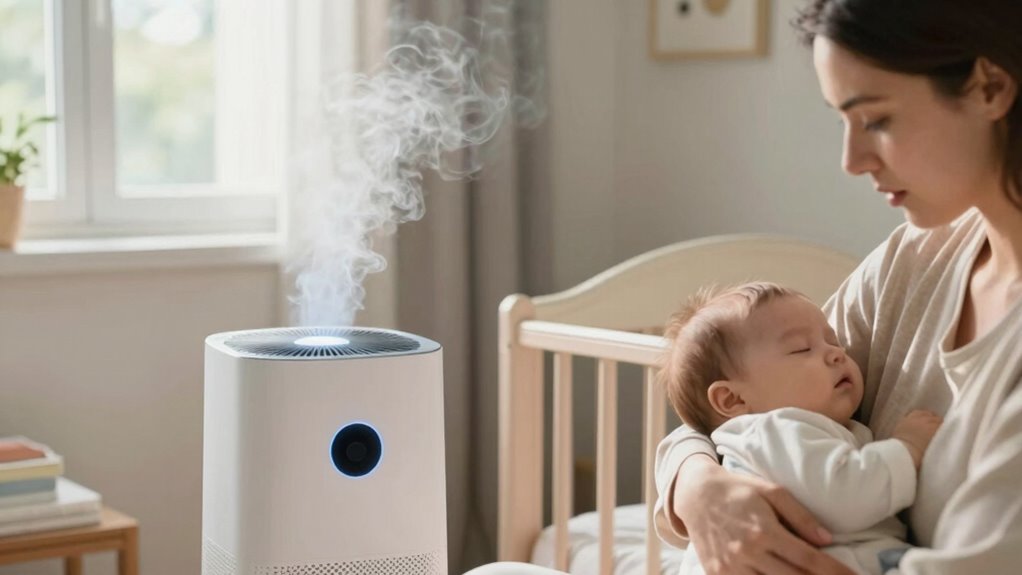
If your baby shows persistent respiratory issues or allergic reactions, it’s time to consult a pediatrician or air quality expert. Pay attention to signs like coughing, wheezing, or unusual irritability, which may indicate poor air quality. If your infant has sensitivities or health concerns, seeking professional advice can assist you in selecting the best air purifier and ensure a safe environment.
When to Seek Medical Advice
You should consult a pediatrician or air quality expert if your baby shows persistent respiratory symptoms, such as coughing, wheezing, or difficulty breathing, despite maintaining a clean environment. Indoor plants can sometimes worsen air quality if not properly cared for, adding mold or allergens that exacerbate symptoms. If you notice ongoing issues, it may indicate that air pollution levels indoors or outdoors are affecting your baby’s health. An expert can assess whether an air purifier is effective or if other measures are needed. Don’t ignore these signs, especially if your baby’s breathing struggles continue. Professional guidance guarantees you take the right steps to improve your child’s environment and health, rather than relying solely on air purifiers.
Signs Your Air Quality Is Poor
Persistent respiratory issues in your baby, despite maintaining a clean environment, can signal that indoor air quality isn’t meeting their needs. If your little one shows signs like coughing, wheezing, or frequent sneezing, it’s time to contemplate whether poor air quality might be a factor. Remember, some air purifier myths suggest they can completely eliminate all pollutants, but they’re not a cure-all. If your baby has toddler allergies or seems more affected by indoor allergens, consulting a pediatrician or air quality expert is wise. These professionals can help determine if airborne irritants are contributing to your child’s symptoms. Don’t rely solely on air purifiers; understanding the root cause is key to creating a healthier space for your baby.
Consulting for Sensitive Infants
Knowing when to consult a pediatrician or air quality expert is essential if your baby shows signs of sensitivity or persistent symptoms despite a clean environment. Don’t fall for air purifier myths that claim they completely eliminate all allergens or pollutants; instead, focus on supporting your infant’s respiratory health. If your baby experiences frequent coughing, wheezing, or difficulty breathing, it’s time to seek professional advice. A healthcare provider can assess whether environmental factors are contributing to their symptoms and recommend appropriate steps. An air quality expert can evaluate your home’s air and suggest effective solutions, including the proper use of an air purifier. Early consultation guarantees you address potential issues promptly, helping protect your sensitive infant’s respiratory health.
Frequently Asked Questions
Are There Any Specific Brands Recommended for Baby Air Purifiers?
You should consider trusted brand recommendations like Molekule, Winix, or GermGuardian when choosing a baby air purifier. These brands offer models with reliable filters that have good filter longevity, ensuring you don’t need frequent replacements. Look for features like HEPA filters and quiet operation to protect your baby’s health. Comparing reviews and specifications helps you find the best fit, giving you peace of mind about your little one’s indoor air quality.
How Often Should I Replace Filters in a Baby Air Purifier?
You’ll want to replace the filters in your baby’s air purifier roughly every 6 to 12 months, depending on the filter lifespan and use. Yes, it’s ironic—your purifier’s “fresh air” depends on timely replacements! Stick to the recommended replacement schedule to keep the device running efficiently and guarantee your little one breathes clean air. Regular filter changes are the key to maintaining peak air quality in your baby’s space.
Can Air Purifiers Help With Specific Baby Allergies or Asthma?
Yes, air purifiers can help with specific baby allergies or asthma by improving air quality and reducing airborne irritants. They trap allergens like pollen, pet dander, and dust mites, providing allergy relief. Choose a purifier with a HEPA filter to target small particles effectively. Regular filter changes ensure peak performance, helping your baby breathe easier and reducing allergy symptoms or asthma flare-ups in your home.
Do Air Purifiers Produce Noise That Could Disturb a Baby’s Sleep?
Air purifiers can produce some noise, but many models have quiet settings designed to minimize noise levels, so they shouldn’t disturb your baby’s sleep. Look for purifiers labeled as “quiet” or “sleep mode,” which operate silently or at very low noise levels. By choosing the right model, you can guarantee effective air purification without causing sleep disturbance, helping your baby rest peacefully through the night.
Are There Environmental Impacts of Using Air Purifiers Around Babies?
Ever wondered if using air purifiers impacts the environment? They can affect indoor air quality positively, but they also consume energy, contributing to environmental concerns. While many models are energy-efficient, frequent use increases overall energy consumption, which might have a broader environmental footprint. To minimize this, choose eco-friendly purifiers and operate them only when needed. Balancing indoor air quality with environmental impacts helps protect both your baby and the planet.
Conclusion
In the end, while air purifiers can be a gentle whisper of reassurance for your little one’s environment, they aren’t a magic solution. Think of them as part of a broader symphony of healthy habits—ventilation, cleanliness, and expert advice. When in doubt, reaching out to a pediatrician or air quality specialist can help you strike the perfect balance, ensuring your baby’s space remains a cozy, safe haven where peaceful dreams can flourish.