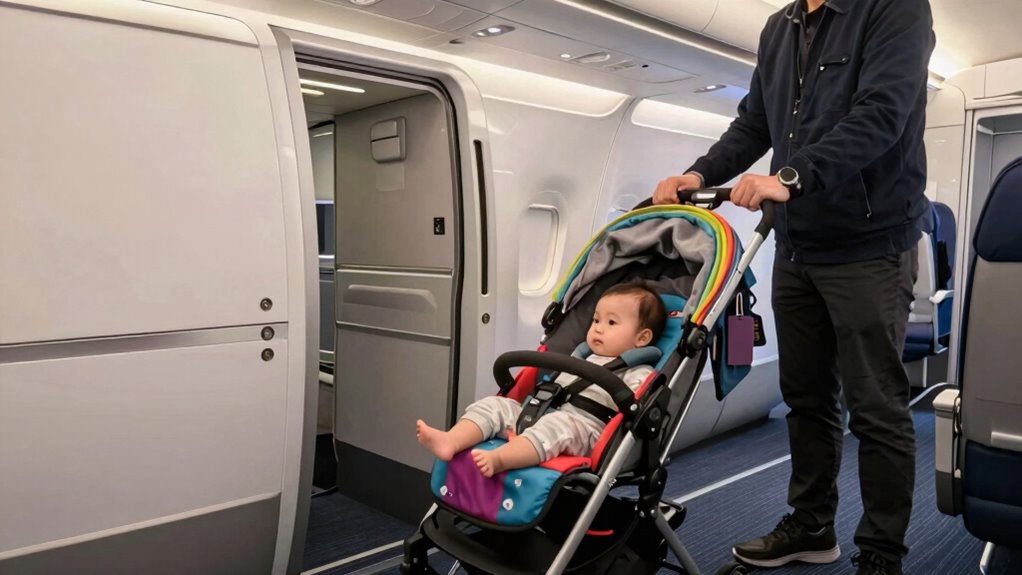

When traveling with a baby, gate-checking your stroller is a smart move to prevent damage and make airport navigation easier. Make certain it’s lightweight, folds compactly, and use protective covers with labels for quick identification. Attach contact info or GPS trackers, and review airline policies beforehand. By preparing your stroller properly, you can avoid common mistakes and ensure smooth handling—if you’re curious about more insider tricks, keep going for expert tips that will simplify your journey.
Key Takeaways
- Always check airline policies on gate-checking strollers to ensure compliance and understand folding requirements.
- Use lightweight, compact strollers that are easy to fold and maneuver through airport terminals.
- Attach clear luggage tags with your contact info and protective covers to prevent damage during handling.
- Keep essential items and valuables out of the stroller before gate-checking, and take photos for identification.
- Consider travel insurance that covers stroller damage or loss, and track your stroller with GPS if possible.

J.L. Childress Gate Check Bag for Single & Some Double Strollers – Travel Bag for Airplane, Fits Most Standard Baby Strollers, Airport Accessories Gate Check, Flying Essentials – Black
- Gate Check Stroller Bag: Designed for gate check travel
- Universal Fit: Fits most single and some double strollers
- Durable Construction: Made with reinforced polyester and seams
As an affiliate, we earn on qualifying purchases.
As an affiliate, we earn on qualifying purchases.
When and Why to Gate-Check Your Baby’s Stroller
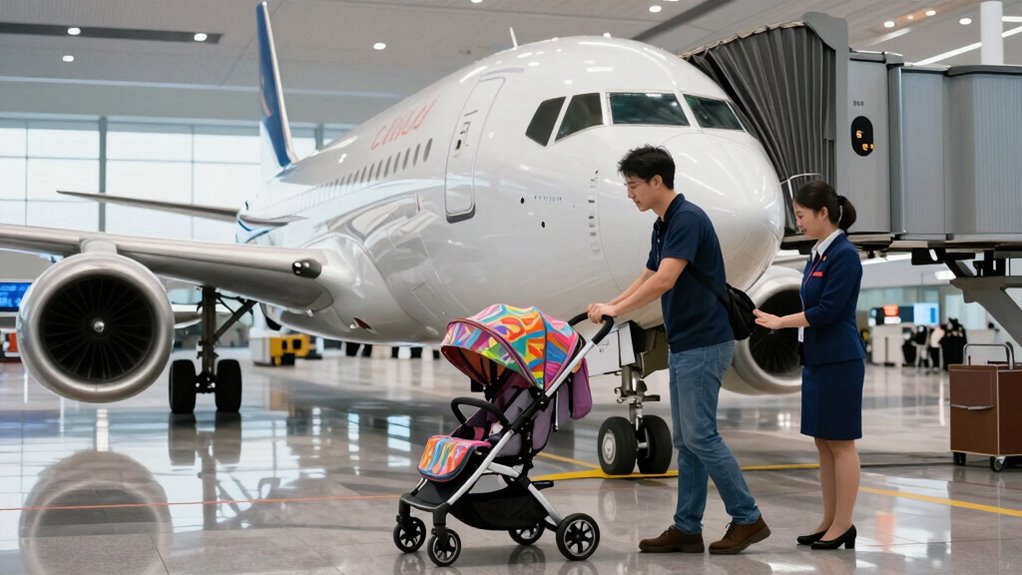
You should consider gate-checking your baby’s stroller whenever the airline’s policies or the situation make it more convenient than bringing it onboard. Gate-checking offers easier stroller storage and prevents damage from crowded cargo holds. Check the airline policies beforehand to guarantee they allow gate-checking and understand any specific requirements, like folding the stroller. If you’re flying during busy times or with a larger stroller, gate-checking can save you hassle at security and reduce the risk of rough handling. It’s especially helpful if you need quick access to the stroller upon landing. By gate-checking, you keep the stroller close until you board, then hand it over at the gate for safe storage. This approach streamlines your travel experience and keeps your stroller protected. Using the proper stroller types can also make gate-checking easier and more secure, especially when choosing lightweight or compact folding models designed for air travel. Additionally, selecting durable materials for your stroller can help it withstand the rigors of handling during travel. Opting for a travel-friendly stroller with reinforced frames can further ensure it arrives in good condition. Being aware of environmental considerations like proper handling and storage can help maintain the stroller’s condition throughout your journey.
Which Stroller Is Best for Airport Travel and Gate-Checking
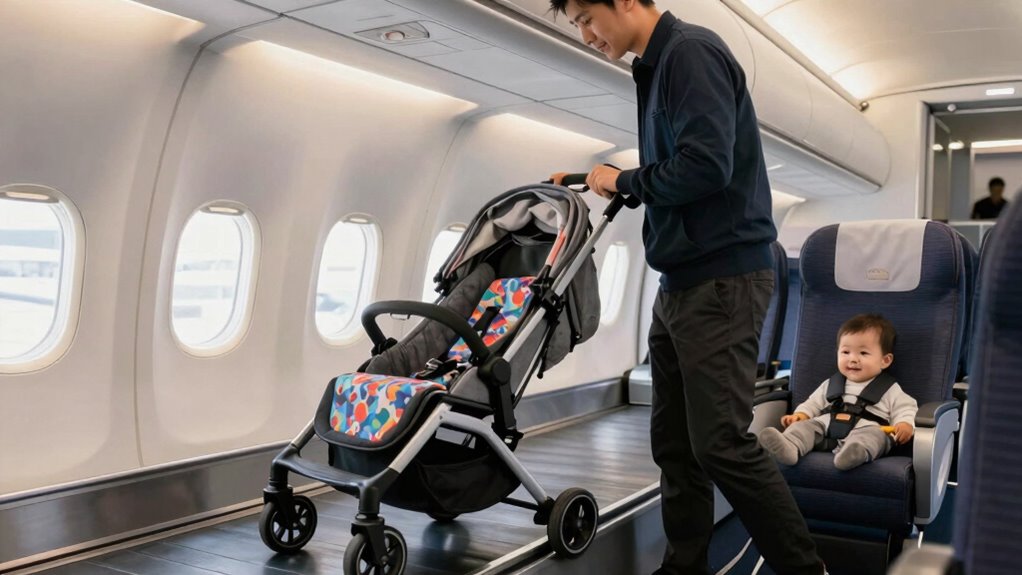
When choosing a stroller for airport travel and gate-checking, look for one that’s compact and lightweight so you can carry it easily through busy terminals. An easy-to-fold design helps you get through security and boarding without hassle, while durability guarantees it can handle the rigors of travel. The right stroller combines portability with strength to make your airport experience smoother. Being aware of odor indicators such as the scent of spoiled ground beef can also help you identify and avoid potential issues with your belongings during travel. Additionally, selecting a stroller with modern farmstead-inspired features can add a touch of rustic charm and practicality to your travel gear. For added peace of mind, consider choosing a model with innovative safety features to ensure your child’s security throughout your journey. Incorporating anti-fatigue mats into your travel setup can also provide extra comfort during long waits or layovers, especially when combined with proper indoor air quality practices to maintain a fresh environment.
Compact and Lightweight Designs
Choosing a stroller that’s compact and lightweight makes airport travel much easier. A compact design lets you maneuver crowded terminals effortlessly, while a lightweight frame reduces fatigue during long walks. These features help you stay agile and stress-free, ensuring a smoother journey with your baby. When selecting the best stroller for gate-checking, prioritize models that feel effortless to carry and store. Here’s a quick comparison:
| Feature | Benefits | Ideal For |
|---|---|---|
| Compact design | Fits easily in overhead bins | Tight spaces and tight connections |
| Lightweight frame | Easy to lift and carry | Busy airports and gate transitions |
| Easy to store | Saves space in baggage compartments | Small car trunks or closets |
| Durable material | Lasts through multiple trips | Frequent travelers |
A lightweight, compact stroller makes every airport outing hassle-free. For added convenience, consider models with easy folding mechanisms to streamline your travel experience.
Easy to Fold and Carry
A stroller that’s easy to fold and carry can considerably simplify your airport experience. Look for models that fold quickly with minimal effort, so you won’t struggle at the gate. Compact strollers are perfect for fitting into overhead compartments or gate-checking without hassle. Consider stroller accessories like straps or handles that make carrying easier, especially when maneuvering busy terminals. An easily foldable stroller also helps you stay hands-free, reducing stress while managing your baby and luggage. Prioritize a lightweight design that still offers baby comfort, such as padded seats or ventilation. Additionally, choosing a stroller that aligns with Best Airless Paint Sprayer principles can help you adapt to different travel environments with more flexibility and ease.
Durable for Airport Use
To guarantee your stroller withstands the rigors of airport travel and gate-checking, prioritize models built with durable materials like reinforced aluminum frames and tough fabrics. A sturdy stroller ensures long-lasting stroller durability and reliable airport convenience. Look for features like reinforced joints and scratch-resistant surfaces to handle rough baggage handling. Here’s a quick comparison:
| Feature | Benefits |
|---|---|
| Reinforced Frame | Prevents bending or breaking during travel |
| Tough Fabrics | Resists tears and stains from handling |
| Quality Wheels | Ensures smooth navigation through airports |
| Compact Build | Fits easily in overhead compartments or trunks |
Additionally, selecting a weather-resistant stroller can help protect your belongings from the elements during airport transit. Choosing a resilient stroller makes airport trips smoother, giving you peace of mind during gate-checks and travel. For added assurance, look for models with impact-resistant materials that can endure rough handling without damage. Ensuring the stroller has durable construction is key to withstanding the demands of frequent travel and rough handling in airports. A shock-absorbing suspension can also contribute to smoother rides over uneven surfaces during transit.
Preparing Your Stroller for Gate-Checking: Tips and Tricks

Preparing your stroller for gate-checking can make the process smoother and help guarantee it arrives in good condition. First, remove any valuables, and check airport regulations for size and weight limits. Use stroller accessories like protective covers or padding to prevent damage during handling. Consider attaching a luggage tag with your contact info for easy identification. Additionally, fold your stroller securely, ensuring it fits the airline’s specifications. This minimizes the risk of damage and makes storage easier. It’s also helpful to be aware of digital tracking options that some airlines or services offer for added peace of mind. Understanding Gold IRA markets can also help you choose the best protective measures and investment in case of delays or damages during transit. Being informed about luggage handling procedures can further aid in safeguarding your stroller throughout the journey. For extra reassurance, researching airline policies beforehand can help clarify specific requirements and reduce surprises at the airport. Knowing the airline’s baggage policies can also help you prepare properly and avoid additional fees or issues.
How to Gate-Check Your Baby Stroller in Easy Steps
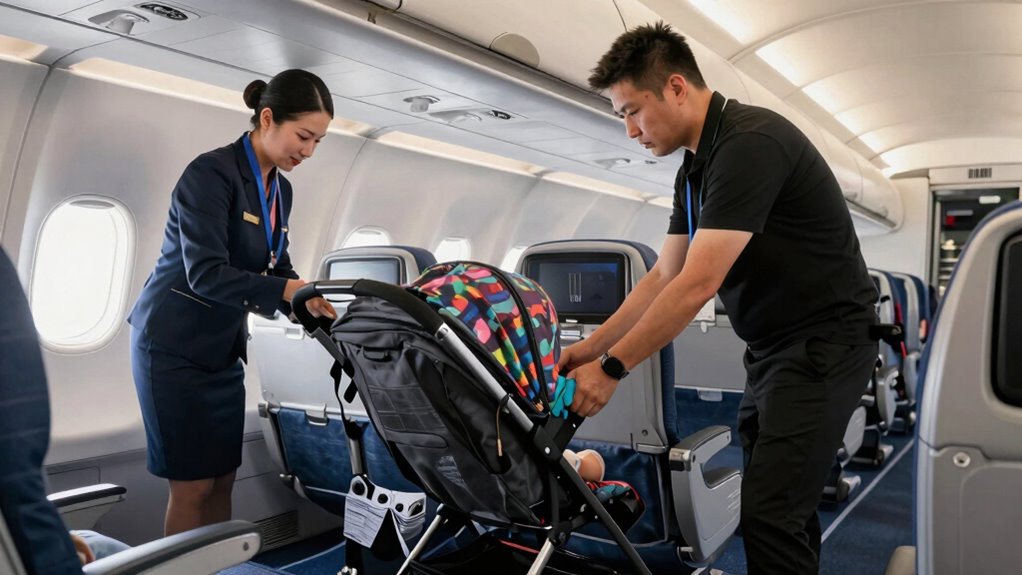
Gate-checking your baby stroller is a simple process when you follow a few easy steps. First, remove any valuables, stroller accessories, or items that could get lost or damaged during transit. Make sure the stroller is clean and dry before heading to the gate. At airport security, you may need to collapse the stroller, so check that it’s easy to fold. Many airlines allow you to keep essential stroller accessories like sunshades or cup holders attached, but confirm with your airline beforehand. When you reach the gate, inform the staff that you’re gate-checking your stroller. They’ll typically give you a tag to attach. Keep your boarding pass handy, and remember that your stroller will be ready for pickup near the aircraft upon arrival. Understanding AI trends can help airlines improve the gate-checking process for travelers. Additionally, knowing airline policies can prevent surprises during the process. Being aware of appliance maintenance plans can also assist in understanding how airlines maintain and handle equipment like strollers to ensure safety and efficiency.
Protecting and Tracking Your Stroller During Travel

To keep your stroller safe during travel, consider using protective covers and labels to prevent damage. Tracking your stroller with a GPS device or app helps make certain it doesn’t get lost amidst transit chaos. Staying vigilant makes sure your stroller arrives intact and ready for your next adventure. Incorporating smart home safety devices like leak detectors or indoor air monitors can also alert you to potential hazards that might affect your travel gear. Additionally, understanding work-life balance principles can help manage stress and prevent burnout during hectic travel schedules. Being mindful of travel safety tips ensures peace of mind while on the go, and setting up home security measures can give you added reassurance when you’re away.
Protecting Your Stroller
Your stroller is your child’s safe haven, so it’s essential to safeguard it during travel. To keep it in top shape and avoid damage, consider using sturdy stroller accessories like protective covers or reinforced bags. These help shield against scratches, dirt, and rough handling. Regular stroller maintenance, such as checking for loose parts or worn wheels, ensures your stroller remains functional and safe. Additionally, secure all loose items to prevent them from falling off during transit. Here are some ways to protect your stroller:
- Use a padded stroller cover for added protection
- Keep stroller accessories like cup holders and organizers secure
- Inspect and maintain your stroller regularly before and after trips
Tracking During Transit
Tracking your stroller during transit is essential to guarantee it doesn’t get lost or misplaced. Start by attaching identifiable stroller accessories, like colorful tags or GPS trackers, to make it easier to spot. Always review airline policies beforehand, as some airlines require specific labeling or handling instructions. When gate-checking, take photos of your stroller and its features for quick identification later. Keep a record of your stroller’s description, including brand, model, and any distinctive marks. Consider using a luggage tag with your contact information for added security. Once your stroller is in the hands of airline staff, stay alert and ask for confirmation that it’s properly tagged. These steps help ensure your stroller arrives safely and can be easily tracked during transit.
What to Expect When Your Baby Stroller Is Gate-Checked
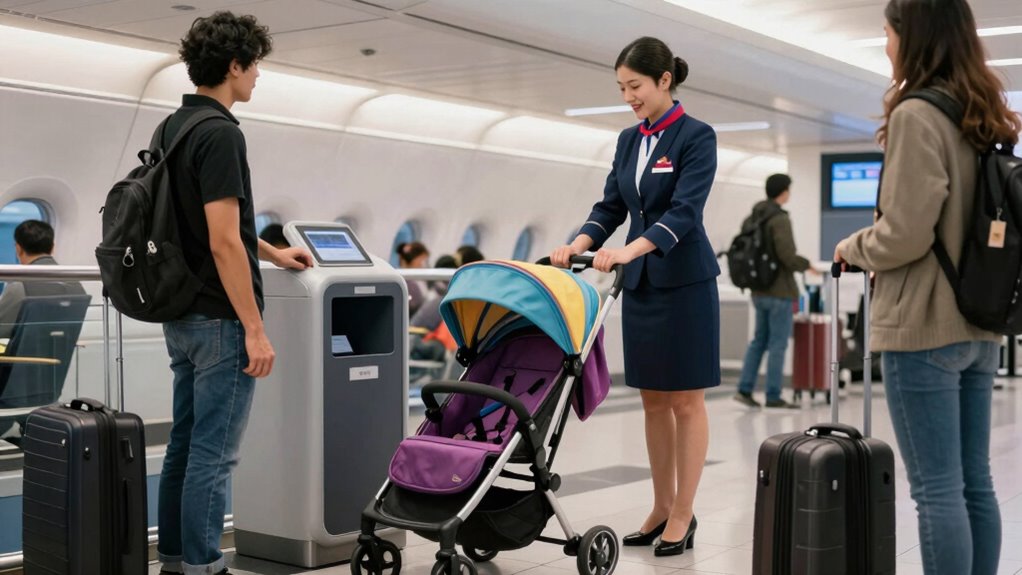
When gate-checking your baby stroller, it’s important to know what to expect upon arrival. Typically, your stroller will be waiting for you near the aircraft door or baggage claim area. It might have a few signs of handling, such as scratches or minor dings, but major damage is rare. Be sure to verify your stroller’s accessories—like cup holders or storage compartments—are still intact. Keep travel insurance details handy in case repairs or replacements are needed. When collecting your stroller, look for it on a designated gate-check area or carousel. Remember, the stroller is often returned quickly, but delays can happen. To stay prepared, pack essential stroller accessories in your carry-on. This way, you’re ready for any situation.
Common Mistakes to Avoid When Gate-Checking Your Baby Stroller
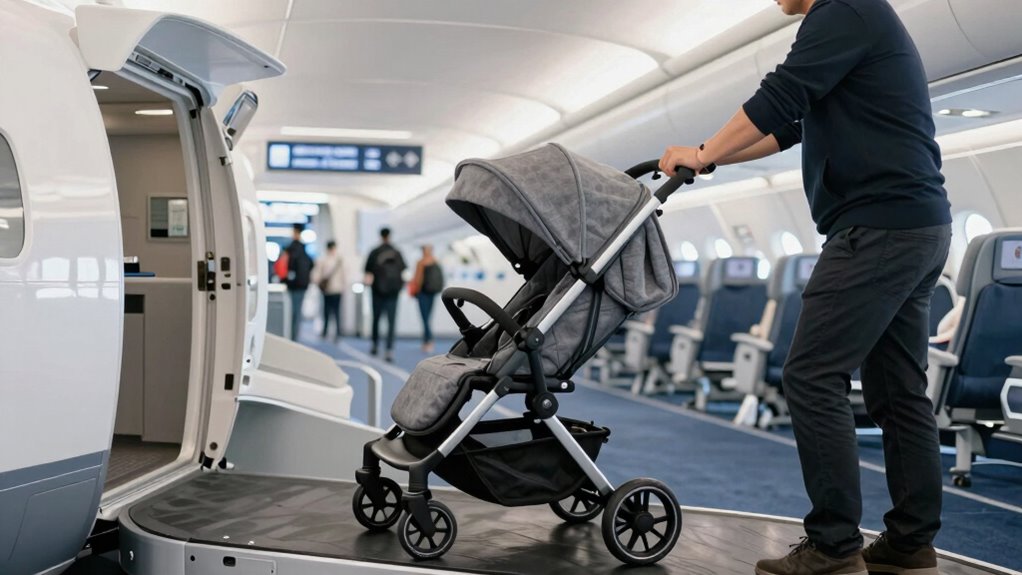
Gate-checking your baby stroller can seem straightforward, but many travelers overlook common pitfalls that lead to damage or inconvenience. One mistake is neglecting to remove or secure stroller accessories, like cup holders or toys, which can get lost or damaged during handling. Failing to use a protective cover or label can also result in scratches or mishaps. Additionally, it’s wise to check if your travel insurance covers stroller damage, as some policies don’t include gate-checked items. Another mistake is not confirming with airline staff whether your stroller qualifies for gate-checking, leading to surprises at the gate. Finally, avoid relying solely on the airline’s handling—prepare your stroller properly and consider extra protection to prevent unnecessary damage or loss.
Alternatives to Gate-Checking Your Baby Stroller
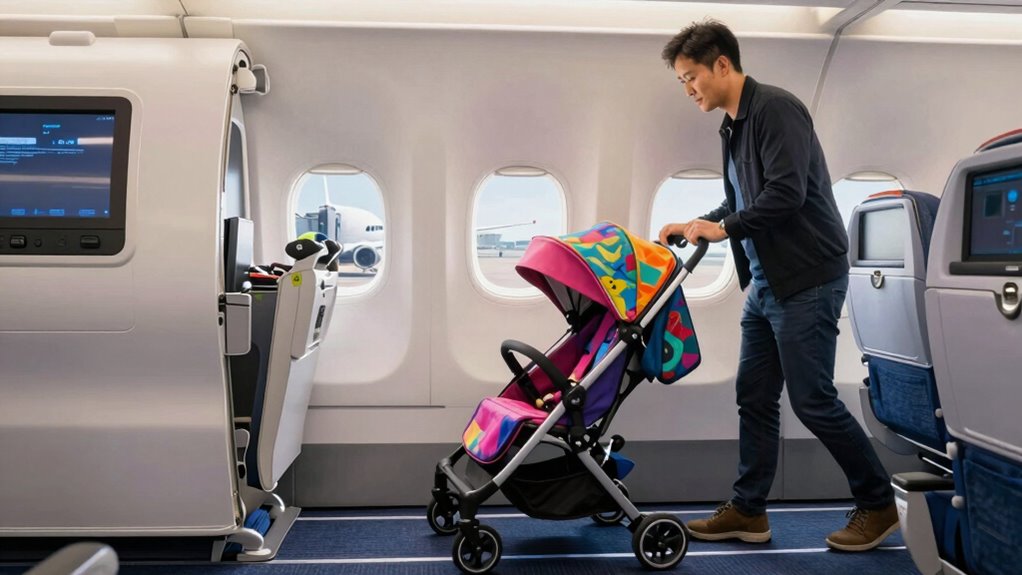
If you want to avoid gate-checking your stroller altogether, there are several alternatives that can make traveling easier and less stressful. One option is to invest in stroller accessories like compact, lightweight models designed for travel. These fold up small and fit easily in carry-on luggage. Another idea is to use a sturdy, diaper bag-style carrier that straps onto your body, keeping your hands free. Additionally, consider purchasing travel insurance that covers potential damage or loss of your stroller, giving you peace of mind.
Here are some options to explore:
- Lightweight, foldable travel strollers
- Stroller carriers or slings
- Travel insurance for stroller coverage
Final Tips for a Smooth Airport Journey With Your Baby and Stroller
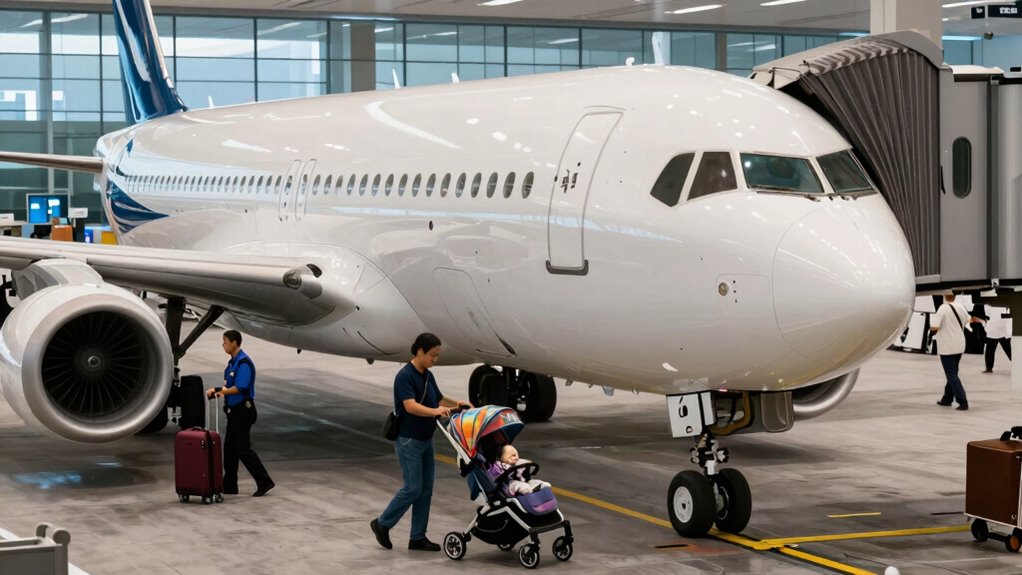
Traveling through airport procedures with your baby and stroller can feel overwhelming, but a few simple strategies can make the experience much smoother. First, familiarize yourself with airport regulations regarding stroller size and gate-check policies. Always prioritize stroller safety by securing all parts and avoiding overloading. Arrive early to allow extra time for security checks and boarding. When passing through security, be prepared to fold your stroller and carry your baby. Label your stroller clearly to prevent mix-ups. Consider this quick reference:
| Tip | Why it matters | Example |
|---|---|---|
| Check airport regulations | Ensures smooth security process | Confirm size limits before arriving |
| Secure stroller safety | Prevents accidents during travel | Use safety straps and locks |
| Arrive early | Reduces stress and rush | Arrive 2 hours before your flight |
Frequently Asked Questions
Can I Request Special Handling for My Gate-Checked Stroller?
Yes, you can request special handling for your gate-checked stroller. When you arrive at the gate, let airline staff know about your stroller so they can assist with proper stroller storage and guarantee it’s handled carefully. This also gives you a chance to ask about stroller cleaning options if needed. By making this request early, you help protect your stroller from damage and make sure it’s ready when you land.
How Do I Identify My Stroller Among Others at Baggage Claim?
To identify your stroller at baggage claim, use distinctive stroller identification methods like colorful ribbons, unique stickers, or personalized tags. Arrive early to be near the carousel, and keep an eye out for your specific stroller design or features. Baggage claim tips include taking a photo of your stroller beforehand to compare, and staying close to the area until your stroller appears. These tricks help you quickly spot your stroller among others.
Are There Size Restrictions for Gate-Checking Strollers?
Gate check policies typically allow strollers within specific size limits, usually around 20x15x10 inches, but it varies by airline. Verify your airline’s stroller dimensions restrictions before heading to the gate to avoid surprises. If your stroller exceeds these limits, you might need to fold it or arrange for special handling. Always review your airline’s gate check policies to ensure smooth travel with your baby and stroller.
What Insurance Options Are Available for Gate-Checked Strollers?
Think of stroller insurance as a safety net for your peace of mind. You can usually purchase damage coverage through your airline or third-party providers, protecting against mishaps during gate-checking. Some airlines include basic coverage, but for extra protection, consider dedicated stroller insurance plans. This way, if your stroller gets damaged or lost, you’re covered, and your travel worries take a backseat while you focus on your adventure.
How Does Gate-Checking Impact Stroller Warranty Coverage?
Gate-checking your stroller typically doesn’t void its warranty, but you should verify the manufacturer’s gate checking policies. Many warranties remain valid as long as you follow proper handling procedures, even when gate checking. Be aware that some warranties might exclude damage caused during air travel, so protect your stroller accordingly. Always review your stroller’s warranty details and airline policies before flying to ensure your coverage stays intact.
Conclusion
Think of gate-checking your baby’s stroller as carefully packing a fragile treasure. With the right preparation and precautions, you’ll navigate airport travel smoothly, turning potential chaos into a well-orchestrated dance. Trust the tricks and tips shared, and your journey will flow seamlessly. Remember, a little extra effort now guarantees your adventure remains a beautiful symphony rather than a discordant noise. Safe travels, and enjoy every moment of your journey together.