You should keep your child rear-facing until they reach your car seat’s maximum height or weight limits, which is typically around 2-4 years old. Extending rear-facing provides better protection for your child’s head, neck, and spine during crashes, reducing the risk of serious injuries. Staying informed about safety guidelines helps you make the best choice for your child’s protection—more details can guide you to keep them safest for longer.

Turn the school run and nap time into listening time
- Thousands of audiobooks, podcasts and originals
- Listen on your phone, tablet or Echo — also offline
- Cancel anytime
Key Takeaways
- Children should remain rear-facing until they reach the seat’s maximum height or weight limits, typically around age 2 to 4.
- Extended rear-facing offers better protection for the head, neck, and spine during crashes, reducing injury risks.
- Properly installed seats with snug harnesses ensure safety until the child outgrows the seat’s limits.
- Transition should occur only after exceeding the manufacturer’s recommended height and weight thresholds.
- Staying rear-facing longer aligns with current safety guidelines and supports healthy child development.
rear-facing car seat for toddlers
As an affiliate, we earn on qualifying purchases.
As an affiliate, we earn on qualifying purchases.
Why Is It Safer to Keep Kids Rear-Facing Longer?
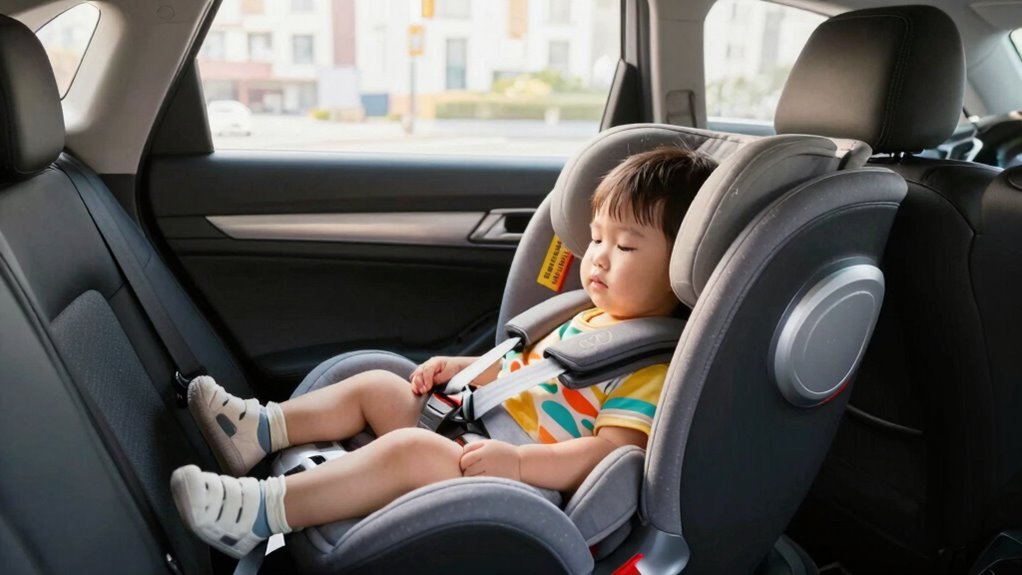
Keeping kids rear-facing longer is safer because their heads, necks, and spines are more protected in a crash. When you choose a rear-facing car seat, you’re giving your child passenger the best possible protection, especially during sudden stops or accidents. Safety statistics show that children rear-facing are considerably less likely to suffer serious injuries compared to forward-facing. Their developing bones and soft tissues are vulnerable, and the rear-facing position distributes crash forces more evenly across the body. This reduces the risk of head and neck injuries. In addition, proper installation techniques ensure that the car seat functions as intended, maximizing safety. Research indicates that extended rear-facing significantly decreases injury risk in the event of an accident. By keeping your child rear-facing for as long as possible, you’re maximizing safety and aligning with the latest safety research. It’s a simple step that can make a big difference in protecting your little one in an emergency. Studies on child passenger safety highlight the importance of longer rear-facing periods for optimal protection. Additionally, understanding child development can help parents make informed decisions about the appropriate timing for transitioning to forward-facing seats. Moreover, using appropriate harness adjustments ensures your child’s safety is maintained as they grow.
What Are the Age and Size Guidelines for Rear-Facing Car Seats?
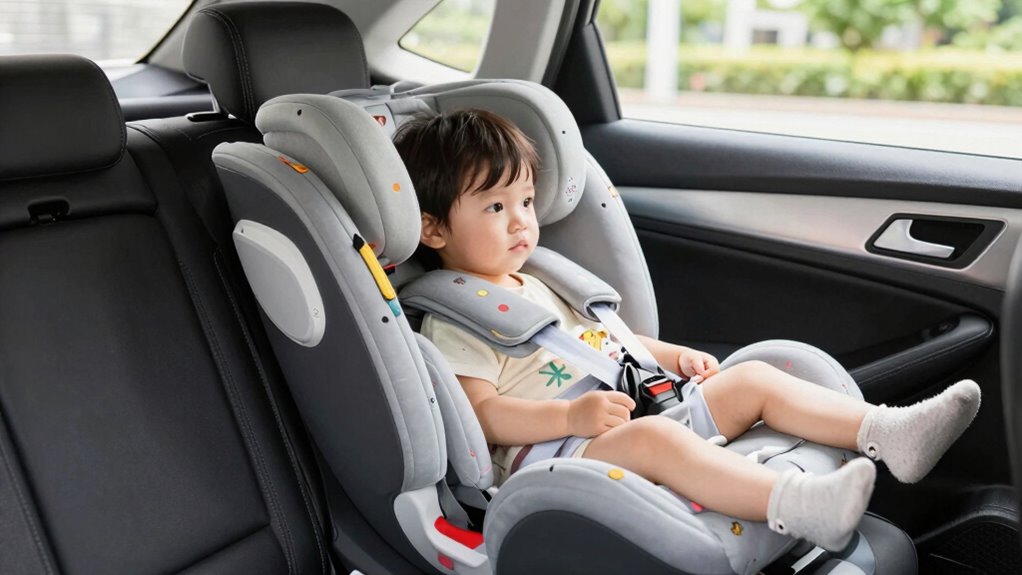
Understanding the age and size guidelines for rear-facing car seats helps keep your child safe. These seats typically are recommended for children up to a certain age, height, and weight, depending on the model. It’s also important to adhere to safety regulations and laws in your area to ensure proper use. Additionally, battery inverter generators can be useful for powering safety devices or equipment during emergencies. Following current safety standards ensures that your child’s car seat remains effective and compliant with legal requirements. Recognizing rear-facing seat limits is essential for optimal protection as your child grows. Being aware of regional flavor variations can also help parents choose the most suitable car seats that meet local regulations and preferences. Incorporating foam rolling routines can further support your child’s overall health and recovery.
Recommended Age Range
At what age should your child switch out of a rear-facing car seat? Typically, it’s recommended until they reach the maximum age or size limits set by the manufacturer, often between 2 to 4 years old. Remember, every child develops differently, so following these guidelines guarantees safety aligns with their growth. Keep in mind that the age range varies depending on the child’s size and weight, which are vital factors in vehicle maintenance and safety. Using appropriate parenting strategies helps you stay consistent with rear-facing seating for as long as possible. Here are some key points to contemplate:
- Follow manufacturer’s age and weight limits
- Keep your child rear-facing until they outgrow the seat
- Prioritize safety over age milestones
- Regularly check seat adjustments
- Consult child passenger safety specialists
- Understanding growth patterns can help you determine the right timing for switching seats. Additionally, being aware of developmental milestones can inform safer car seat decisions.
Height and Weight Limits
Children should remain in a rear-facing car seat until they reach the specific height and weight limits set by the manufacturer, which typically vary depending on the seat’s design. These height restrictions and weight limits guarantee your child is properly protected and seated in the safest position. Most rear-facing seats accommodate children up to about 40 to 50 pounds and heights of around 40 inches, but always check your seat’s labels for exact guidelines. Once your child exceeds these limits, it’s time to switch to a forward-facing seat. Staying within these limits helps maintain best protection for your child’s head, neck, and spine during a crash. Remember, following the manufacturer’s recommended height and weight limits is vital for your child’s safety. Additionally, AI-powered virtual reality in e-learning can be used to educate parents about the importance of following these guidelines through interactive simulations. Understanding child passenger safety and adhering to these guidelines can significantly reduce injury risks in the event of an accident. Properly utilizing rear-facing car seats during the recommended duration is supported by safety studies that show increased protection for young children in crashes. Moreover, being aware of the benefits of rear-facing positioning underscores the importance of adhering to these limits for optimal safety.
Furthermore, proper installation techniques ensure the seat functions as intended and maximize safety benefits.
Safety Regulations and Laws
Safety regulations and laws specify clear guidelines for how long you should keep your child passenger in a rear-facing car seat, based on age and size. These safety legislation standards aim to protect your child’s neck and spine during crashes. While laws vary by state, most recommend children remain rear-facing until at least age 2 or until they reach the maximum height and weight limits of their seat. Understanding these regulations helps you make informed decisions for your child’s safety. Additionally, electric bikes’ speed capabilities are an important consideration for safe riding practices.
- Check your local laws for specific age and size requirements
- Follow manufacturer weight and height limits
- Keep children rear-facing as long as possible within legal limits
- Know that safety legislation prioritizes child passenger protection
- Stay updated on changing regulations for idealsafety
Which Car Seat Features Help Keep Your Child Safer Rear-Facing?
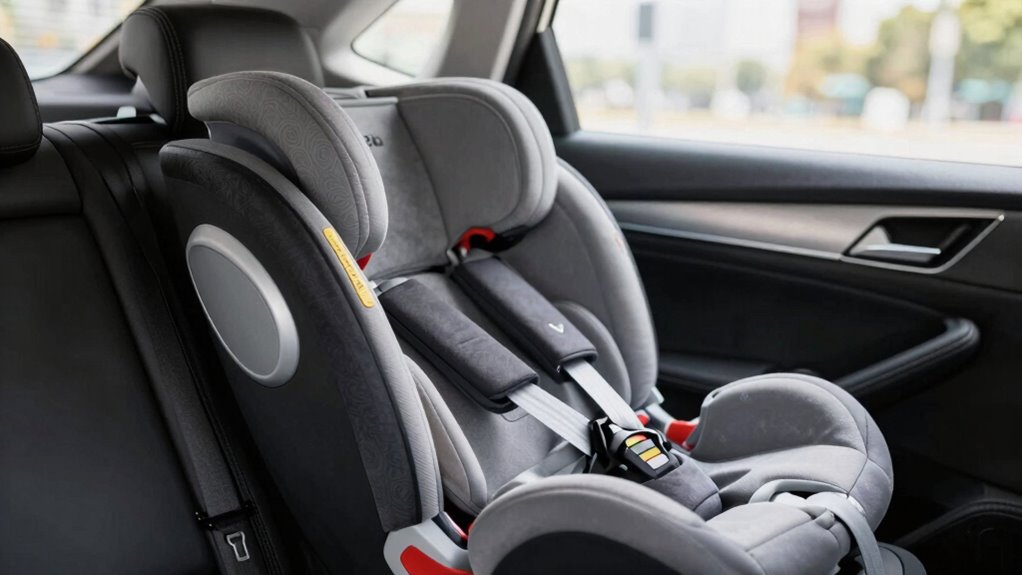
To keep your child safer while riding rear-facing, focus on car seat features designed for maximum protection. Look for seats with side-impact protection, which cushions your child’s head and neck during a collision. A high-quality five-point harness distributes crash forces evenly and keeps your child secure. Adjustable headrests support proper positioning as your child grows, promoting healthy child development. Guarantee the seat has clear, easy-to-follow instructions for correct car seat installation, reducing the risk of misuse. Reinforced steel frames add durability and stability during crashes. Features like energy-absorbing foam and a secure buckle system further enhance safety. Incorporating fabric decorating markers can help personalize the car seat for easier identification or added comfort, making it more engaging for your child. Selecting seats with impact-absorbing features can significantly improve safety during accidents. Utilizing safety-focused design ensures the seat effectively protects your child’s delicate developing body and ensures proper installation for exceptional safety. Additionally, choosing a seat with easy maintenance and cleaning can help maintain hygiene and safety over time. Regularly checking for recalls and safety updates can also ensure your seat remains a secure choice for your child.
How Do I Know When My Child Has Outgrown Rear-Facing Limits?
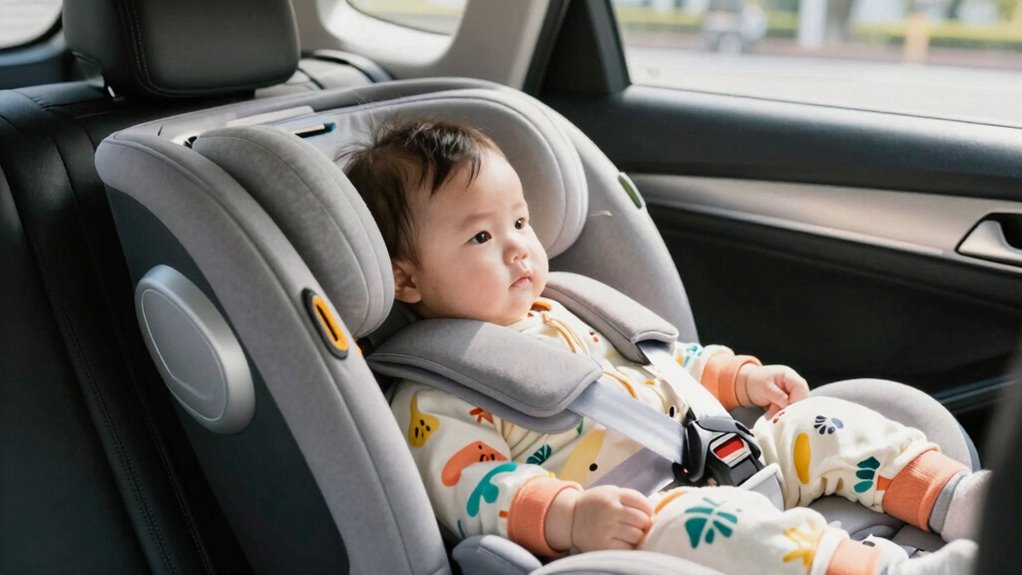
Knowing when your child has outgrown rear-facing car seats depends on their size and the seat’s specific limits. As your child experiences rapid growth, it’s essential to monitor their height and weight regularly. Car seat lifespan also matters since seats can wear out over time, affecting safety. To know if your child has outgrown rear-facing limits, check the manufacturer’s guidelines carefully. Additionally, understanding Gold IRA Rollovers can help parents plan for future financial security once their children are grown. Being aware of the recommended age and size limits ensures your child’s safety is maintained as they grow. Regularly reviewing the seat’s durability and safety features can also help determine if it remains secure and effective. Observing your child’s growth patterns and comparing them to the car seat’s limits helps in making informed decisions. It’s also beneficial to stay updated on current safety recommendations and car seat laws in your state.
- Your child’s height exceeds the maximum height specified by the seat
- Your child’s weight surpasses the seat’s weight limit
- Their ears are close to the top of the seat or headrest
- They can sit comfortably with proper harness fit
- The seat looks worn or damaged, affecting safety
Staying attentive to child growth and car seat lifespan helps ensure your child’s safety as they grow.
What Are the Risks of Turning Forward Too Early?
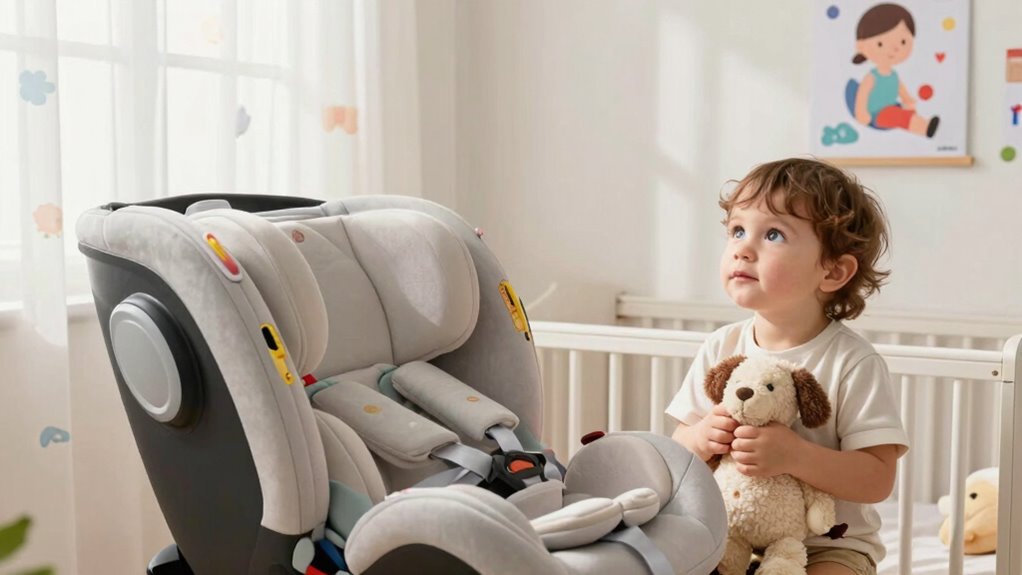
Turning your child forward too early considerably increases the risk of injury in a crash because they’re no longer protected by the full harness system designed for rear-facing seats. When you switch too soon, you reduce their hazard awareness, making them more vulnerable to neck and spinal injuries. Risk assessment becomes vital here, as early switching ignores developmental readiness. Studies show that children under two are safer in rear-facing seats due to proper weight distribution and increased protection for critical areas. Additionally, understanding child developmental stages can help parents make safer decisions about when to transition.
How Can I Safely Transition My Child From Rear- to Forward-Facing?

To guarantee a safe transition, watch for signs your child is ready, like sitting steadily and showing no discomfort. Always follow the manufacturer’s guidelines for your car seat, as they provide specific age and weight recommendations. By paying attention to these cues and instructions, you can make the switch confidently and safely.
Recognize Safety Signs
How can you tell when it’s safe to switch your child from a rear-facing to a forward-facing car seat? Watch for signs that your child’s development and size meet the manufacturer’s guidelines. Make certain their shoulders are at or just below the top harness slots, and they can sit comfortably with the harness snug against their body. Check for proper car seat maintenance, like no frayed straps or loose parts, which could compromise safety. Also, observe your child’s behavior; if they’re enthusiastic and able to sit upright, it might be time. Remember, every child develops differently, so stay attentive to their physical growth and comfort. Recognizing these safety signs helps ensure your child’s transition is both safe and supportive of healthy development.
- Shoulders at the correct harness level
- Ability to sit upright without support
- No signs of discomfort or struggle
- Secure, snug harness fitting
- No damage or wear in the car seat
Follow Manufacturer Guidelines
Following your car seat manufacturer’s guidelines is essential to guarantee a safe and smooth shift from rear-facing to forward-facing. Every child develops at their own pace, but manufacturers specify weight and height limits that should be respected to support healthy child development. Proper car seat installation is vital during this transition; verify the seat is securely installed according to the instructions. Before switching, double-check that your child’s shoulders have reached the top harness slot or meet the height requirement. Avoid rushing the process; waiting until your child is ready ensures maximum protection. Following these guidelines helps you make a safe transition, reducing the risk of injury and supporting your child’s growth and safety as they develop.
Are There Common Myths About Rear-Facing Car Seats?
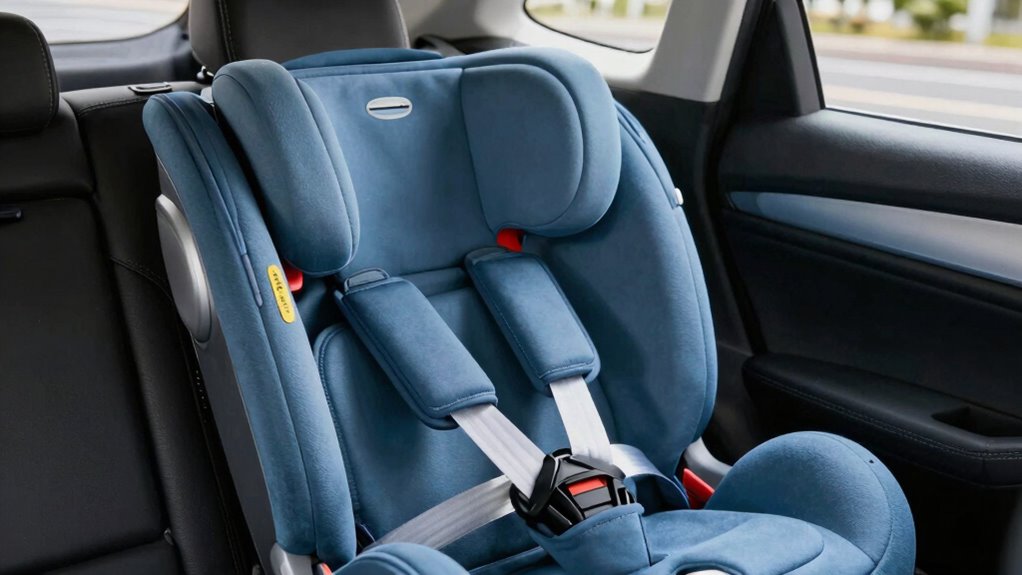
Many parents believe common myths about rear-facing car seats, which can lead to unnecessary concerns or incorrect decisions. One myth is that rear-facing seats are unsafe for older children; in reality, they provide better protection for head and neck injuries. Some think that switching to a booster seat is better once a child outgrows rear-facing, but many kids should stay rear-facing longer for optimal safety. Others believe that car seat installation is complicated, but proper installation is crucial for safety and can be straightforward with guidance. A common misconception is that rear-facing limits mobility, but it actually minimizes injury risk during crashes. Lastly, some assume booster seat safety is comparable to rear-facing, but rear-facing seats offer superior crash protection for younger children.
How Do I Choose the Best Rear-Facing Car Seat for My Child?
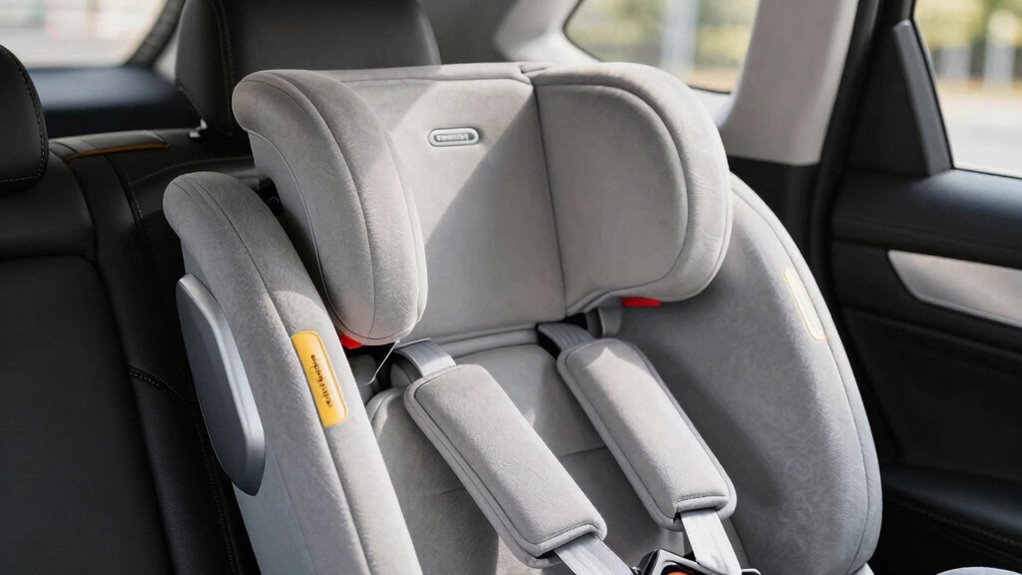
Choosing the right rear-facing car seat involves considering your child’s size, weight, and age, along with your vehicle’s features. Make sure the seat fits well in your car, and check that it meets current safety standards. Look for seats with adjustable harnesses and weight limits that can accommodate your child’s growth. When selecting a seat, keep vehicle maintenance in mind—ensure your car’s seat belts and anchors are compatible with the car seat. Parenting tips include reading reviews and consulting safety ratings to find trusted brands. Proper installation is vital for safety, so follow the manufacturer’s instructions carefully. Taking the time to choose the best seat helps keep your child safer and guarantees you’re making an informed decision during your parenting journey.
Practical Tips for Keeping My Child Rear-Facing Longer and Safer

Keeping your child rear-facing for as long as possible boosts their safety on the road. To do this, focus on proper car seat installation and understanding child development milestones. Confirm the seat is installed tightly and at the correct angle, reducing movement during a crash. Regularly check that your child’s harness fits snugly without slack, supporting their growth and safety. Keep your child rear-facing until they reach the maximum height or weight limit, often around age 4. Here are some practical tips:
- Follow manufacturer instructions for proper car seat installation.
- Keep your child’s head within the seat’s shell for maximum protection.
- Adjust harness straps as your child grows.
- Choose seats that accommodate longer rear-facing periods.
- Regularly review safety guidelines and updates to child development recommendations.
Frequently Asked Questions
How Long Can a Child Stay Rear-Facing Legally in My State?
You can keep your child rear-facing until they reach your state’s car seat laws, which often recommend until age two or until they hit the maximum weight or height limit for their seat. Child safety regulations prioritize rear-facing positions because they offer better protection. Check your local laws to confirm specific age or size requirements, but generally, staying rear-facing as long as possible is safest for your child’s development and safety.
Are There Specific Brands Recommended for Extended Rear-Facing Safety?
You should look for child seats with top-rated safety certifications and positive child seat reviews for extended rear-facing use. Brands like Nuna, Britax, and Chicco often earn high marks for safety and durability. Check the manufacturer’s guidelines to make sure the seat supports rear-facing beyond the minimum age, and read reviews to confirm it fits your child’s size comfortably. Prioritize safety features and certifications to keep your child secure longer.
Can Older Children Benefit From Rear-Facing Seats?
Yes, older children can benefit from rear-facing seats if they still fit within the weight and height limits. Proper age-appropriate seating is essential, and extending rear-facing can provide better neck and spine protection. When they outgrow rear-facing options, a booster seat shift is the next step. Keep your child rear-facing as long as possible before gradually moving to forward-facing and eventually booster seats for maximum safety.
What Are Signs My Child’s Car Seat Installation Is Incorrect?
Imagine your child’s safety depends on perfect installation. You’ll know it’s incorrect if the seat belt isn’t snugly positioned or if there’s slack, or if your child’s head isn’t properly supported. Check that the seat is tightly installed, the harness fits snugly at their shoulders, and their head isn’t leaning forward or sideways. Regularly review these signs to guarantee the seat provides maximum protection and comfort.
How Do I Handle Rear-Facing Car Seats on Airplane Trips?
When flying, you should verify your airline’s seat compatibility for rear-facing car seats. Many airlines allow them, but some require a certified harness. Use portable car seat options designed for travel, which are lightweight and easy to install on planes. Always confirm with your airline beforehand, and arrive early to ensure proper installation. This way, your child stays safe and comfortable during the flight.
Conclusion
Many believe turning your child forward-facing at the earliest opportunity is safe, but science shows waiting longer markedly reduces injury risk. Research confirms that rear-facing seats better protect your child’s head, neck, and spine during crashes. So, don’t rush the change—trust the evidence, follow guidelines, and keep your little one rear-facing as long as possible. It’s a simple step that can make a life-saving difference.
Fall Picks
fall essentials
As an affiliate, we earn on qualifying purchases.