

Creating an allergy action plan involves clear communication with both your child’s school and caregivers. Share detailed medication instructions, emergency steps, and symptom recognition. Make certain everyone understands their roles, knows where medications are stored, and has access to the plan at all times. Regularly review and update the plan as needed to keep everyone informed and prepared. To learn more about effective coordination strategies, keep exploring how to keep your child safe.
Key Takeaways
- Share a detailed allergy action plan with school staff and caregivers, ensuring everyone understands their roles during an allergic reaction.
- Regularly review and update the plan to reflect any changes in allergies or medications.
- Store copies of the plan in accessible locations, such as the school health office and on mobile devices.
- Educate all parties on recognizing symptoms and administering emergency medications promptly.
- Maintain open communication to reinforce preparedness and ensure quick, coordinated responses during emergencies.
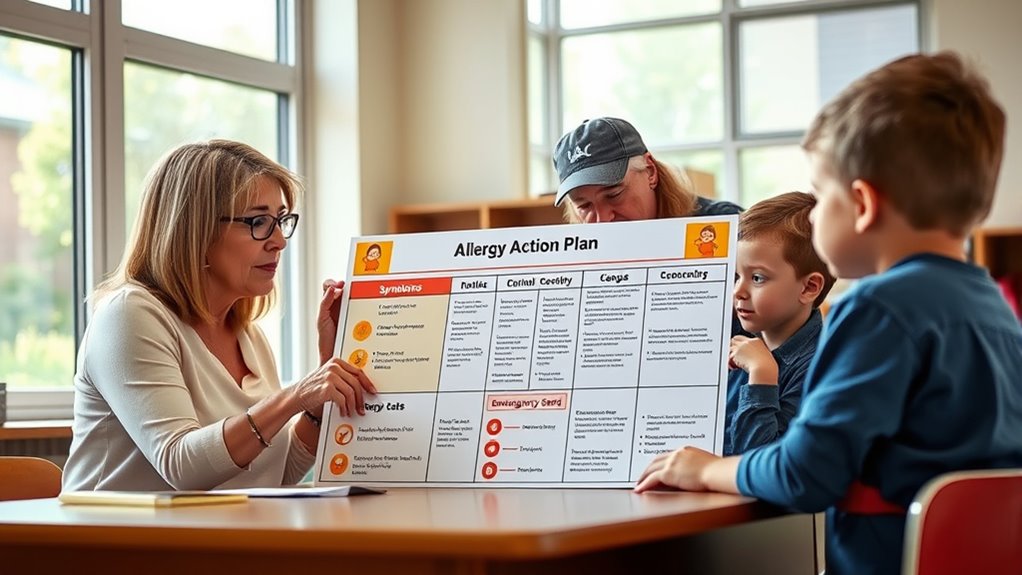
An Allergy Action Plan is an indispensable tool that helps you manage allergic reactions effectively and safely. It provides clear instructions on how to recognize symptoms, administer medication, and respond swiftly during emergencies. When you share this plan with school staff and caregivers, it creates a unified approach to allergy management that minimizes risks and promotes confidence in handling urgent situations. Medication management is a critical aspect of the plan. It outlines which medications you need, how and when to use them, and where they are stored. This ensures that anyone involved in your care knows exactly how to access and administer your allergy medications, such as epinephrine auto-injectors or antihistamines. Proper medication management prevents delays during reactions and ensures you receive timely treatment, which can be life-saving.
Emergency preparedness is equally crucial. Your Allergy Action Plan prepares you and those around you to respond swiftly when an allergic reaction occurs. It details the signs to watch for, including mild symptoms like hives or swelling, and more severe indicators such as difficulty breathing or loss of consciousness. By clearly communicating these signs, your school and caregivers can act immediately, reducing the chance of a reaction worsening. The plan also emphasizes the importance of having emergency contact information readily available and practicing emergency procedures regularly. This proactive approach helps everyone involved feel confident and ready to act without hesitation.
Sharing your Allergy Action Plan with school staff and caregivers guarantees they understand their roles in your allergy management. It’s essential to review the plan periodically, especially if your allergies change or if new medications are added. This ongoing communication keeps everyone up to date and reinforces emergency preparedness. You should also ensure that your plan is accessible at all times—whether it’s stored in your school’s health office, kept with your caregiver, or on a mobile device. By doing so, you make sure that critical information is available whenever an allergic reaction occurs.

Fukumi Auvi Q Carrying Case,Portable Medicine Emergency Bag for 2 Auvi-Q Auto Injectors,Asthma Inhaler,Nasal Spray,Allergy Medicine,First Aid,Hard Travel Case with Carabiner and Lanyard,Bag Only
EMERGENCY SUPPLIES – The Auvi Q carry case is for those who are prone to allergies, or who…
As an affiliate, we earn on qualifying purchases.
As an affiliate, we earn on qualifying purchases.
Frequently Asked Questions
How Often Should Allergy Action Plans Be Reviewed and Updated?
You should review and update your allergy action plan at least once a year, and after any allergy-related incident. Make sure medication storage is current and accessible, and incorporate information from emergency drills to improve responses. Regular reviews ensure all caregivers know their roles, and updates reflect any changes in allergies or medications. This proactive approach helps keep everyone prepared and your child safe.
Who Is Responsible for Communicating Updates to All Caregivers?
You’re responsible for communicating updates to all caregivers, guaranteeing clear communication protocols are followed. It’s essential to maintain caregiver collaboration by promptly sharing any changes to the allergy action plan. Regularly check in with caregivers and use multiple channels—like emails, phone calls, or meetings—to confirm everyone’s informed. By staying proactive, you help prevent misunderstandings and ensure all caregivers can effectively respond to allergy emergencies.
How Can Schools Ensure Allergen-Free Environments Consistently?
Think of your school as a fortress against allergens. To keep it secure, you should implement clear classroom labeling and make certain staff training is ongoing. Regularly update labels to reflect current allergies, and train staff to recognize and respond swiftly to allergic reactions. This consistency creates a safer environment where allergen exposure is minimized, and everyone knows their role in maintaining a safe space.
What Are the Legal Rights of Students With Allergies?
You have legal protections that safeguard your rights as a student with allergies. Schools must provide a safe environment and accommodate your needs under laws like Section 504 and IDEA. Your student rights include access to allergy management plans, emergency action plans, and reasonable accommodations to prevent allergic reactions. If your rights are compromised, you can escalate the issue to school administrators or seek legal advice to ensure your safety and well-being.
How to Handle Allergy Emergencies During Extracurricular Activities?
During extracurricular activities, you should act quickly by following your emergency response plan. Keep your medication accessible and administer it immediately if symptoms appear. Make sure there’s clear communication with activity leaders about your allergy triggers and emergency procedures. You’re responsible for managing your medication properly and alerting others if an emergency arises. Staying prepared and confident guarantees your safety and helps prevent serious reactions during these activities.

Amazon Basic Care 7-Day AM/PM Pill Organizer, Medication Planner with Large Compartments for Tablets, Blue and Clear Lids
AM/PM COMPARTMENTS: Plan doses for morning and evening with separate AM/PM compartments
As an affiliate, we earn on qualifying purchases.
As an affiliate, we earn on qualifying purchases.
Conclusion
By working together, you create a safety net that catches your child’s allergies before they cause harm. Imagine a vibrant school hallway, where every caregiver knows the plan like a map, ready to guide your child safely through daily adventures. With clear communication and prepared action plans, you’re painting a picture of confidence and security—where your child’s smile shines bright, free from fear, and every step is guarded by your careful coordination.

Portable First Aid Kit for Kids with CPR Shield – Ideal for Home, Car, School, Camping, and as a Travel First aid kit. Latex-Free Bandages – Children First Aid Guide by The Life Safety Pro
First aid kit for kids designed specifically for your children. It contains essential items to handle your child's…
As an affiliate, we earn on qualifying purchases.
As an affiliate, we earn on qualifying purchases.
Nicpro Architectural Drafting Tools, 3 PCS Templates for House Plan Furniture Kitchen, Building, Interior Design CAD Drawing, Geometry Measuring Template Ruler Supplies
Made from flexible, yet sturdy plastic ,it is not too hard and not too soft to allow for…
As an affiliate, we earn on qualifying purchases.
As an affiliate, we earn on qualifying purchases.