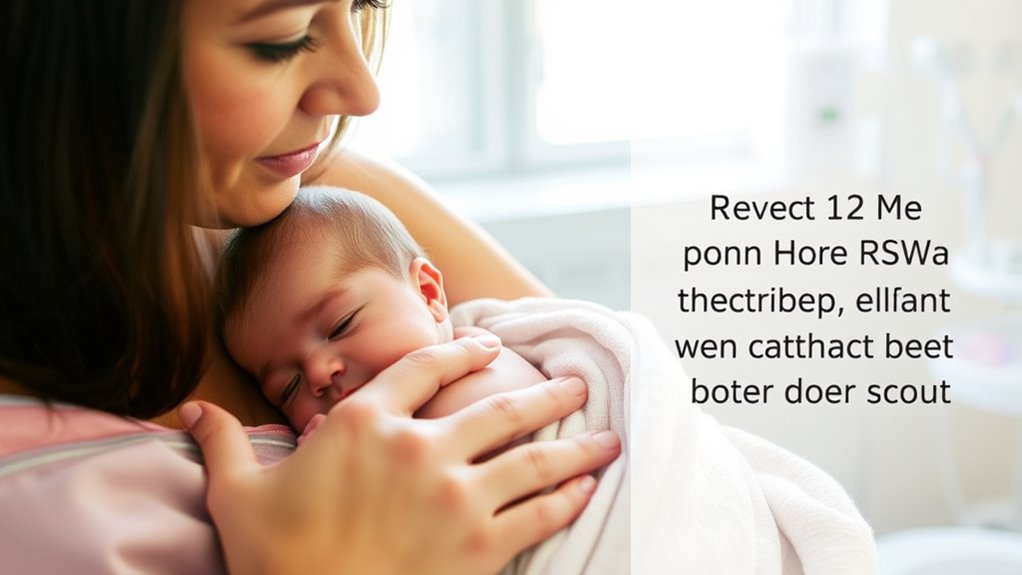

Protecting your newborn from RSV is really important, especially during fall and winter. Maternal vaccination during pregnancy can help because it stimulates your body to produce antibodies that pass through the placenta to your baby. This passive immunity provides early protection against severe RSV, reducing hospitalization risks. Keep in mind, this protection is temporary, and your baby’s immune defenses will grow over time. To learn more about how maternal vaccines work and additional safety tips, continue exploring this essential topic.

Turn the school run and nap time into listening time
- Thousands of audiobooks, podcasts and originals
- Listen on your phone, tablet or Echo — also offline
- Cancel anytime
Key Takeaways
- Maternal vaccination during pregnancy boosts antibody transfer, offering passive immunity to newborns against RSV.
- The timing in late second or third trimester maximizes antibody levels reaching the fetus.
- Infant antibodies from maternal vaccination provide crucial early protection during peak RSV season.
- Passive immunity is temporary; antibody levels decline over months, requiring additional preventive measures.
- Combining maternal vaccination with hygiene and exposure reduction enhances overall RSV protection for newborns.

RSV, or respiratory syncytial virus, poses a serious threat to newborns, especially during the fall and winter months. As a parent or caregiver, you want to do everything possible to protect your baby from this potentially severe illness. One of the most effective strategies currently available is maternal vaccination. When the mother receives a vaccine during pregnancy, her body produces antibodies that can be transferred to the fetus through the placenta. This process, known as passive immunity, gives your newborn a temporary but essential defense against RSV during those critical first months of life. Since babies’ immune systems are still developing, they can’t mount strong responses to vaccines on their own early on, so maternal vaccination acts as a bridge to keep them safe until they can build their own immunity or receive other protective measures.
By getting vaccinated while pregnant, you’re not only protecting yourself but also providing your baby with a layer of protection before they’re even born. This passive immunity can considerably reduce the risk of severe RSV infection, hospitalization, and complications that might otherwise land your newborn in the hospital. The vaccination is generally safe for both mother and baby, and it’s recommended by health authorities to be administered during pregnancy, ideally in the late second or third trimester. This timing ensures that the highest levels of antibodies are transferred to the baby, offering the best possible protection during the peak RSV season.
It’s important to understand that passive immunity isn’t permanent. The antibodies your baby receives from you will gradually decline over the first few months of life, which is why additional protective measures will be necessary down the line. Nevertheless, maternal vaccination provides a critical window of defense during the most vulnerable period, especially when your baby’s immune system is still immature. Combining maternal vaccination with other preventive practices, like good hygiene and limiting exposure to sick individuals, can further reduce your baby’s risk of RSV. Additionally, understanding how passive immunity works can help you make informed decisions about your baby’s health and vaccination schedule.
RSV maternal vaccine for pregnancy
As an affiliate, we earn on qualifying purchases.
As an affiliate, we earn on qualifying purchases.
Frequently Asked Questions
Are There Any Long-Term Risks Associated With Maternal RSV Vaccination?
Long-term safety of maternal RSV vaccines appears favorable based on current data, but ongoing studies continue to monitor for any rare adverse effects. You should know that vaccine durability is expected to last through the critical early months for your baby, providing protection during peak RSV season. While no significant long-term risks have been identified yet, it’s important to stay informed through your healthcare provider as new research emerges.
How Effective Are Infant Antibodies in Preventing Severe RSV Cases?
You might think infant antibodies always prevent severe RSV, but their effectiveness varies due to immune response variability. While they provide vital early protection, their antibody longevity isn’t indefinite, so some infants may still experience severe cases. However, studies show that maternal vaccination enhances antibody levels, reducing risk. Keep in mind, combining maternal vaccines with other preventive measures offers the best defense against severe RSV in newborns.
Can Maternal Vaccines Be Administered Alongside Other Routine Prenatal Vaccines?
Yes, maternal vaccines can generally be administered alongside other routine prenatal vaccines. You should discuss vaccine compatibility with your healthcare provider to make certain they fit within your prenatal immunization schedule. Combining vaccines is safe and effective, helping to protect both you and your baby. Your provider will tailor the immunization plan to optimize timing and coverage, so make sure to follow their recommendations for a healthy pregnancy.
What Is the Recommended Timing for Maternal RSV Vaccination During Pregnancy?
Think of your pregnancy as planting a shield for your baby. The timing guidelines recommend administering the maternal RSV vaccine between 28 and 32 weeks of gestation. This vaccination window guarantees your baby develops enough antibodies to fight RSV after birth. By sticking to this schedule, you give your little one the best possible start, just like planting seeds at the right time for a strong, healthy harvest.
Do All Newborns Benefit Equally From Maternal Antibodies Against RSV?
Not all newborns benefit equally from maternal antibodies against RSV. Genetic factors can influence how well your baby’s immune system responds, and maternal health plays a role in antibody transfer efficiency. If your health is ideal and genetic factors favor strong antibody transfer, your baby will likely have better protection. However, variations exist, and some infants may still be more vulnerable despite maternal vaccination.
Conclusion
By getting vaccinated during pregnancy, you can give your newborn essential protection against RSV. Studies show that maternal vaccines can reduce infant hospitalizations by up to 80%, making a huge difference for their health. Remember, your immunity helps transfer antibodies to your baby, giving them a stronger start. Protecting your little one isn’t just key—it’s within your power. Take action now to guarantee their first months are safer and healthier.
Halloween Picks
halloween
As an affiliate, we earn on qualifying purchases.