
To prevent and detect lice, focus on avoiding head-to-head contact and sharing personal items like hats and combs, since lice crawl and cling tightly rather than jump or fly. Know that clean hair doesn’t attract lice, and your hair color doesn’t matter—lice seek warmth and scalp oils. Proper examination helps in early detection. Busting myths can lead to smarter treatment choices. Want to stay ahead of lice? Keep exploring these key facts to protect yourself effectively.
Key Takeaways
- Lice spread mainly through head-to-head contact and sharing personal items, not from dirt or poor hygiene.
- They are tiny, wingless insects that crawl; they cannot jump or fly, making close contact the primary transmission method.
- Detect lice by carefully examining the scalp and hair, as nits are small and tightly attached to hair strands.
- Effective treatment involves using lice-specific products and removing nits; understanding lice biology aids in proper management.
- Common myths, like lice being caused by dirty hair, hinder prevention; knowledge of facts promotes effective control and prompt action.
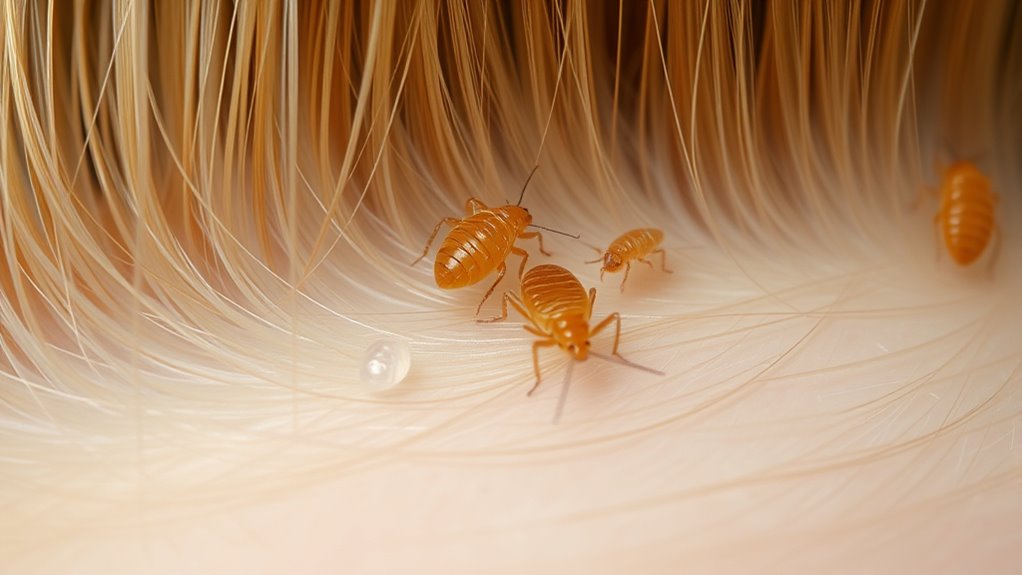
Have you ever wondered what lice really are and how they infest your hair? Understanding head lice biology is key to demystifying these tiny pests. Head lice are insects, specifically parasitic insects, that survive by feeding on human blood. They are tiny, wingless insects about the size of a sesame seed, with flat, oval-shaped bodies. Unlike fleas or ticks, lice cannot jump or fly; they crawl from one hair strand to another or cling tightly to the scalp. They lay eggs—called nits—near the scalp, attaching tightly to hair shafts with a tough, glue-like substance. These nits hatch in about a week, and the cycle continues if not addressed. Knowing this biology helps you grasp why lice are so persistent and why they prefer close contact for spreading. Despite what many believe, lice do not jump from person to person like fleas do, nor do they fly or burrow into the scalp. They are transmitted mainly through direct head-to-head contact or sharing personal items like hats, combs, or headphones. Recognizing that lice are parasitic insects that rely on human hosts can motivate more effective prevention measures.
Common myths about lice abound, and understanding the truth is essential to effective prevention and treatment. One widespread misconception is that dirty hair causes lice; however, lice are attracted to clean hair just as much as dirty hair. They don’t care about hygiene; they care about the proximity to a scalp and hair density, which provides a cozy environment for their eggs and feeding. Another myth is that lice are a sign of poor hygiene or uncleanliness. This isn’t true—anyone can get lice regardless of how often they wash their hair. Some people also think that lice prefer certain hair colors, but in reality, they are attracted to the warmth and oils of the scalp, making hair color irrelevant. Many believe that lice can be easily seen with the naked eye; in truth, they are tiny, and nits can be hard to spot, especially since they blend in with hair strands.
Understanding these facts and myths can help you approach lice infestations calmly and effectively. Recognize that lice are a common issue that can happen to anyone, and they’re not a reflection of poor hygiene or cleanliness. Knowing their biology and debunking common myths enables you to take proper precautions, such as avoiding head-to-head contact and not sharing personal items. If you suspect lice, thorough examination and appropriate treatment are your best steps forward. Remember, lice are a nuisance but manageable with accurate information and prompt action.

Nix Ultra Superlice Treatment, All-in-One Shampoo, 4 Fl Oz & Lice Removal Comb
- Kills lice and eggs: Eliminates head lice and nits including superlice
- Lice removal comb: Helps remove lice and nits from hair
- Gentle cleansing: Gently treats and cleanses hair in one step
As an affiliate, we earn on qualifying purchases.
As an affiliate, we earn on qualifying purchases.
Frequently Asked Questions
Can Lice Survive on Pets or Other Animals?
Lice can’t survive on pets or other animals because they are specific to humans. Pet transmission of lice is highly unlikely, and animal infestation by human lice is rare. If you notice lice on your pet, it’s probably a different type, like fleas. To protect yourself and your pets, avoid sharing personal items and maintain good hygiene. Always consult a veterinarian or healthcare provider if you’re unsure about infestation or transmission.
Is It Safe to Use Essential Oils for Lice Treatment?
Sure, using essential oils for lice treatment sounds like a natural remedy, but don’t assume it’s completely safe without caution. While some believe essential oil safety is guaranteed, these oils can cause skin irritation or allergic reactions if not used properly. Always dilute essential oils and consult a professional before applying them. Relying solely on natural remedies might seem tempting, but safety and effectiveness should always come first.
How Often Should I Check My Child’s Hair for Lice?
You should check your child’s hair at least once a week to stay on top of lice screening frequency. During hair checking routines, look closely for nits and lice around the scalp, behind ears, and at the nape of the neck. If you notice any signs, increase the frequency of lice screening to every few days until you’re sure the problem is gone. Regular checks help catch infestations early.
Are Lice More Common in Certain Climates or Seasons?
Lice tend to be more common in warm, humid climates because these conditions favor their survival and reproduction. Seasonal patterns also influence their prevalence, with higher cases often reported in late summer and early fall when children are back in school and sharing items. You should stay vigilant during these times, as climate influence and seasonal patterns increase the likelihood of lice transmission. Regular checks help catch infestations early.
Can Lice Cause Long-Term Health Issues or Infections?
You might worry that lice cause long-term health issues, but they generally don’t lead to lasting health concerns. While they can cause itching and skin irritation, lice are unlikely to transmit serious infections or result in long-term effects if promptly treated. However, persistent scratching can sometimes lead to secondary infections. Staying vigilant, treating lice quickly, and maintaining good hygiene help prevent any potential health concerns.
Conclusion
So, now that you’re armed with the truth about lice, go ahead and dismiss those wild myths. No, you don’t need to shave your head or burn your belongings—just stick to the proven methods. Remember, lice aren’t tiny vampires; they’re just tiny pests that prefer hair over blood. So relax, stay vigilant, and don’t let the lice drama turn your head into a battleground. You’ve got this—lice don’t stand a chance!